
Monday, November 16, 2026Nov 16

Flash of luck: Astronomers find cosmic radio burst source

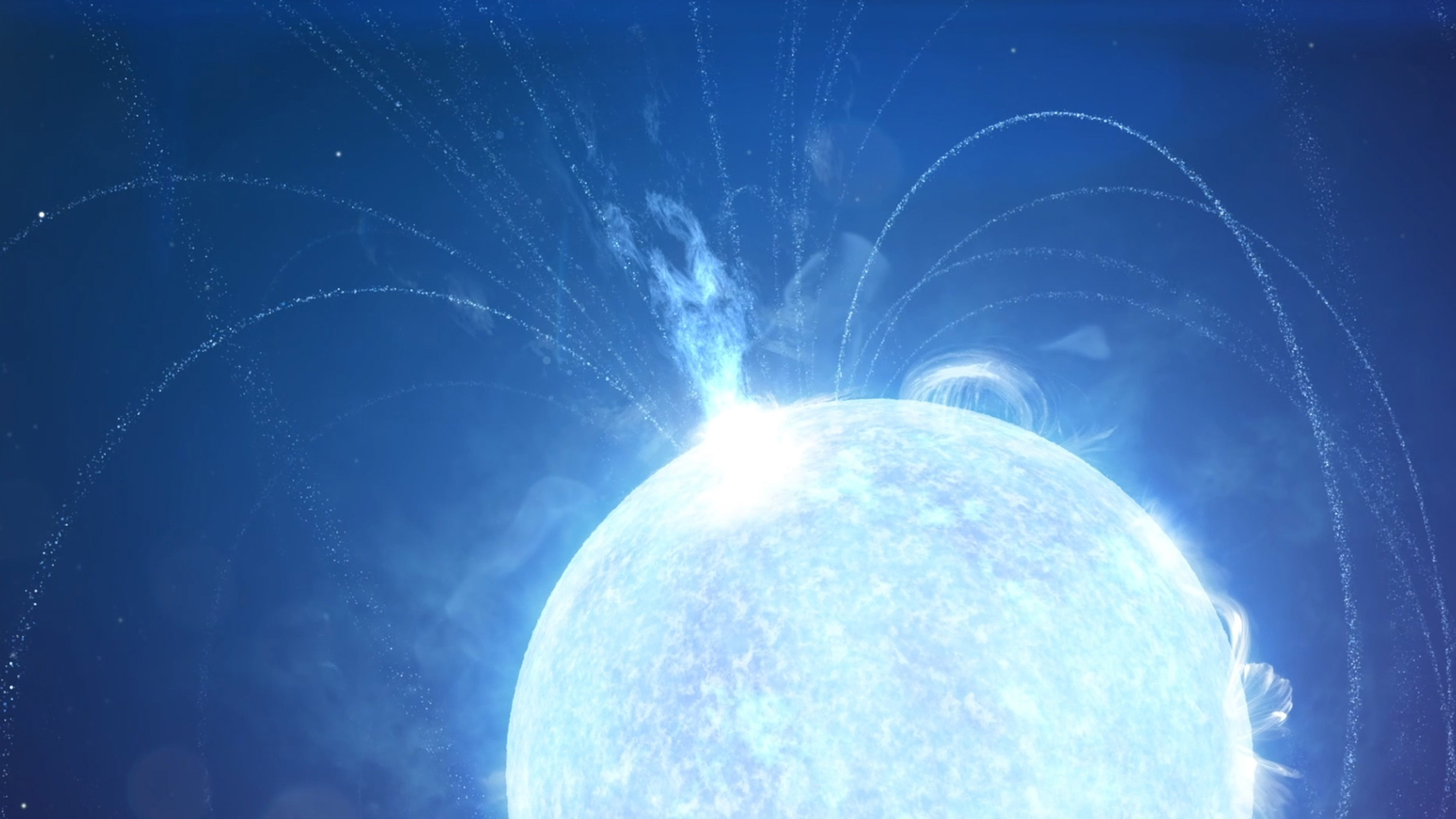
This image from video animation provided by NASA in November 2020 depicts a powerful X-ray burst erupting from a magnetar – a supermagnetized version of a stellar remnant known as a neutron star. A radio burst detected April 28, 2020, occurred during a flare-up like this on a magnetar called SGR 1935. The radio signal was more powerful than any previously seen in our galaxy. The simultaneous X-ray and radio events implicate magnetars as a likely source of mysterious fast radio bursts observed from other galaxies. (Chris Smith (USRA)/NASA/Goddard Space Flight Center via AP)

A flash of luck helped astronomers solve a cosmic mystery: What causes powerful but fleeting radio bursts that zip and zigzag through the universe?

Scientists have known about these energetic pulses – called fast radio bursts – for about 13 years and have seen them coming from outside our galaxy, which makes it harder to trace them back to what’s causing them. Making it even harder is that they happen so fast, in a couple of milliseconds.

Then this April, a rare but considerably weaker burst coming from inside our own Milky Way galaxy was spotted by two dissimilar telescopes: one a California doctoral student’s set of handmade antenna s, which included actual cake pans, the other a $20 million Canadian observatory.

They tracked that fast radio burst to a weird type of star called a magnetar that’s 32,000 light-years from Earth, according to four studies in Wednesday’s journal Nature.

It was not only the first fast radio burst traced to a source, but the first emanating from our galaxy. Astronomers say there could be other sources for these bursts, but they are now sure about one guilty party: magnetars.