
Saturday, November 14, 2026Nov 14

Burundi rivals gather in Uganda to open peace negotiations

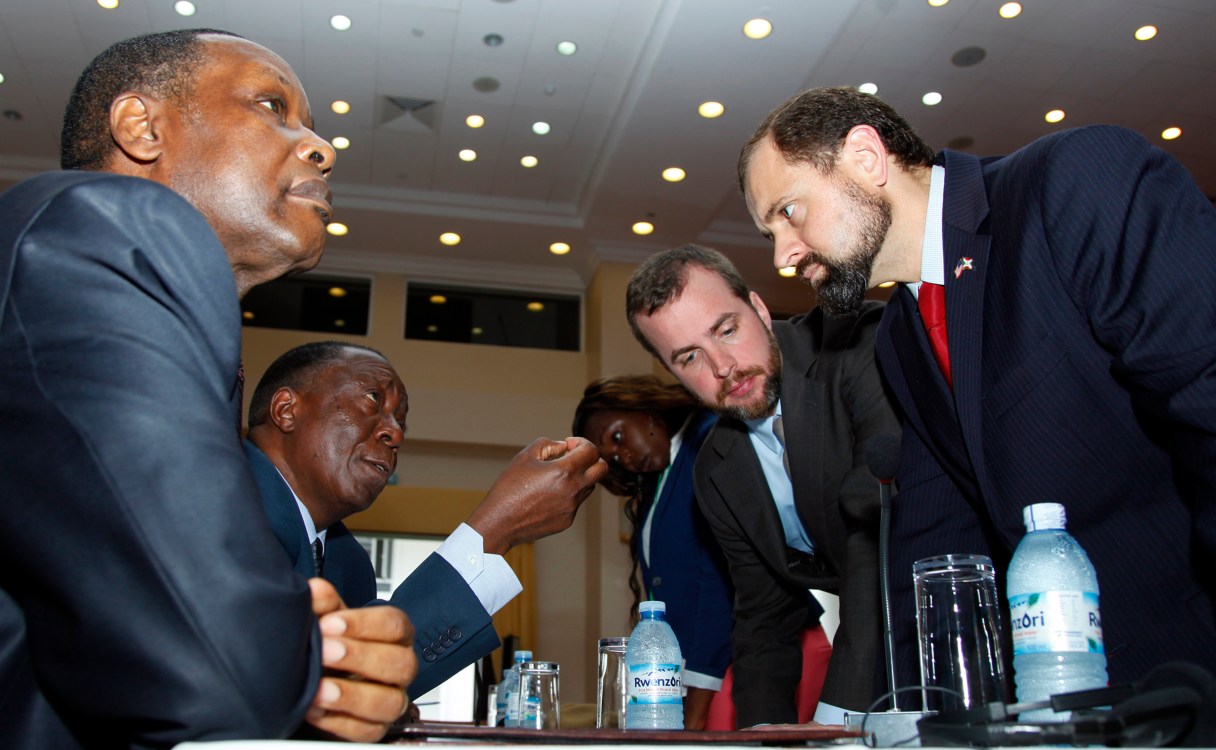
Former Burundi presidents Pierre Buyoya left, Sylvester Ntibatunganya, second left, interact with US Special Envoy Thomas Perriello, right, with his Chief of Staff Berennan M. Gilmore, second right, during Burundi peace talks, at Entebbe State House about 42 kilometers east of Uganda capital Kampala, Monday , Dec. 28, 2015. Representatives of Burundi's government and the opposition are in Uganda for negotiations aimed at ending political violence. Burundian President Pierre Nkurunziza, whose decision to run for election to a third term triggered the bloodshed, wasn't present at the opening ceremony Monday. (AP Photo/Stephen Wandera)

ENTEBBE, Uganda (AP) – Representatives of Burundi’s government and opposition began a mediated effort on Monday to end the country’s political violence. Burundian President Pierre Nkurunziza, whose decision to run for election to a third term triggered the bloodshed, was invited but wasn’t present at the opening ceremony. Proper negotiations will start in January.

The two sides met Monday under the banner of the East African Community, a regional bloc, in a ceremony Monday at Uganda’s State house. Ugandan President Yoweri Museveni, in his role as mediator, urged both sides to negotiate seriously and without conditions.

But even before the start of negotiations – which are scheduled to begin January 6 in Tanzania – the Burundian government imposed conditions.

Hundreds of Burundians have been killed since April, with the government’s opponents and supporters targeting each other in gun, grenade and rocket attacks, many in the capital, Bujumbura. Representatives of Burundian civic groups say they hope the talks will end with the resignation of Nkurunziza, who won the presidential elections this year, though that possibility seems very remote.

More than 100,000 Burundians have fled their country, fearing the violence will escalate into mass bloodshed.