
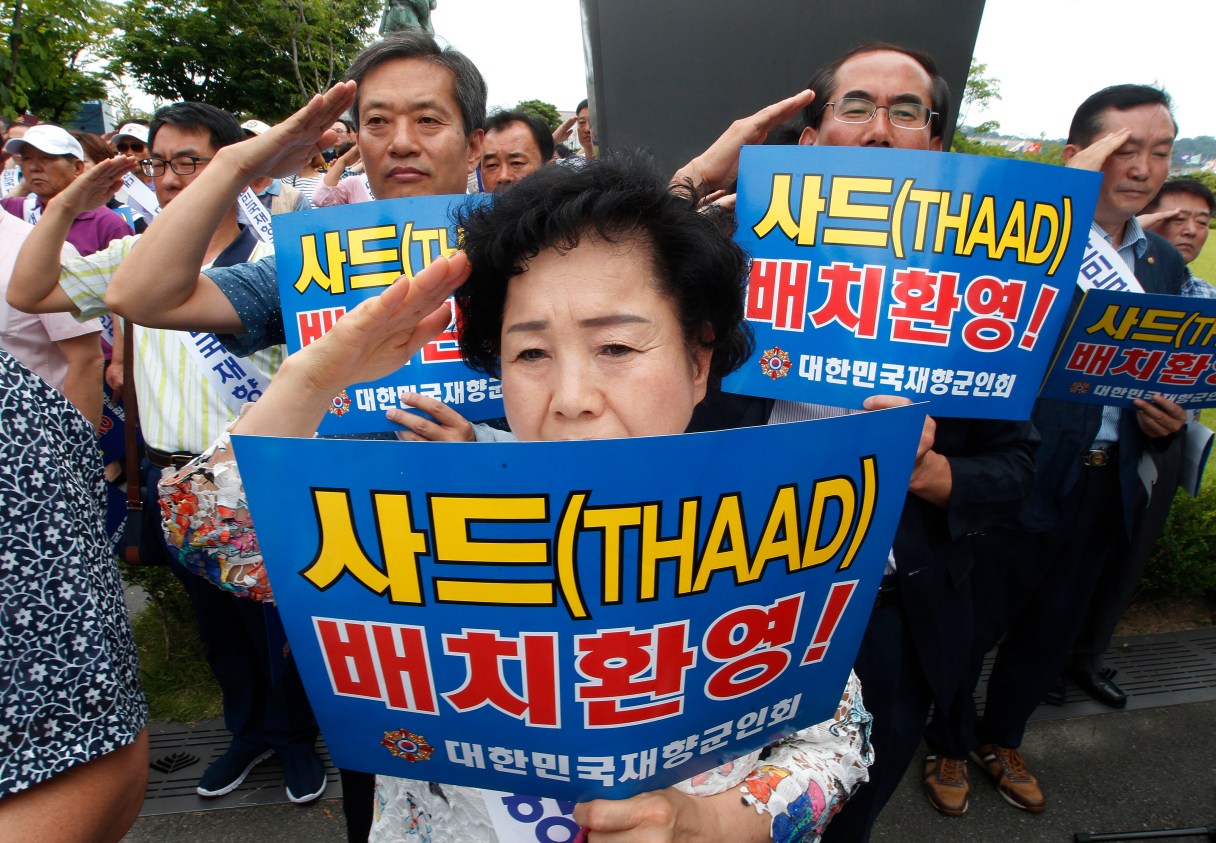
BEIJING (AP) – Growing Chinese anger at South Korea over a U.S. anti-missile defense system bodes ill for everything from pop star appearances to United Nations action against North Korea’s nuclear and missile threats.
South Korea’s mighty entertainment sector has been on edge since Beijing criticized Seoul’s decision last month to proceed with the Terminal High Altitude Area Defense, or THAAD, system, with reports of event cancellations and possible bans on South Korean TV series, amid scattered calls for a total boycott of imports from the South.
In the latest cancellation, Youku, China’s biggest streaming site, deep-sixed a meet-and-greet for fans with South Korean stars Kim Woo-Bin and Bae Suzy to promote the hugely popular TV drama “Uncontrollably Fond.” A company statement gave the reason simply as “forces beyond our control.”
A chill has already descended over the political relationship, with Chinese state media employing its trademark searing rhetoric in daily screeds against South Korea and the U.S. over the THAAD plans.
State outlets have even hinted that Beijing will stop future cooperation with the U.S. against North Korea at the United Nations Security Council. THAAD “has declared the death of that short-lived United Front,” the English-language China Daily said in a recent editorial. The Foreign Ministry did not respond directly to a faxed question about future U.N. sanctions cooperation, but said the Security Council’s resolutions on North Korean missile tests contained “clear rules.”