
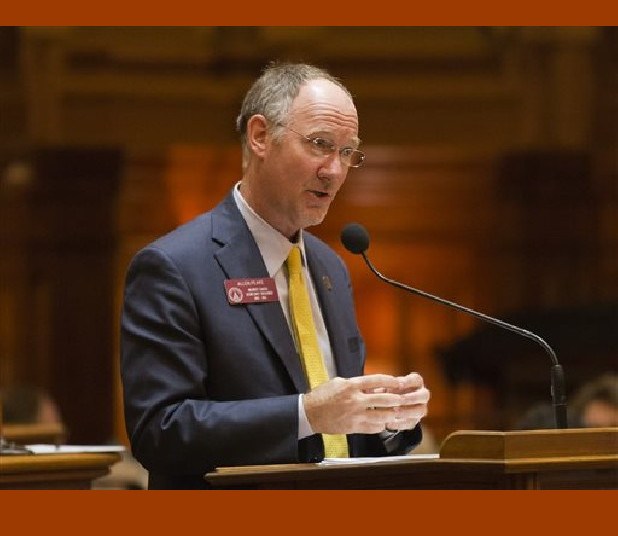
 State Rep. Allen Peake, R-Macon, speaks on behalf of his bill that would legalize medical marijuana in Georgia for patients with certain illnesses, in Atlanta in this March 3, 2014, file photo.
ATLANTA – While an effort to bring a form of medical marijuana to Georgia garnered bipartisan support during the most recent legislative session, hurdles remain as lawmakers prepare to make another attempt at passing the legislation next year.
A bill is being drafted after a series of committee hearings and included testimony from leaders within the law enforcement and medical communities who raised concerns about the use of medical cannabis even under narrow circumstances. Meanwhile, progress is being made in terms of bringing clinical trials to Georgia, but advocates warn that will not be enough to help all those who see the drug as their best hope to manage debilitating conditions.
“I don’t think any of us are opposed to finding out how effective it is or how it works, but let’s have compassionate use with it as well,” said Bob Kutchback, whose young granddaughter suffers from a rare disorder that causes severe seizures.
Rep. Allen Peake, R-Macon, took the lead earlier this year in fighting to allow the use of cannabidiol, a marijuana derivative low in the psychoactive compound that makes users feel high, by children suffering from certain seizure disorders. His bill ultimately failed amid some last-minute maneuvering on unrelated legislation.
Peake said recently he expects to have a draft bill soon and it will allow for a limited number of businesses to obtain a state license to grow and process marijuana for the sole purpose of providing the cannabis oil under a system in which people of all ages with certain medical conditions would be able to obtain it under the supervision of a doctor. The amount of the psychoactive compound known as tetrahydrocannabinol, or THC, would be limited and facilities would be subject to regulations, lab testing and security measures.