
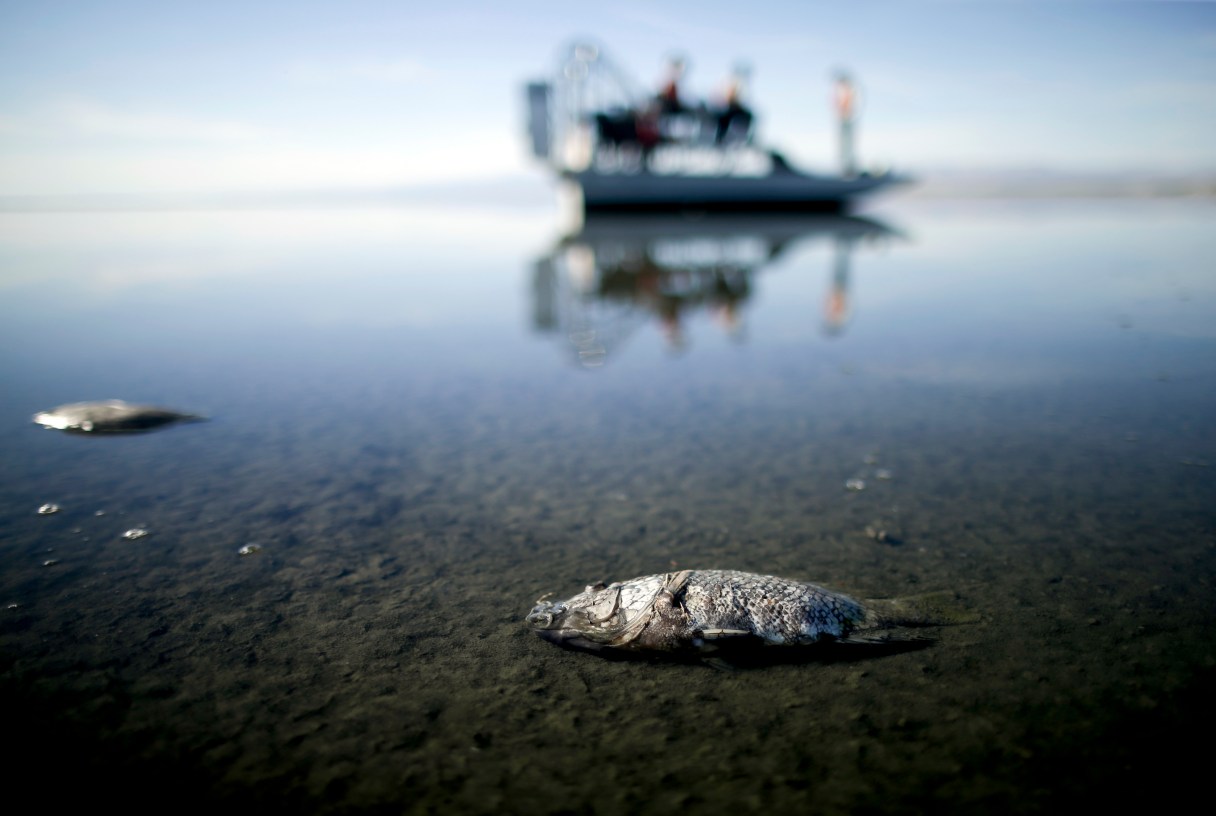
SAN DIEGO (AP) – California Gov. Jerry Brown’s administration on Thursday proposed spending nearly $400 million over 10 years to slow the shrinking of the state’s largest lake just as it is expected to evaporate an accelerated pace.
The plan involves building ponds on the northern and southern ends of the Salton Sea, a salty, desert lake that has suffered a string of environmental setbacks since the late 1970s. During its heyday of international speed boat races, it drew more visitors than Yosemite National Park and celebrities including Frank Sinatra, Bing Crosby and the Beach Boys.
The proposal comes at a critical time for the lake about 150 miles southeast of Los Angeles because San Diego’s regional water agency will soon stop sending water to help preserve the lake. San Diego agreed in 2003 to contribute water through 2017 under a landmark deal to buy Colorado River water from the Imperial Valley, which includes the lake.
The $383-million proposal ran into immediate questions over who will pay for it. The state has set aside $80 million under a voter-approved water bond measure, leaving a shortfall of $300 million.
The lake is often called “The Accidental Sea” because it was created in 1905 when the Colorado River breached a dike and two years of flooding filled a sizzling basin that today is about 35 miles long, 15 miles wide and only 50 feet deep.