
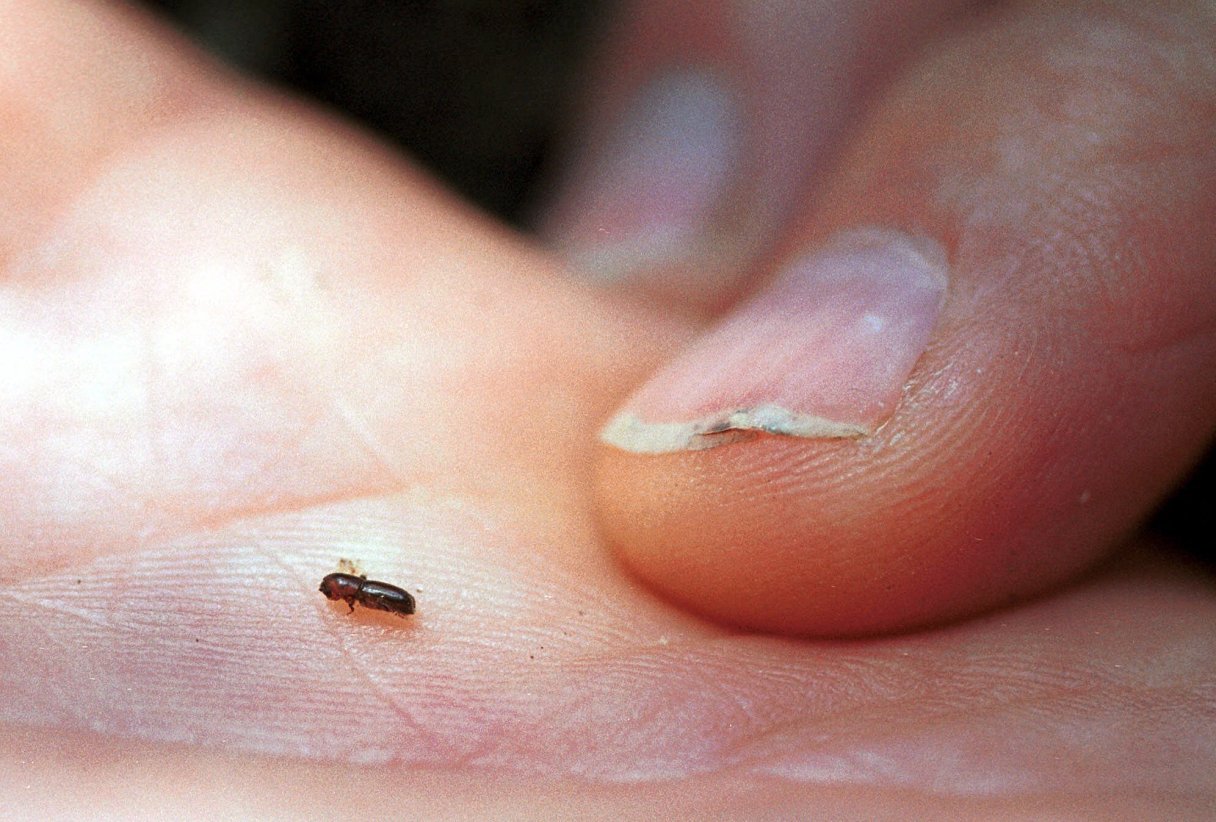
A fungal disease that kills sassafras trees is spreading in Tennessee, and the state Agriculture Department is seeking the public’s help to stop it.
Earlier this year, laurel wilt disease was detected in trees in Montgomery, Cheatham, Dickson and Williamson Counties. More recently, it has been detected in Robertson and Hamblen counties, according to a news release from the Tennessee Department of Agriculture.
“These new detections of this invasive disease show a significant geographic jump across the state,” State Forester David Arnold said in the statement. “This is yet another unfortunate example of an invasive pest impacting our forests.”
Tom Stebbins, University of Tennessee/Tennessee State University extension agent for Hamilton County, said in an email that about 85 county agents, forest managers and landscapers were briefed about the disease, which developed “very fast” and is caused by a beetle that brings in a fungus, last week at Chattanooga State Technical College. He said he hasn’t seen it yet, but it is “probably already here or near.
“We are often the first Tennessee county to see new pests which are already in the more southern areas,” Stebbins said, “because of our warmer climate and also because we are the first major transportation hub in Tennessee.”