
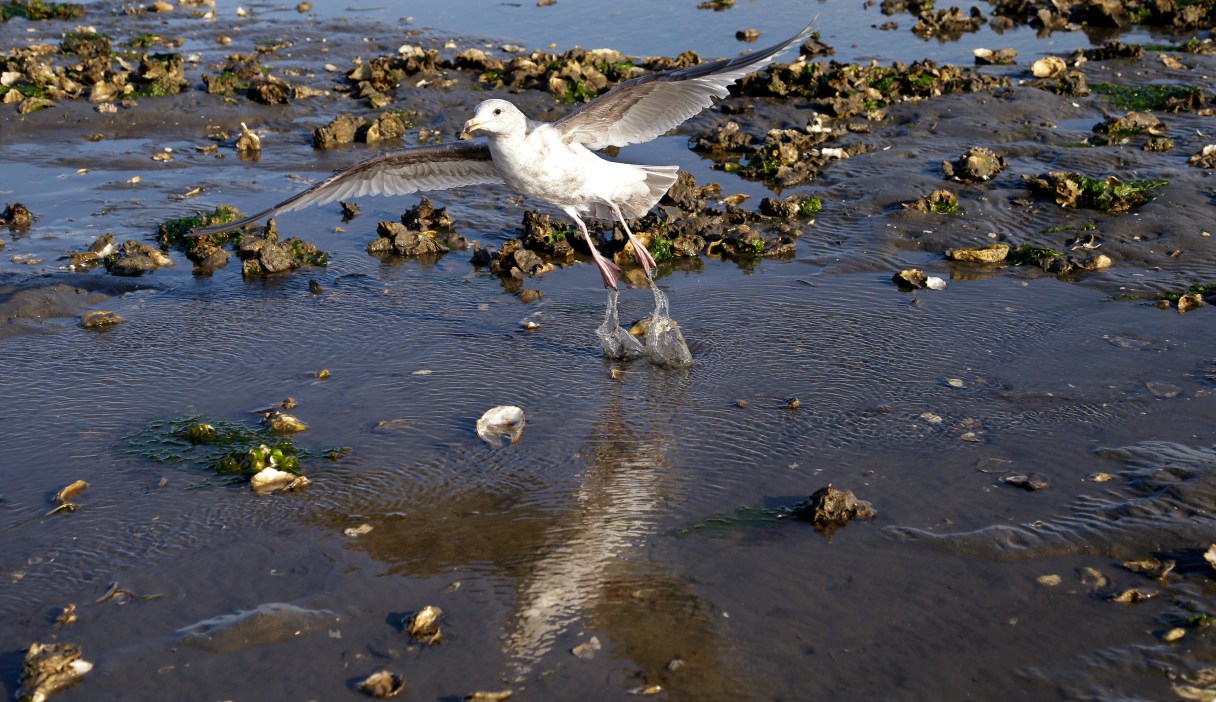
SEATTLE (AP) – For decades, oyster growers in southwest Washington have battled to control native shrimp that burrow in the mudflats and make it hard for oysters to grow.
Now, after getting state approval, a group of shellfish farmers plan to spray a widely-used neurotoxic pesticide on up to 2,000 acres of commercial shellfish beds in Grays Harbor and Willapa Bay. They insist it’s a safe way to keep in check a threat to the area’s multi-million shellfish industry.
But critics, including the U.S. Fish and Wildlife Service and the National Oceanic and Atmospheric Administration, worry about unintended harm to other species. The plan is premature, they say, with too many unknowns about the pesticide’s effects on other organisms, including those that are a food source for threatened species.
With public and customer concerns rising, one of the big players, Taylor Shellfish Farms, said late Friday that it would back away from treating its oyster beds.
In comments to the state, NOAA noted that state Department of Ecology “is clearly aware that imidacloprid is a persistent broad spectrum pesticide that will kill nearly all benthic (sediment-dwelling) organisms on acreage directly treated.”