
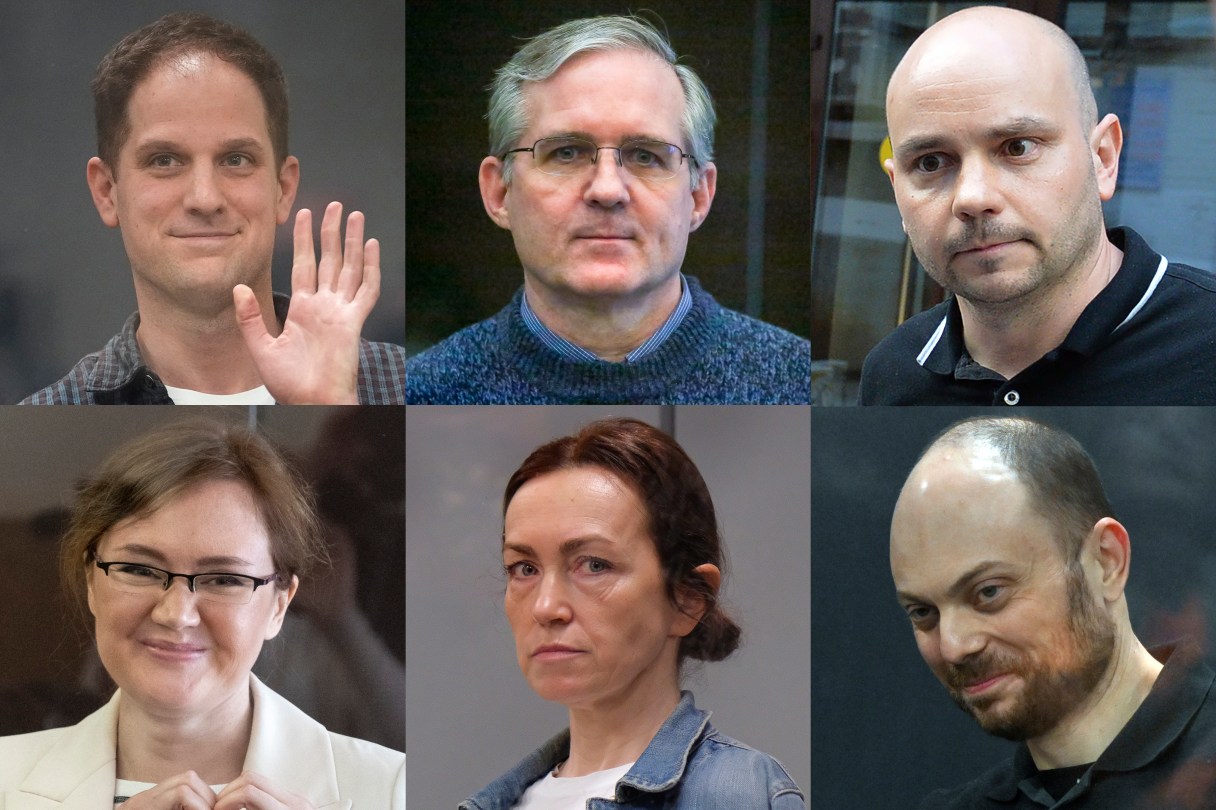
WASHINGTON (AP) — The United States and Russia completed their biggest prisoner swap in post-Soviet history on Thursday, with Moscow releasing journalist Evan Gershkovich and fellow American Paul Whelan, along with dissidents including Vladimir Kara-Murza, in a multinational deal that set two dozen people free.
The trade unfolded despite relations between Washington and Moscow being at their lowest point since the Cold War after Russian President Vladimir Putin’s February 2022 invasion of Ukraine. Negotiators in backchannel talks at one point explored an exchange involving Russian opposition leader Alexei Navalny but after his death in February ultimately stitched together a seven-nation, 24-person deal that required significant concessions from European allies, including the release of a Russian assassin, and secured freedom for a cluster of journalists, suspected spies, political prisoners and others.
President Joe Biden trumpeted the exchange, by far the biggest in a series of swaps with Russia, as a diplomatic feat while welcoming families of the returning Americans to the White House. But the deal, like others before it, reflected an innate imbalance: The U.S. and allies gave up Russians charged or convicted of serious crimes in exchange for Russia releasing journalists, dissidents and others imprisoned by the country’s highly politicized legal system on charges seen by the West as trumped-up.
“Deals like this one come with tough calls,” Biden said but added: “There’s nothing that matters more to me than protecting Americans at home and abroad.”