
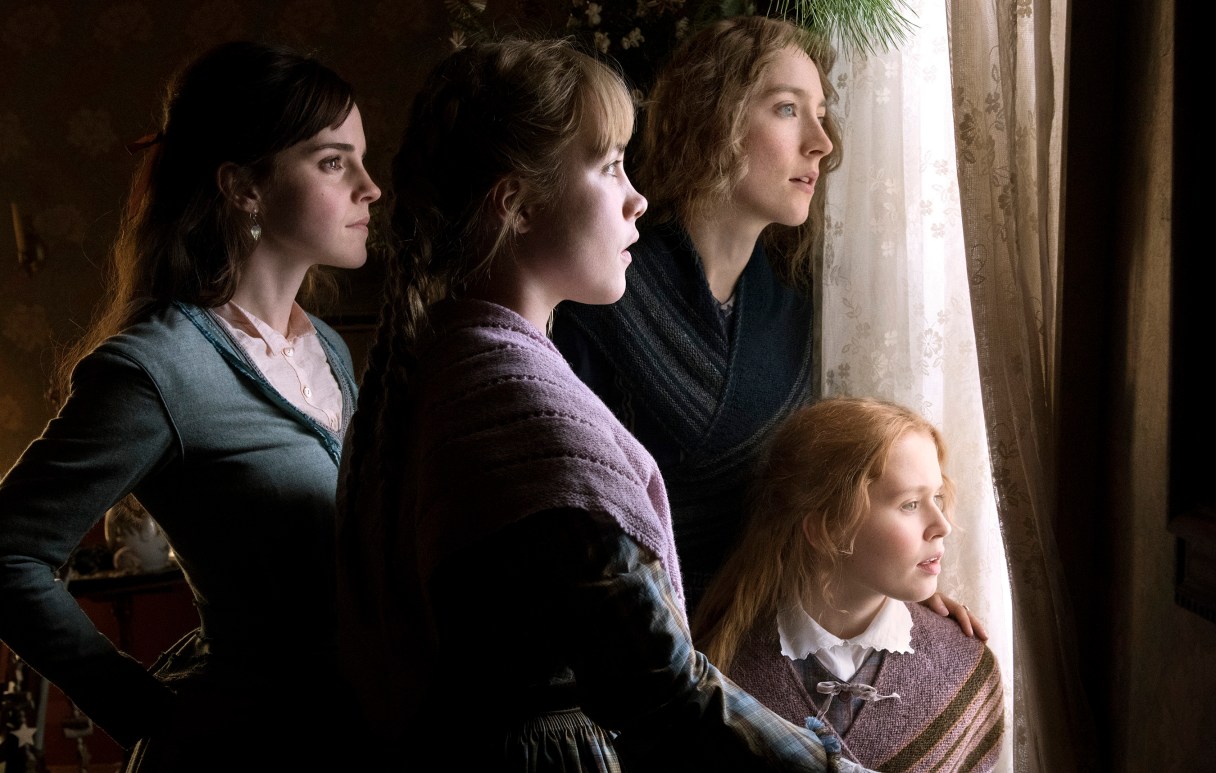
I went to see “Little Women” the other day without a great deal of hope: Not one of the many film adaptations of Louisa May Alcott’s 1868 novel has been truly faithful to the book. In particular, Gillian Armstrong’s 1994 adaption might more accurately have been titled “Little Feminists.”
The new film is enjoyable on many levels. Laura Dern is a delight as “Marmee,” the mother of four lively young daughters struggling with poverty and the absence of their father, a Civil War chaplain. For once, the actress chosen to play daughter Jo (Saoirse Ronan) is interesting-looking rather than beautiful (the Jo of Louisa May Alcott’s novel is described as having just one beauty: her hair.)
Emma Watson (Hermione of the Harry Potter films) is sweet as oldest daughter Meg, as is Eliza Scanlen as Beth, the sister who suffers from severe social phobia and is almost too good to be true. But Amy, the youngest sister (played by Florence Pugh) is hard as nails, not the vain, selfish brat who, in Alcott’s telling, grows into a graceful, thoughtful young woman.
The film is sumptuously shot and well-acted, although the endless flashbacks will likely confuse viewers unfamiliar with the storyline – as it did the little girls seated behind me, who told me they had not read “Little Women.” But the film was still a disappointment because the strong Christian elements of the novel are left out.
For example, in the very first chapter of the book, Meg, Jo, Beth and Amy recall the times they acted out John Bunyan’s “Pilgrim’s Progress,” the greatest Christian allegory ever penned.