
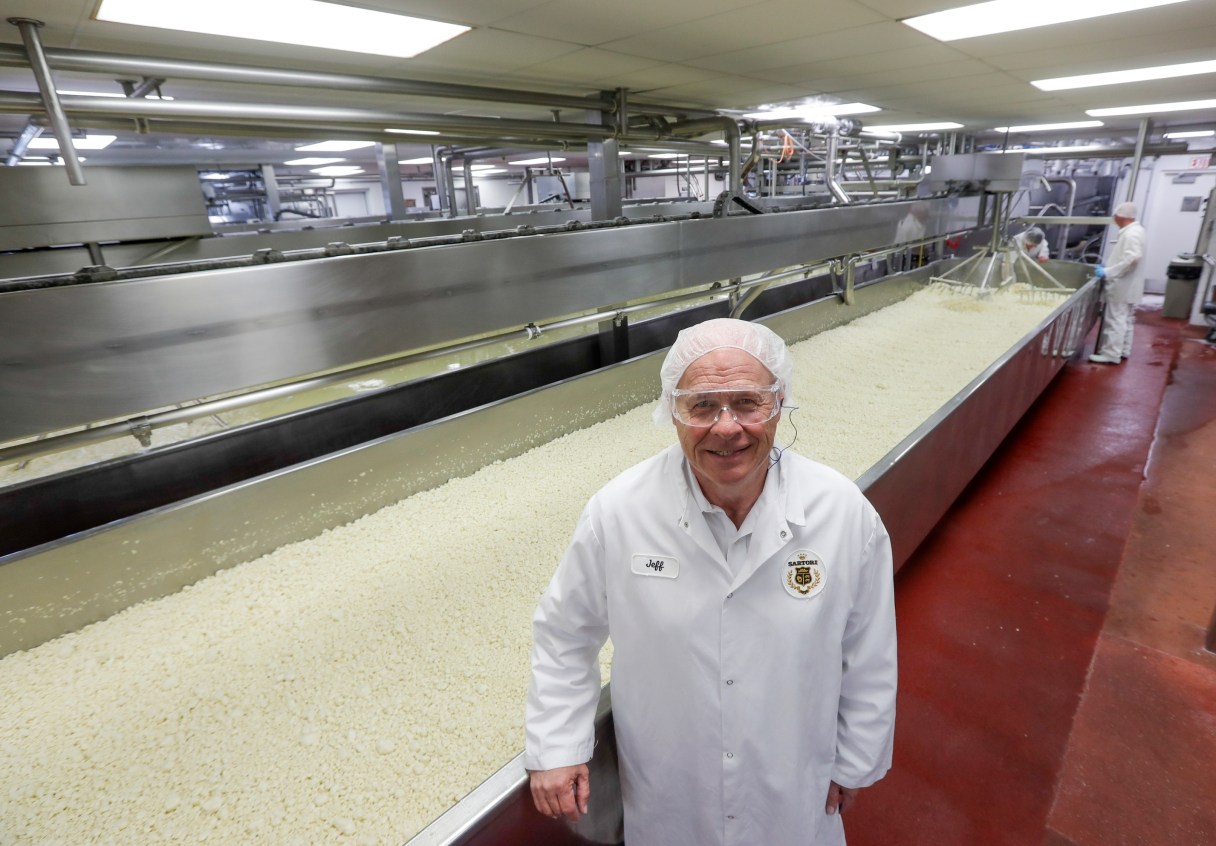
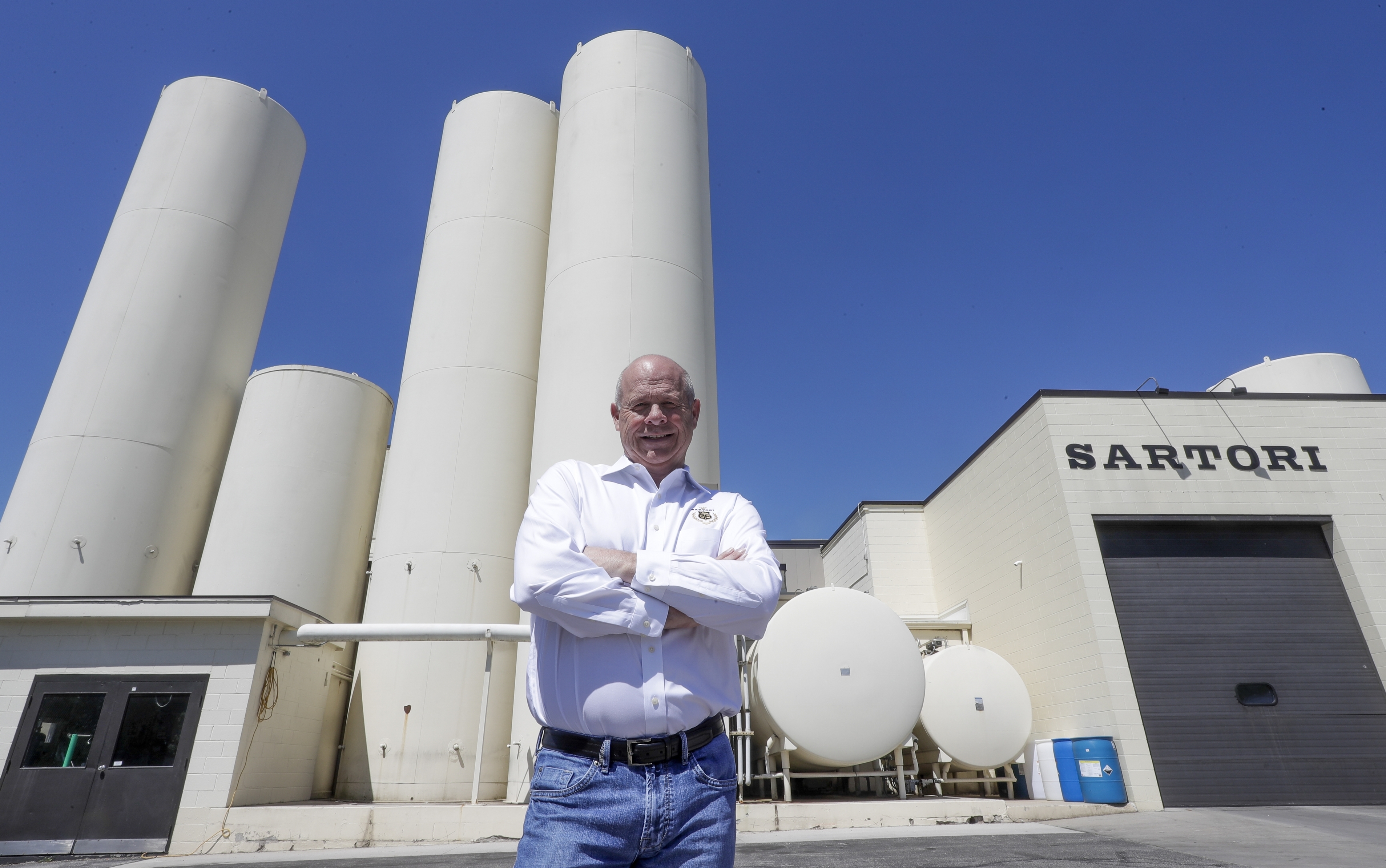
 In this June 7, 2019, photo Jeff Schwager, president of Sartori Cheese poses for a picture at their plant in Plymouth, Wis. Schwager’s company, Sartori, faced retaliatory tariffs as President Donald Trump reopened a trade battle with Mexico to pressure the country into stopping the flow of Central American migrants to the U.S. border. The Plymouth, Wisconsin-based company already had to deal with 10 months of retaliatory tariffs from Mexico last year, and is also paying tariffs on sales to China. (AP Photo/Morry Gash)
Jeff Schwager is wondering whether it truly makes sense to sell his company’s cheese outside the U.S.
Schwager’s company, Sartori, faced potential retaliatory tariffs from Mexico when President Donald Trump threatened nearly two weeks ago to reopen a trade war with Mexico to pressure its government to halt the flow of Central American migrants to the U.S. border. Sartori already had to deal with months of 25% Mexican tariffs in last year’s trade dispute with the U.S. The Plymouth, Wisconsin-based company is also paying tariffs on sales to China, a result of the U.S. trade dispute with that country.
The combination cost $100,000 a month and Sartori was losing money on its business with China and Mexico. The pressure eased somewhat after the Mexican tariffs ended when the U.S., Mexico and Canada reached a new trade agreement in October. But the events of the past year have left Schwager with doubts.
“Uncertainty in this business/political environment has driven us to focus more growth on domestic opportunities rather than take chances on international growth,” Schwager says.
Although Trump suspended the tariffs against Mexico, his unpredictable trade moves – including a hike in tariffs on Chinese goods last month – are making some small businesses increasingly uncertain about foreign trade. Even the prospect of tariffs has made some owners and investors reluctant to pursue deals. Importers have been searching for manufacturing alternatives in countries that aren’t at odds with the U.S. Companies like Sartori are rethinking their export business.