
Monday, November 16, 2026Nov 16

Alabama officials to ask federal government for two-year delay on food assistance error rate penalty

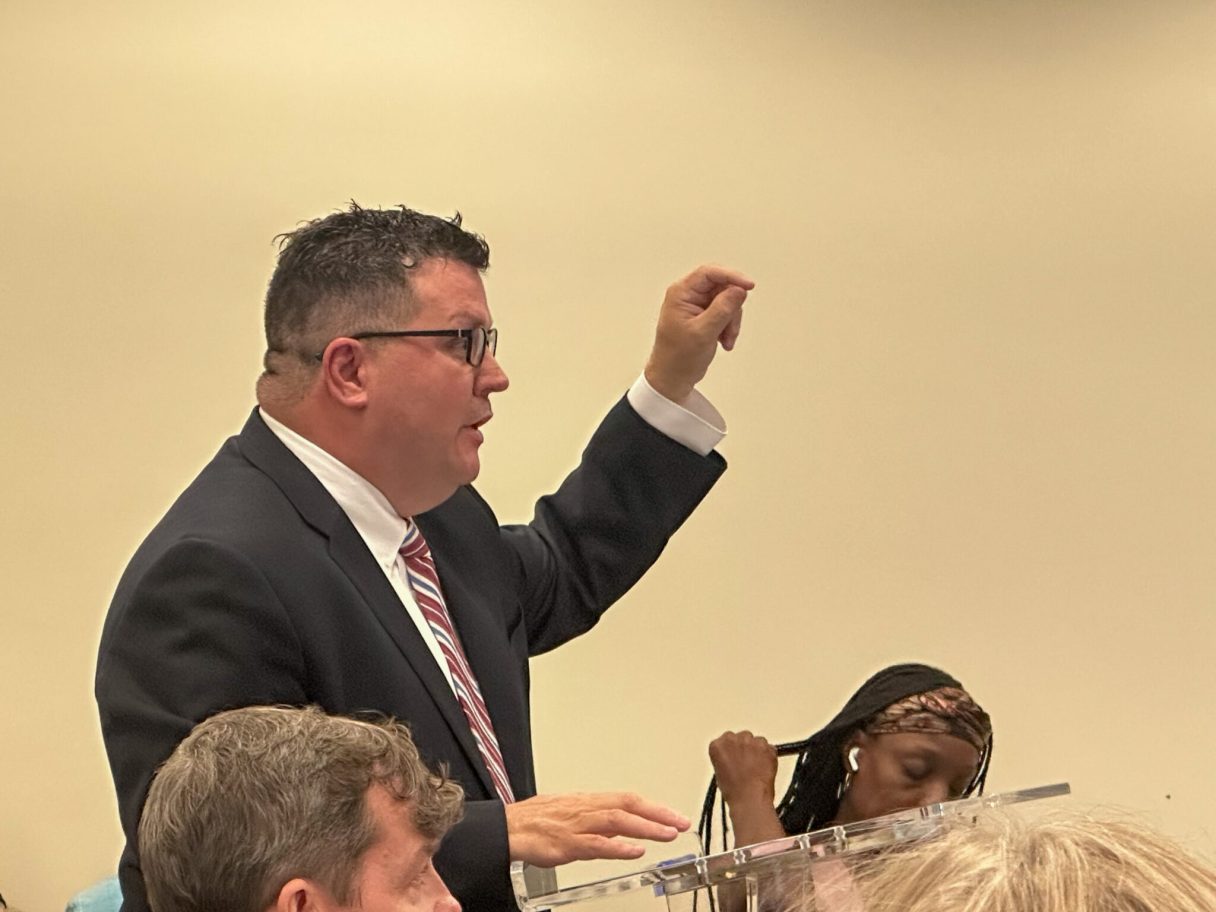
Brandon Hardin, Alabama food assistance director, speaks at the Department of Human Resources meeting July 23, 2026, in Montgomery, Ala. The department board unanimously approved a motion for the commissioner to ask the congressional delegation for a two-year delay on the food assistance error rate penalty, which is projected to cost the state $174 million. (Anna Barrett/Alabama Reflector)


Alabama officials asked the federal government to extend a two-year reprieve from changes to a food assistance program that could cost the state more than $174 million.

President Donald Trump’s tax and spending bill introduced a penalty for states with a high error rate in the Supplemental Nutrition Assistance Program, aka food stamps or food assistance. Alabama’s error rate for fiscal year 2025 was 9.52%, food assistance Director Brandon Hardin said at a quarterly meeting of the Alabama Department of Human Resources, which administers the program in the state.

“It’s not even close to a measure of fraud,” Hardin said. “It’s when a household circumstance changes, and they do not report that, it ends up becoming a potential error in that case.”

He said errors can be on the client, the agency or can be under-issuances or overpayments of benefits.