
It’s common knowledge public officials are often undercompensated.
To overcome this, why not compensate them for allowing good government to flow smoothly? By that, I mean gratuities. Pay them a little extra for a job done well. Like cutting through the complicated bureaucratic morass of competitive bidding to hook up your brother-in-law’s company with a sweet contract?
Attentive (as in pliable) public servants are worth it, right?
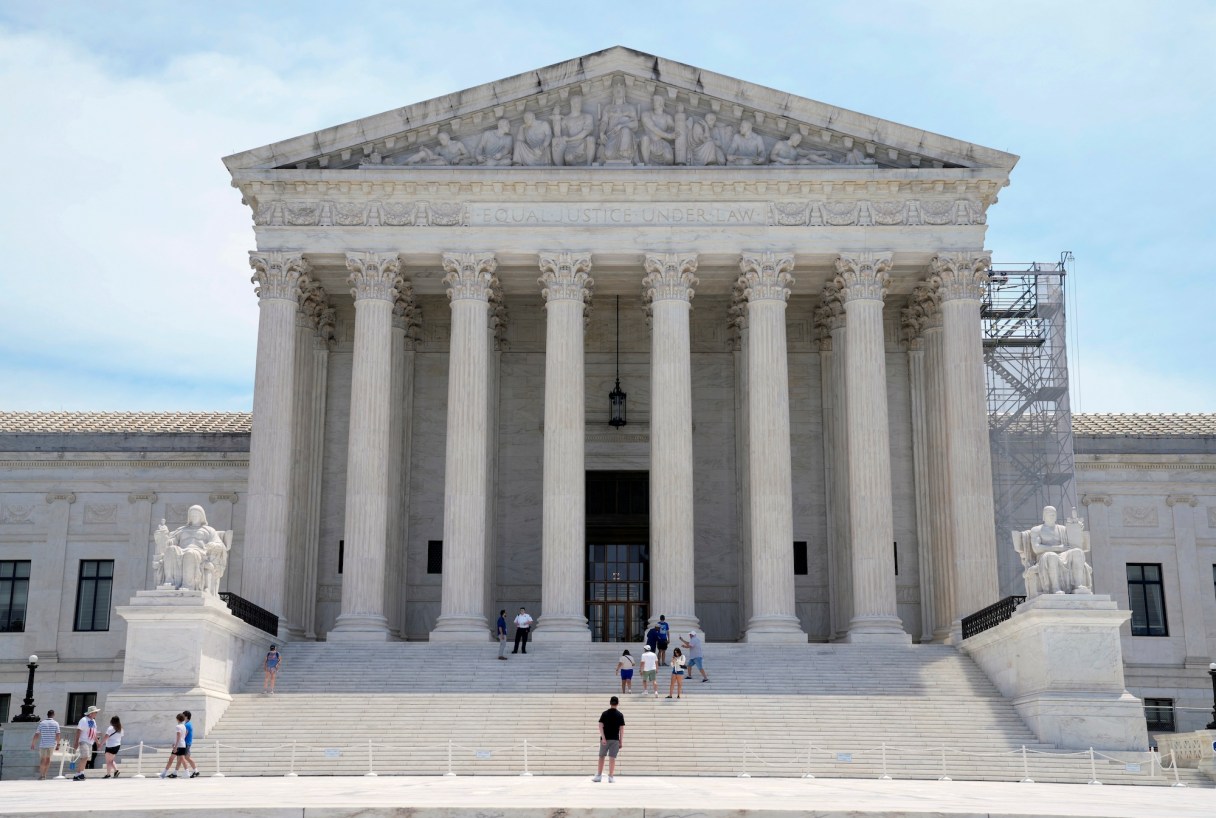
Earlier this summer, the U.S. Supreme Court whittled away at federal corruption statutes, making it easier to “tip” your local politician. In a 6-3 decision, the conservatives on the High Court ruled that a gratuity — a payment for good service after the fact — is not necessarily a bribe.
In essence, you need an arrangement beforehand — an articulable, provable-in-court pre-agreement — for a gratuity to become a bribe.
You need a quid pro quo, which is Latin for “slide that envelope across the table when no one is looking.”
In late June, the Supreme Court tossed the bribery conviction of Portage, Indiana, Mayor James Snyder. In 2013, his city bought five garbage trucks from a firm for $1.1 million. In 2014, that company paid him $13,000.
Later, when the feds started sniffing around, he called them “consulting fees.” Prosecutors said the mayor manipulated the bidding process to make sure the trucking company won the business.
But, alas, it was just a gratuity. Kind of like giving your waiter a little extra after the meal because your spaghetti came out piping hot.
With this in mind, it seems that unscrupulous pols and their benefactors need to be much more discreet on the front end of their negotiations. Perhaps, a “Something good might happen down the road. Remember, I’m an excellent tipper.”
In the decision, Justice Brett Kavanaugh wrote that the federal bribery law is fuzzy and could be used against hard-working, low-level public servants. He said there are 19 million state and local officials.
“Is a $100 Dunkin’ Donuts gift card for a trash collector wrongful?” he wrote. “What about a $200 Nike gift card for a county commissioner who voted to fund new school athletic facilities? Could students take their college professor out to Chipotle for an end-of-term celebration?”
He could have added, “What about a Supreme Court justice who accepts lavish vacations from a billionaire GOP donor?”
But I have no prosecutorial experience to answer those questions other than what I see on “Law and Order.”
I called John Horn, a long-time federal prosecutor who was the U.S. attorney here during the start of the long-running Atlanta corruption investigation that netted 10 convictions.
The Supreme Court’s decision, he said, “will make things monumentally more difficult to prove.”
“The challenge for the prosecution is politicians are not stupid enough to be so specific in their communications,” he said. “You are left with inferences and powerful circumstantial evidence” to prove cases.
“Prosecutors will have to try and laser in on concrete expressions of agreement. But no one does those conversations anymore. It’s more a wink and an understanding.”
Lawyer Don Samuel said paying pols after the dirty deed is still illegal if prosecutors can prove there was an agreement before the illegal action was taken.
He said the uncertainty in the federal law as to the difference between bribes and gratuities has made the Supreme Court push such cases back to the states for possible prosecution. In essence, he said the Supremes are saying: “If the states want to regulate this behavior, let them.”
(I must say state and local prosecutors have lagged greatly in this regard.)
Samuel asked why do people give politicians large donations? “Because they vote your way,” he said, answering his own question, adding, “Under your theory that would be illegal.”
Umm, let’s not go there.