
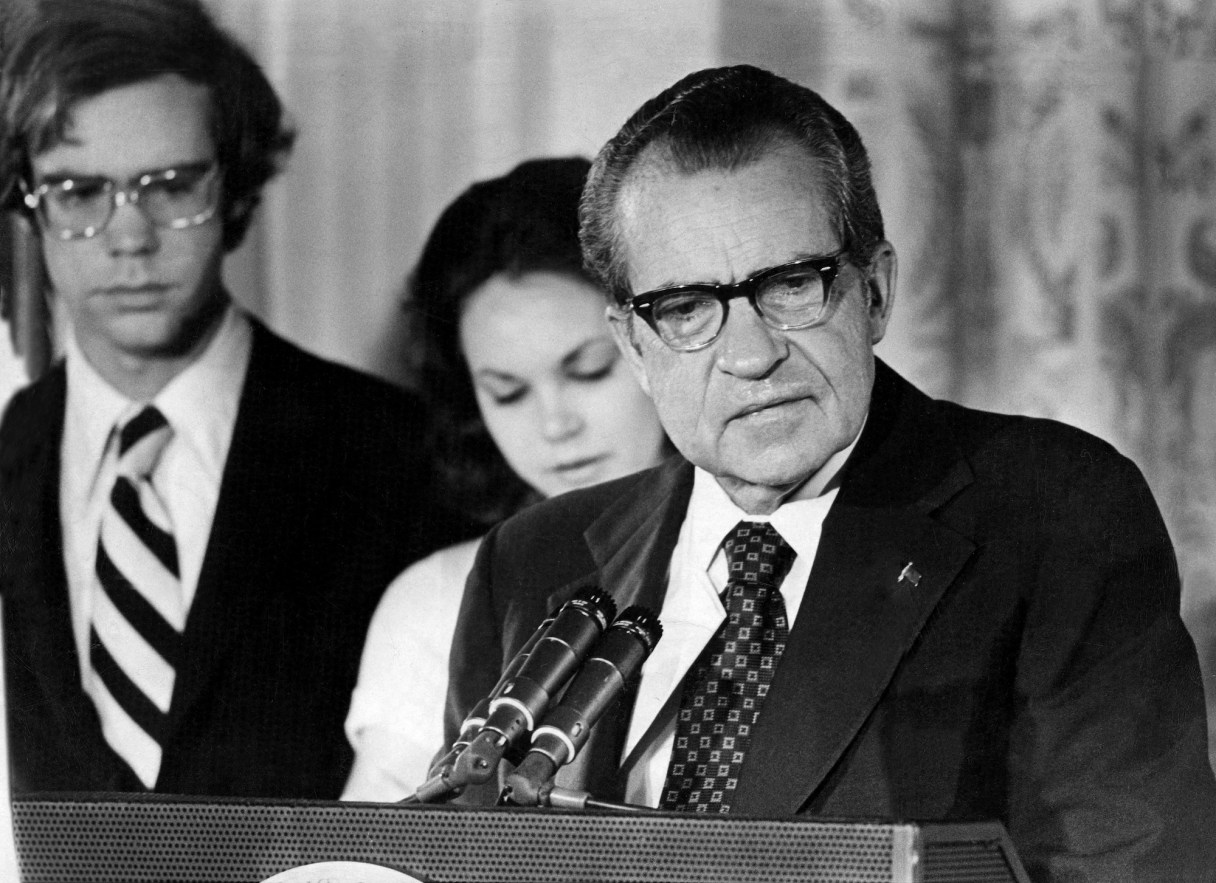

He made the announcement at 9 p.m. on Aug. 8, 1974, 50 years ago this week. He signed the single-page document with a felt-tip pen the next morning after an unusually hearty breakfast of corned beef hash and poached eggs. It became official at noon on Aug. 9, 1974.
Richard Nixon’s resignation as president — still the only one in United States history — has had repercussions in the country and in the presidency in the five decades since.
Perhaps the worst — and one that persists today — is that it gave the national media carte blanche to pursue the personal destruction of presidents because they had a hand in bringing one down.
No, they weren’t at fault. That was proven definitively when a transcript of a June 23, 1972, White House tape released three days before Nixon’s resignation revealed that he had lied when he said he had no involvement in the cover-up of the burglary of the Democratic National Committee office in Washington’s Watergate complex on June 17, 1972.