
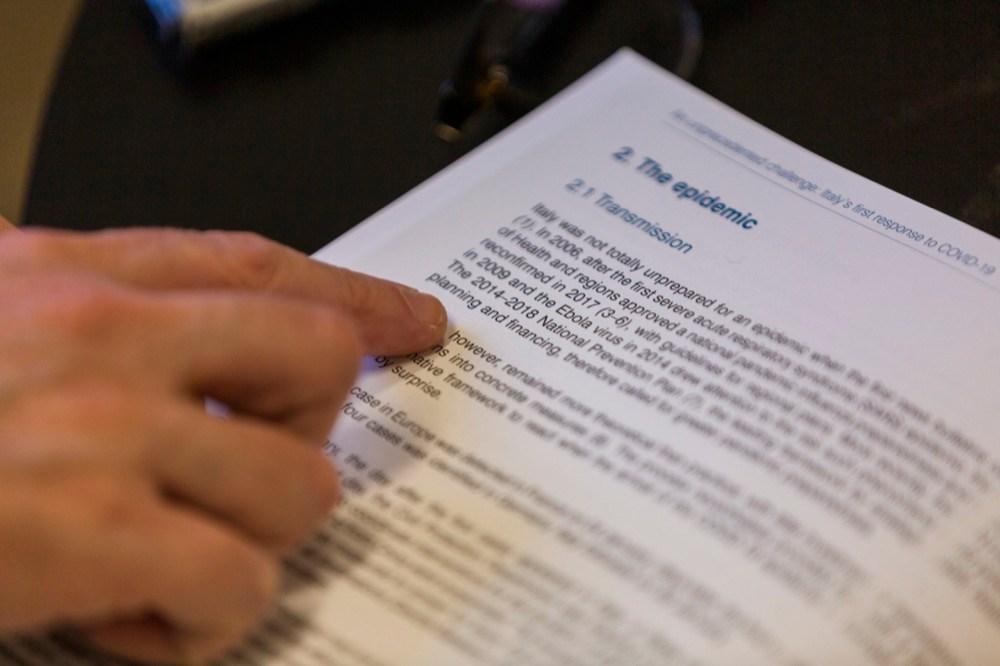
ROME (AP) – An author of a withdrawn World Health Organization report into Italy’s coronavirus response warned his bosses in May that people could die and the U.N. agency could suffer “catastrophic” reputational damage if it allowed political concerns to suppress the document, according to emails seen by The Associated Press.
The comprehensive report examined how the Italian government and health system reacted after the country became the epicenter of the European outbreak in late February. , with real-time data and case studies of what worked and what didn’t. It was aimed at helping other countries prepare as the virus spread globally, but it hit a sensitive nerve among Italian officials because it noted that Italy went into the crisis with an out-of-date pandemic plan.
The agency took it down a day after it was posted on its website, prompting the official who coordinated the work to appeal directly to WHO chief Tedros Adhanom Ghebreyesus on May 28 and warn that the report’s disappearance was undermining WHO’s credibility. He cautioned that any further attempts at censorship would compromise the agency’s independence and its relations with donor nations that funded the research.
The handling of the report could cause a “scandal of huge proportion – in a delicate moment for the U.N. health agency with the forthcoming COVID-19 investigation,” wrote Francesco Zambon, WHO’s chief field coordinator for Italy and its regions during the pandemic.
In a statement Saturday, WHO said Zambon “expressed his views to many people and they were handled via appropriate channels.”