
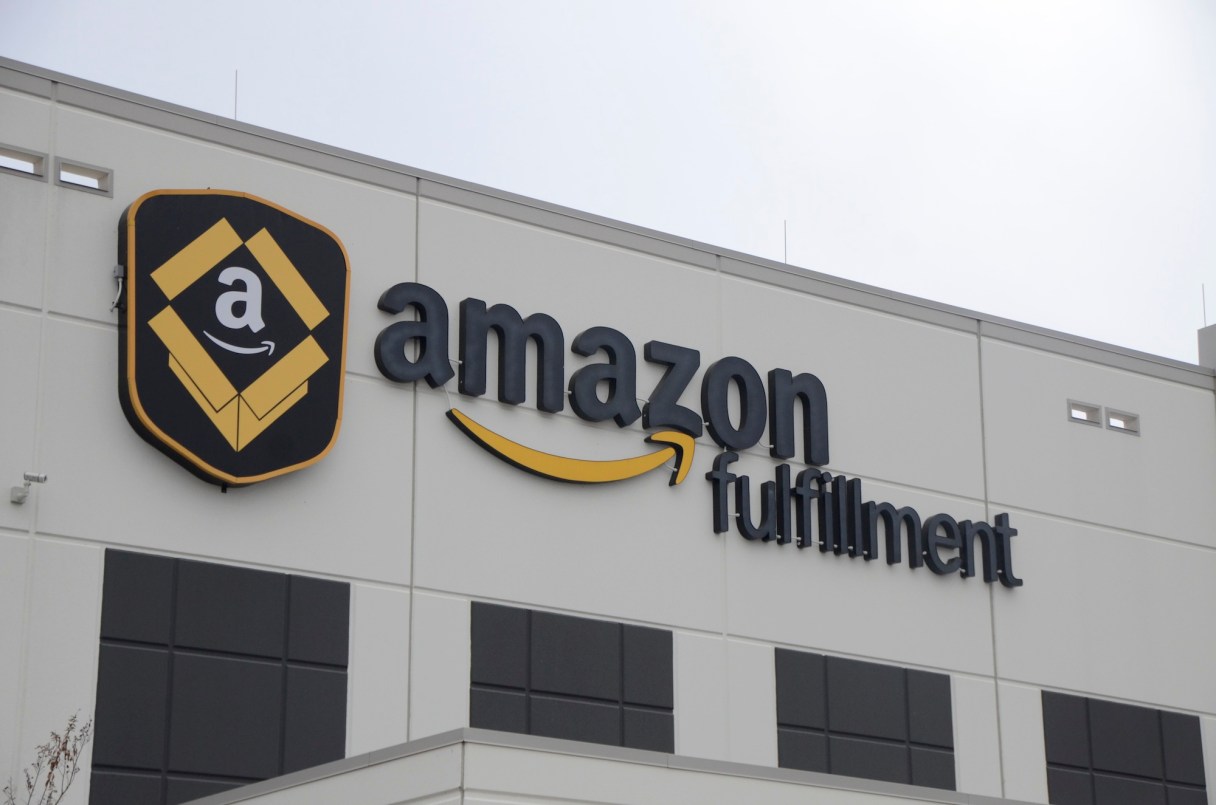
Amazon’s profit tops $2 billion in quarter
Amazon’s quarterly profit soared past $2 billion for the first time as its online shopping, cloud computing and advertising businesses kept growing.
The company, which has expanded far beyond its online bookseller beginnings, is also moving into health care and building up its physical presence as it cements customer loyalty through its smart devices and Prime membership of shipping and streaming perks.
Revenue soared 39 percent in the second quarter, but missed analysts’ expectations.
The financial results still pleased investors, who sent its shares up more than 3 percent to $1,866.55 in after-hours trading. Its stock is already up nearly 72 percent in the last year, and Amazon is getting closer to surpassing iPhone maker Apple as the world’s most valuable company.
Amazon did suffer a rare setback last week, when its Prime Day sales event began with technical issues. Some shoppers saw pictures of dogs with an apologetic message instead of the products they wanted to buy, and took to social media to complain.
Chief Financial Officer Brian Olsavsky said Thursday that the glitch was caused by “larger than expected traffic” to the site. Despite the early issues, Amazon said this year’s Prime Day was its biggest shopping event in its history and more new Prime members signed up on July 16 than on any other day.
Revenue for the quarter came to $52.89 billion, below the $53.37 billion analysts expected. The company’s physical stores brought in $4.3 billion, most of which came from its Whole Foods grocery chain. Amazon, which bought Whole Foods last year, recently rolled out extra discounts for its Prime members at its U.S. stores.
Airlines adjust to higher fuel costs
Airlines are bowing to the pressure of higher fuel prices by culling unprofitable flights while trying to boost revenue by being nicer to customers.
American Airlines said Thursday it will join rivals by growing more slowly during the rest of 2018 than it had originally planned.
Airline investors have soured this year as the carriers kept adding more flights and seats, pushing fares lower even when demand for travel seemed strong enough to produce higher prices. American’s announcement and upbeat comments from Southwest Airlines cheered investors and triggered a rally in airline stocks.
Earlier this month Delta Air Lines and United Airlines both announced slight reductions in planned growth to cope with fuel bills expected to be $2 billion higher than last year.
Spot prices for jet fuel are up nearly 50 percent from a year ago, and a fresh round of financial reports Thursday underscored how that is cutting into airline profits.
McDonald’s sales up with fewer visits
Higher prices are helping McDonald’s ring up more sales in the U.S., even though people are visiting less often.
McDonald’s said Thursday that customers spent more on average per visit during the second quarter, partly because people also added more extras onto their orders. Still, executives said they need to get customers visits growing.
“We’re not yet where we need to be,” CEO Steve Easterbrook said during a call with analysts.
The decrease in visits to existing McDonald’s in its flagship market came even though there were fewer stores than year ago. McDonald’s has been shrinking its U.S. store base in recent years, and now has less than 14,000 domestic locations.
The results come as McDonald’s fights to win back U.S. customers by modernizing operations, with changes like ordering kiosks and delivery. It’s also making tweaks to its menu, such as by using fresh instead of frozen beef patties with select burgers.
To keep pace in a highly competitive fast-food market, McDonald’s said it will roll out new offers to attract deal seekers.
For the quarter, McDonald’s said sales rose 2.6 percent at domestic stores open at least 13 months. The metric is considered a key indicator because it strips out the effect of newly opened and closed locations.
Tthe chain now has more than 37,400 locations.
Starbucks sales up 1% in stores
Starbucks says a key sales figure rose only modestly in the U.S. during the latest quarter, as it struggles to find drinks other than the Frappuccino to attract customers.
The coffee chain says sales grew 1 percent at established U.S. locations. That reflected people spending more per visit, which offset a decline in the number of transactions. Starbucks has blamed health concerns for slipping Frappuccino sales, though analysts have cited increased competition for the decline. The company has said it’s working on attracting customers in the afternoon with teas and other drinks that don’t have as much sugar.
In China, Starbucks said the key sales figure declined 2 percent in the quarter. Starbucks cited competition in the country.
The company said it expects its full-year sales growth to be “just below” its previous target of 3 to 5 percent.
For the quarter, the company reported a net income on Thursday of $852.5 million. On a per-share basis, the Seattle-based company said it had profit of 61 cents. Earnings, adjusted for non-recurring costs, came to 62 cents per share.