
Thursday, November 12, 2026Nov 12

Russia launches European atmosphere monitoring satellite

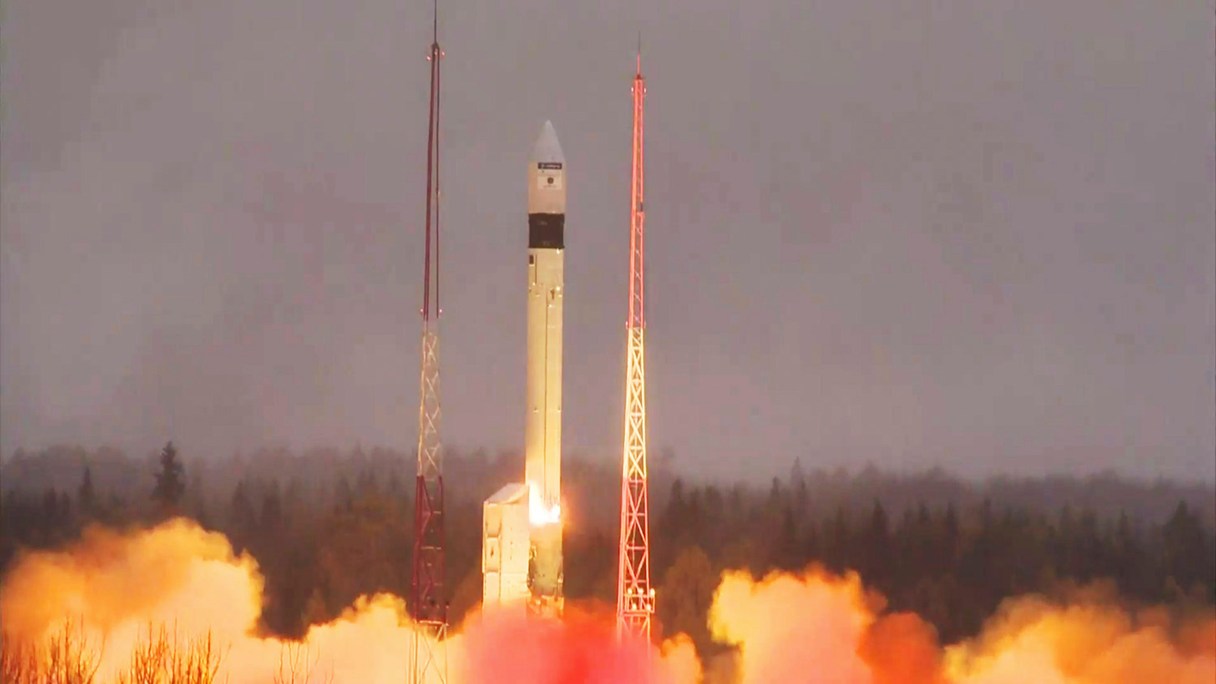
In this photo provided bi the European Space Agency ESA, the atmosphere-monitoring satellite for Europe’s Copernicus programme, Sentinel-5P, lifted off from the Plesetsk Cosmodrome in northern Russia Friday, Oct. 13, 2017.  A Russian booster rocket on Friday successfully put a European atmosphere monitoring satellite into orbit. The European Space Agency’s Sentinel-5P satellite was launched Friday by a Rokot missile from the Plesetsk launch pad in northwestern Russia. The satellite will map the global atmosphere every day, helping study air pollution. (ESA via AP)
In this photo provided bi the European Space Agency ESA, the atmosphere-monitoring satellite for Europe’s Copernicus programme, Sentinel-5P, lifted off from the Plesetsk Cosmodrome in northern Russia Friday, Oct. 13, 2017. A Russian booster rocket on Friday successfully put a European atmosphere monitoring satellite into orbit. The European Space Agency’s Sentinel-5P satellite was launched Friday by a Rokot missile from the Plesetsk launch pad in northwestern Russia. The satellite will map the global atmosphere every day, helping study air pollution. (ESA via AP) In this photo provided bi the European Space Agency ESA, the atmosphere-monitoring satellite for Europe’s Copernicus programme, Sentinel-5P, lifted off from the Plesetsk Cosmodrome in northern Russia Friday, Oct. 13, 2017. A Russian booster rocket on Friday successfully put a European atmosphere monitoring satellite into orbit. The European Space Agency’s Sentinel-5P satellite was launched Friday by a Rokot missile from the Plesetsk launch pad in northwestern Russia. The satellite will map the global atmosphere every day, helping study air pollution. (ESA via AP)

MOSCOW (AP) – Russia successfully launched a satellite into orbit Friday that will monitor Europe’s atmosphere, helping to study air pollution.

The European Space Agency’s Sentinel-5P satellite was launched by a Rokot missile from the Plesetsk launch pad in northwestern Russia. The satellite will map the atmosphere every day.

After separating from the upper stage booster, the satellite deployed its solar panels and began communications with Earth, the ESA said. The first signal was received 93 minutes after launch as the satellite passed over the Kiruna station in Sweden.

Controllers at ESA’s operations center in Darmstadt, Germany, then established command and control links allowing them to monitor the satellite’s condition.

“The Sentinel-5P satellite is now safely in orbit so it is up to our mission control teams to steer this mission into its operational life and maintain it for the next seven years or more,” ESA Director General Jan Woerner said in a statement.