
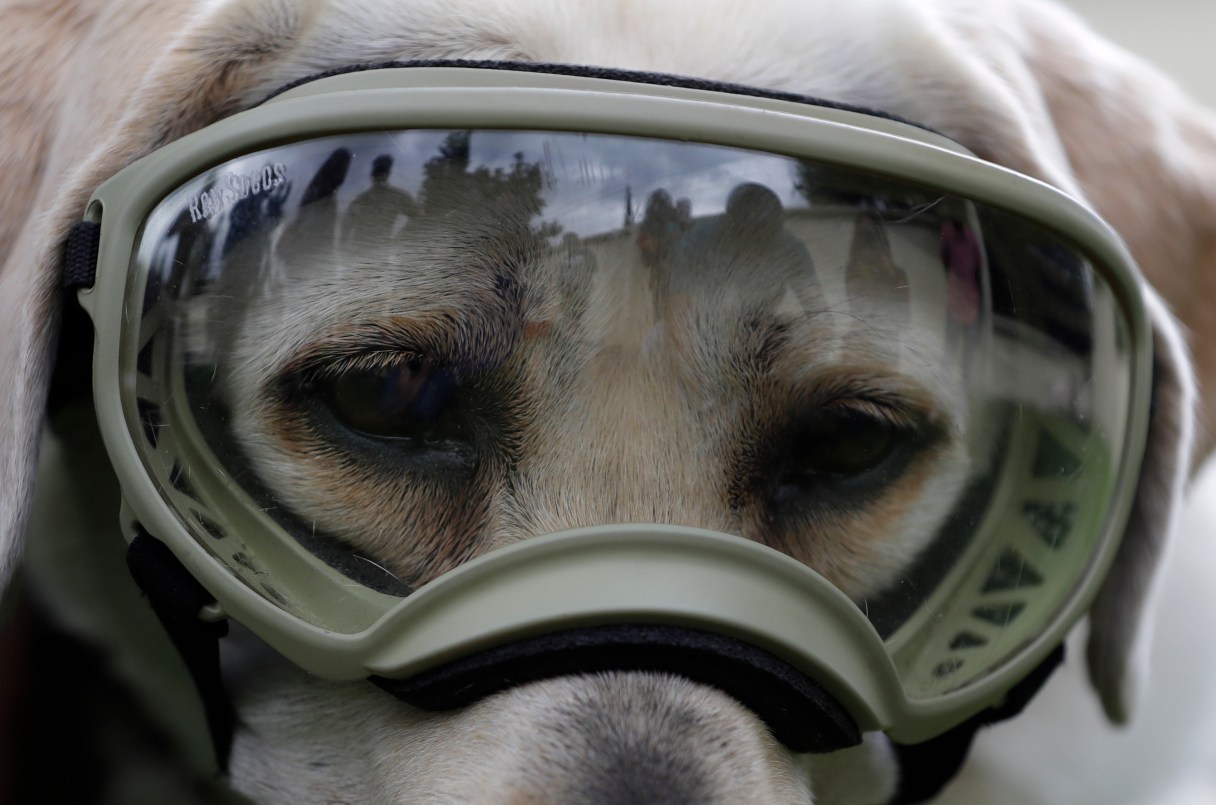
MEXICO CITY (AP) – Even without rescuing anyone from the rubble after Mexico’s big earthquake, a photogenic yellow Labrador retriever named Frida has gained an international social media following.
At least 344 people died in the Sept. 19 earthquake, including 205 in Mexico City. For days, rescuers who tunneled into huge mounds of debris and selfless volunteers who threw themselves into work around the city were lauded for their efforts. But no individual captured the hearts of Mexicans and those watching the efforts from afar like Frida.
Clad in goggles and neoprene booties, Frida with nose to the ground and clambering over crumbled buildings became a symbol of hope.
“In social terms, this dog functioned like a transitional object because maybe she didn’t help us in anything real or concrete – meaning she didn’t rescue anyone – but she let us feel like there was hope and that there were things that could help us,” said Fatima Laborda, a psychoanalyst and director of Casa Grana, a psychological assistance and research organization.
Laborda said Thursday that in traumatic situations, whether war or natural disaster, people tend to seek refuge in something real or symbolic as they try to regain confidence and a feeling of safety. A rescuer literally removing rocks to free you is one way to feel helped, but someone can also “feel supported by merely seeing people in the street, because that way I feel the solidarity of everyone else and that is symbolic and also can give me psychological relief.”