
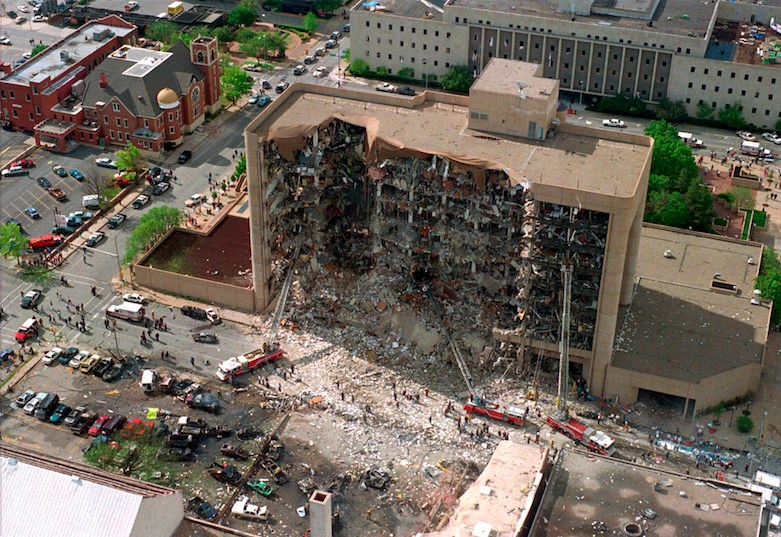
For a generation, mid-April has delivered some of American life’s most cataclysmic moments – a week when young men have shot up schools, terrorists have blown up fellow humans, members of a religious sect have burned to death in their compound and environmental calamity has sullied the ocean.
Now, as those traumatic, unwelcome anniversaries of the past 27 years roll by in the space of a single spring week, overlay one of the most disruptive moments in all of American history, even as it is still unfolding: the coronavirus, and the efforts to contain it.
What is it about this one particular week in April, anyway? And what does it mean – for survivors, and for all Americans – to move through this barrage of violent memories knowing that life as we know it, at least for now, has gone away?
“In April, things tend to happen. I don’t think it’s an accident that a lot of events take place in April. That’s the month that people have been waiting for,” says John Baick, a historian at Western New England University in Massachusetts.
He has been noticing the propensity for upheaval in April since he was in college. “There is,” Baick says, “something about the spring that goes against rationality.”