
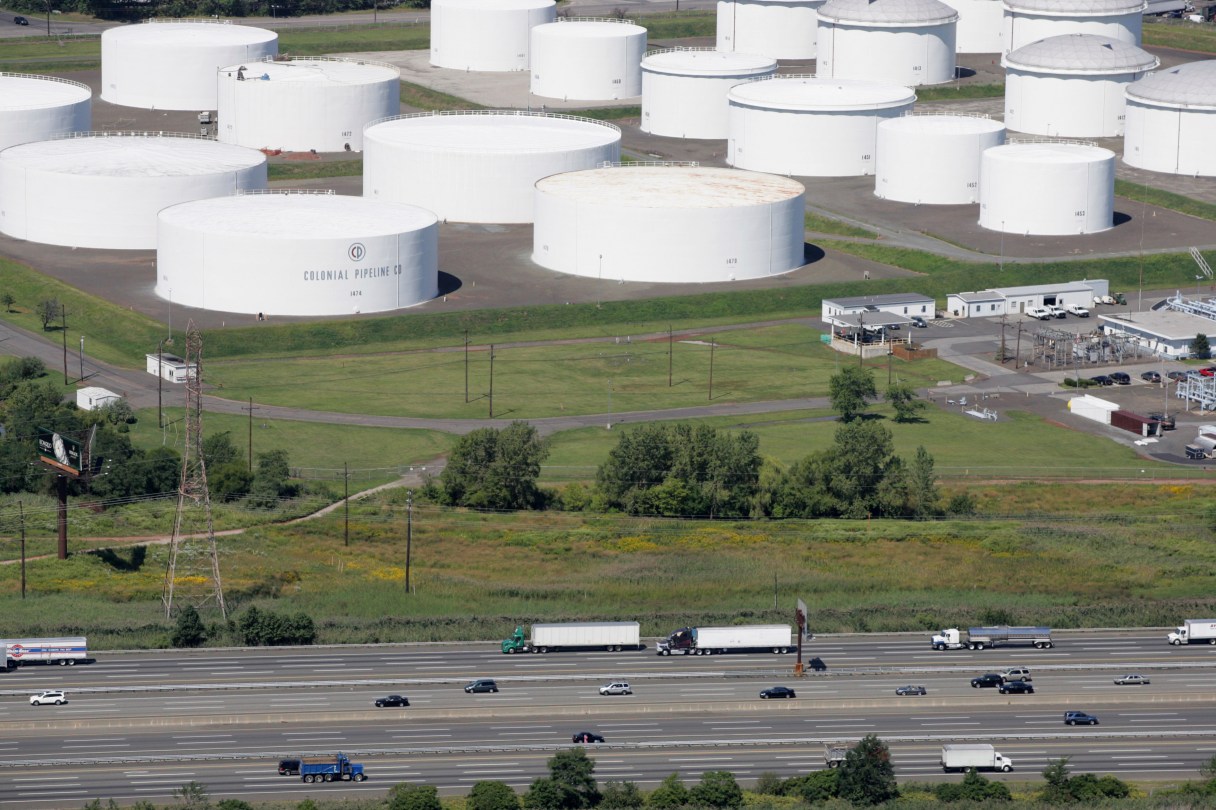
The attack on the Colonial Pipeline is a wake-up call for companies and agencies to tighten cybersecurity protocols. But for many Americans, the episode provided a glimpse into the critical role played by our extensive and largely unseen energy transportation infrastructure. And while oil and gas pipelines sometimes get a bad rap, life as we know it would be impossible without this sprawling underground highway system.
At the dawn of the oil industry, transportation of the stuff that gushed from the Pennsylvania hillsides was the persistent bottleneck in the system. Oil moved by horse and wagon in leaky whiskey barrels to be loaded on railcars, spilling 2 gallons of every 42-gallon barrel. In 1862, a 1,000-foot wooden sluice was first constructed in Oil Creek, PA. By 1865, a welded iron pipeline built by Samuel Van Syckle utilized pumps to transport 2,000 barrels per day to the railhead of the Oil Creek Railroad, and an industry was born.
Today in the United States, there are 2.6 million miles of oil and gas pipelines, with the majority dedicated to movement of natural gas. But there are 225,000 miles of liquid pipelines that transport crude oil and refined products like gasoline, diesel fuel and heating oil. 70% of oil and refined products transit through pipelines with a 99.9995% safety record.
The Colonial Pipeline that suffered the recent attack carries refined products including gasoline, diesel, jet fuel, military fuels, kerosene and heating oil. This critical conduit was created in 1961 by a consortium of 9 major oil companies to carry fuels from refineries in the Texas Gulf Coast to the hub in New York Harbor. The pipeline’s outage was painful because it supplies 45% of the gasoline to the east coast.
Few of us consider the complexities of moving so many different products through the same pipe, but the process is remarkable. Pipeline operators “batch” the orders by product type to maximize efficiency. Colonial may schedule a shipment of 93 octane, 87 octane, low-sulphur diesel, and heating oil. Typically, each product is injected into the pipeline with the creation of a ticket that specifies the customer, quantity, type of products and destination, and is measured at insertion and at the delivery point. Note there might be several customers shipping 93 octane, so the gas delivered is not the specific batch each customer produced but meets standardized specifications.