
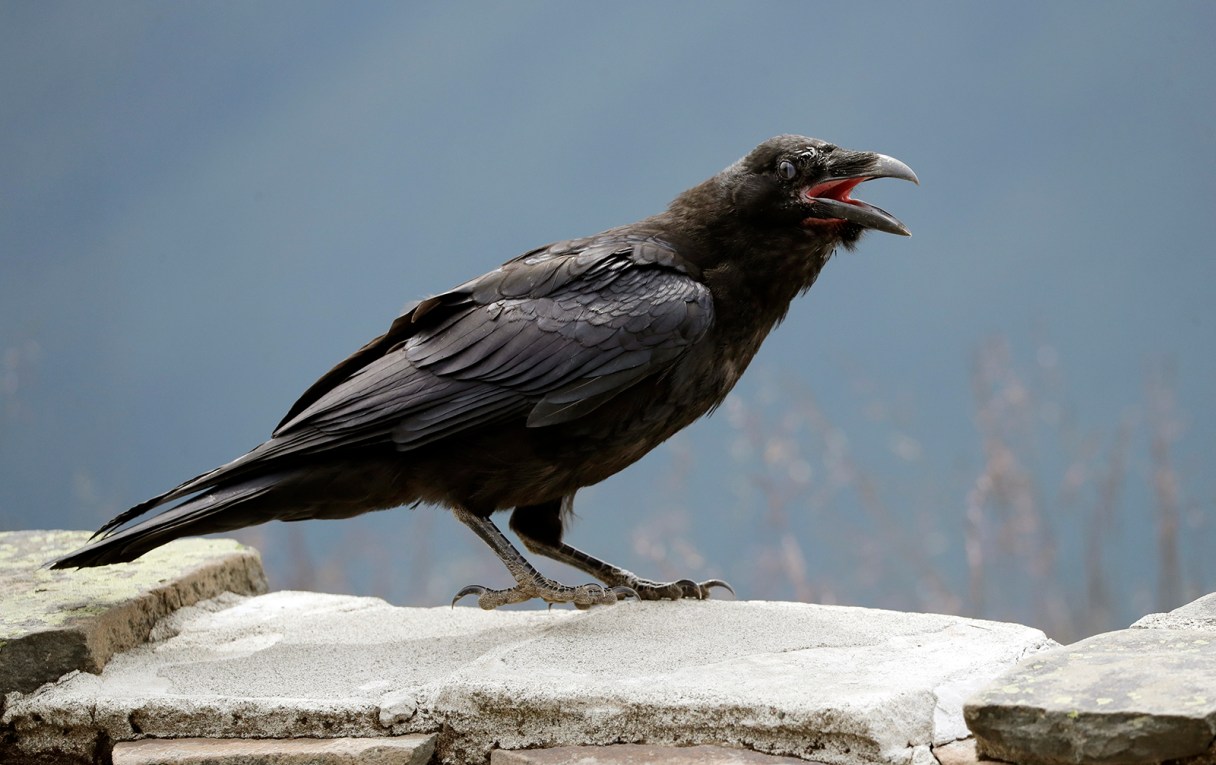
“Quoth the Raven, ‘Nevermore.'” — from “The Raven” by Edgar Allan Poe
I saw a big bunch of ravens this morning. I know, not a very scientific description, but it was a lot of ravens.
They were all over the highway, flying, running and hopping. From a distance, I could see a large gathering of big, black birds, and I suspected it was a large group of vultures gathered on a roadkill deer. Well, the deer was there, but when I got closer, I was amazed: It wasn’t buzzards, it was ravens.
Now we see and hear ravens almost every day in this country, but I have never seen a group like this. I slowed the truck to make sure they all got out of the road, and I guessed there could been as many as 50 of the big, black, beautiful birds.
OK, this is as good a place as any to say I like ravens, but I am not sure as to exactly why. Many people, of course, will mistake a raven for the common crow, but once you get to observing the raven, you will see there is a big difference. (By the way, ravens are protected by state and federal law in the United States.)
(READ MORE: Crows are smart varmints who make good target practice)
The raven is significantly larger than a crow with a bulky body and a thicker beak, and if you look a little closer, you may see a distinctive bulge under its lower beak with feathers sticking out, often called a goiter. I am told this may indicate a thyroid problem, and I do not want to argue with those who know a lot more about ravens than me, but I seem to see the bulge under the beak on most ravens.
Ravens are very widespread across North America and have been associated with following and living around humans for hundreds of years. Ravens are widely featured in many cultures and stories from back in the Greco and Roman days, American Indian lore, the Bible, Norse mythology and other places and sources.
Ravens are very intelligent, and they soon learned that staying close to the humans paid dividends in various foodstuffs that people discarded, or maybe did not guard closely enough, along with opportunities to prey on livestock. Part of the ravens’ secret for being so successful in survival is that they are completely omnivores in their eating habits. Ravens will eat carrion (dead stuff), fruits, grains, small mammals, birds, eggs, insects and human food scraps and garbage. In other words, just about anything.
In the less attractive category, ravens can be notorious for preying on newborn lambs. As we have discussed here many times, nature is sometimes not very pretty.
(READ MORE: From big to small, predators in abundance can be a problem)
Ravens have a large vocabulary and are known to make vocalizations ranging from croaks, caws, a gurgling sound, clicks and a strange knocking-on-wood sound to a high-pitched alarm call. That croak (sometimes called a “gronk”) may be one of the raven sounds I hear the most. I have sat on a ridgetop many times and watched (in wonder) as a raven soared overhead while going through some of his repertoire (as if talking to himself).
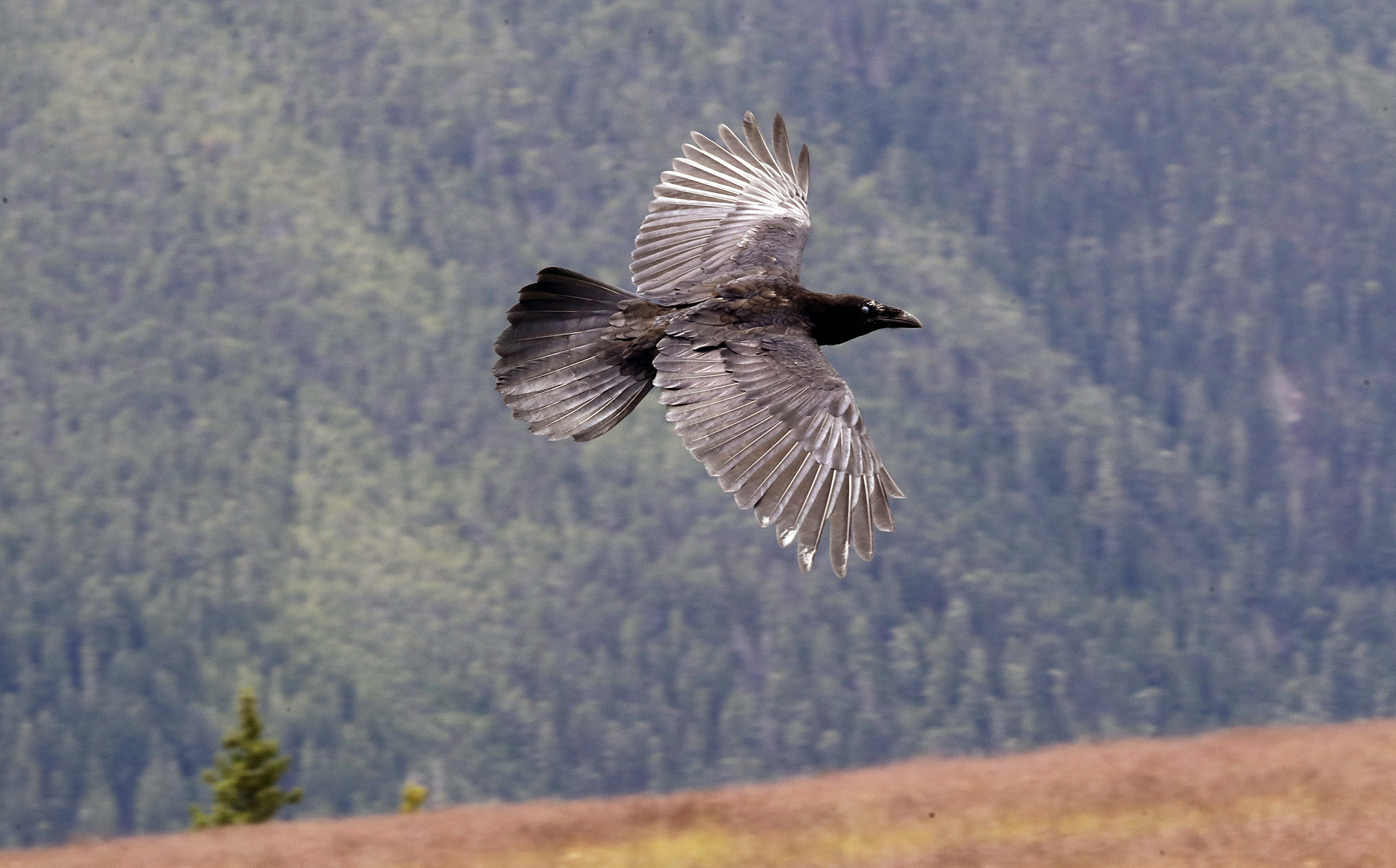
Ravens are also no slouch in the flight department. They are often seen doing various loops and barrel rolls in flight. One researcher reported having seen a raven fly upside down for half a mile. I seem to have observed these flying antics more so when a pair is together in flight. Whether they do this to show off to each other or just for fun is known only to the ravens, and they ain’t talking. (Well, they’re talking, but we haven’t found an interpreter yet.)
Like I said, ravens are highly intelligent and are known to follow large predators like wolves and bears in hopes of getting in on the bounty after they make a kill. They will also often respond to the sound of a rifle shot in big game country, knowing there will be something to eat if the hunter was successful. The raven’s intelligence is known to go beyond these measures as scientists report they will make use of simple tools such as sticks to probe for insects and larvae and use rocks for cracking hard-shelled prey.
There is one report of an urban-based raven ordering a Big Mac and fries at a McDonald’s drive-through window. (OK, I made that one up.)
Ravens are highly territorial and will aggressively try to drive others out of their territory. Young ravens will reportedly call in other ravens to a found food source, such as a dead deer or elk, in order to cause a ruckus over territory boundaries with hopes of shaking up the status quo and moving into the neighborhood. (A group of ravens is called an “unkindness” or a “conspiracy.”)
OK, so I like ravens. Maybe that is strange, but to those of you who follow these pages, I’m sure that is no surprise.
Now on that thing with Mr. Poe — and you thought I was strange! — I’m not sure what he was under the influence of when he penned that poem, but he was very successful in that endeavor.
Take some time and watch the next time you see a raven flying overhead. You may even get to hear a gronk.
“Guns & Cornbread” is written by Larry Case, who lives in Fayette County, W.Va. You can write to him at larryocase3@gmail.com.