
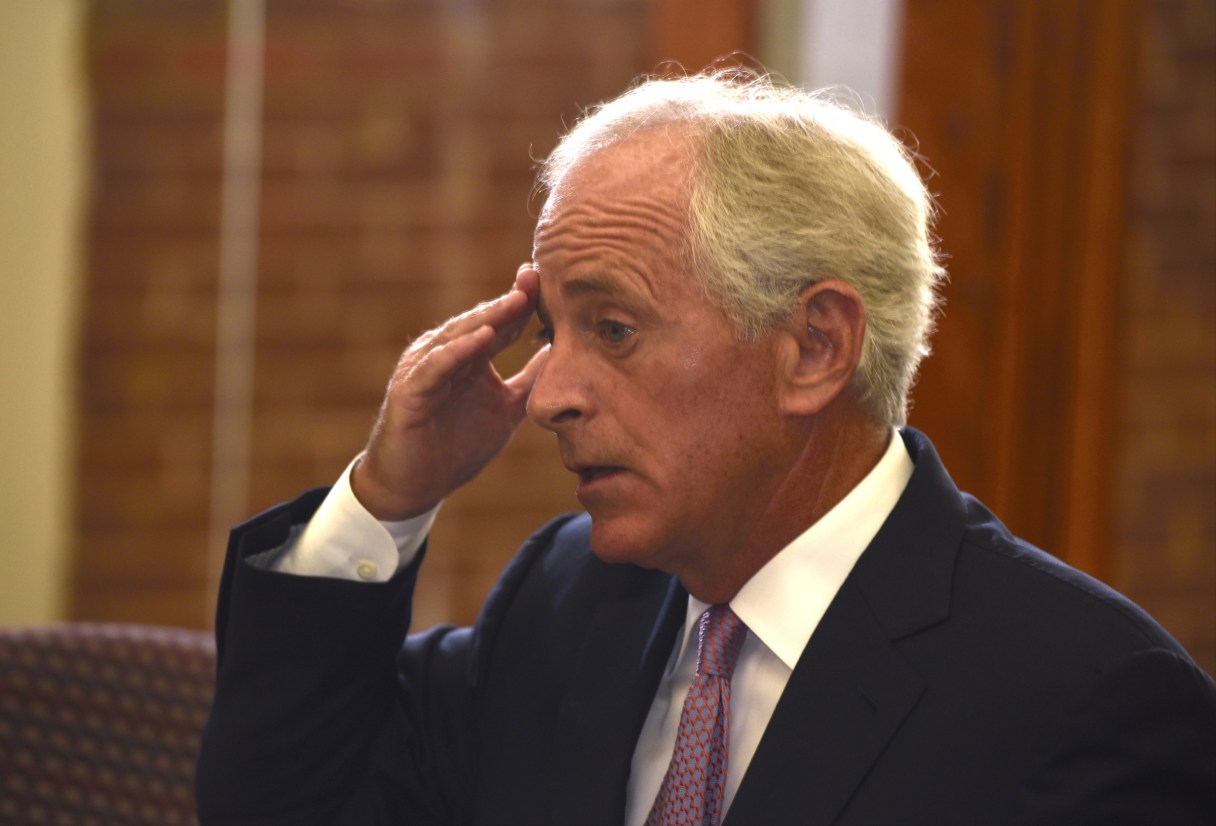
If U.S. Sen. Bob Corker had things to do over again, he wouldn’t change the way he handled the last few months as the United States and other nations negotiatied a deal with Iran over its nuclear program.
It’s a pity the Obama administration didn’t show him the same respect he gave throughout the process.
The Senate Foreign Relations Committee chairman told Times Free Press editors and writers last week he supported diplomatic efforts toward a deal, wanted to give the countries involved leeway in their negotiations and didn’t support another round of sanctions on the world’s leading sponsor of terror during the talks.
And, to give the American people skin in the game, Corker negotiated a bipartisan bill, approved by both the Senate and the House and signed by President Obama, giving Congress an opportunity to express its approval or disapproval of the deal.
However, in negotiating the agreement, U.S. officials crossed line after line they said they would not cross. The deal fails to deliver on any of the goals the White House laid out 18 months ago. Secretary of State John Kerry and his negotiators gave away the store to keep Iran at the table. In the end, the U.S. gets nothing.
Under the deal, Iran now gets to keep its nuclear program, has economic sanctions lifted, must give its permission for inspections, can use its own inspectors and – like a bonus – will see restrictions lifted – in time – on the embargo of buying intercontinental ballistic missile technology and conventional weapons.
And it was all predicated on a nuclear program Iran has “no practical need for other than developing nuclear weapons,” Corker said.
“Our side was way too anxious to get this done,” he said of the Obama administration. “We were so weak in the way we handled it. It speaks to our lack of desire to hold Iran’s feet to the fire.”
Next month, Congress is likely to express its disapproval of the deal, which the president will then veto. But even Republicans are now saying getting two-thirds of Congress to override the veto will be difficult.
Senate Majority Leader Mitch McConnell said Obama had “a great likelihood of success” on sustaining a potential override. Corker himself said mustering the votes to override a veto would be “a heavy lift.”
The administration saw to that by not waiting on the congressional vote and going straight to the United Nations Security Council, where it knew it would find support in a legally binding, unanimous resolution approving the deal and creating the basis for international economic sanctions against Iran to be lifted.
On the same day the administration went the to U.N., the European Union approved the agreement, which put the wheels in motion for lifting its own sanctions against the rogue nation.
As of now, the U.S. is the only country that stands between Iran and $100 billion-$150 billion tied up in sanctions. For Iran, a windfall this size – equal to, at a minimum, a fourth of its gross domestic product – could be allocated to any number of purposes, including improvements in the industrializion of its nuclear program and funding bloodthirsty terror groups such as Hezbollah or Hamas.
And on the other side of the deal, according to Corker, are nations rubbing their hands together in anticipation of trade with the Middle East nation.
China wants to buy Iranian oil, Russia would like to sell the country arms and European countries have their eyes on lucrative trade opportunities.
So don’t look for any of those nuclear negotiating partners to be any too anxious to reapply sanctions if Iran cheats on the deal or shows any recalcitrance in allowing nuclear inspectors – both of which are highly likely, given the country’s recent history.
In the end, such a disappointing deal came about because the Obama administration looks at this agreement as a signature legacy issue, Corker said, and because “we haven’t had a Middle East policy at all” under Obama.
Meanwhile, China has breached U.S. cyber security and is making mischief in the South China Sea, ISIS is using chemical weapons in Syria and Russian President Vladmir Putin has taken advantage of further destabilization to rattle sabers in Ukraine.
Some legacy.
To date, no Republican senator has signaled a willingness to give approval for the Iran deal, and two Democratic senators are on record opposing it. However, Corker must have two-thirds of the Senate on his side for a chance to override Obama’s expected veto of a congressional vote to oppose it.
“We’ve known from day one,” it wouldn’t be easy, he said.
Still, Congress should reject this deal.