
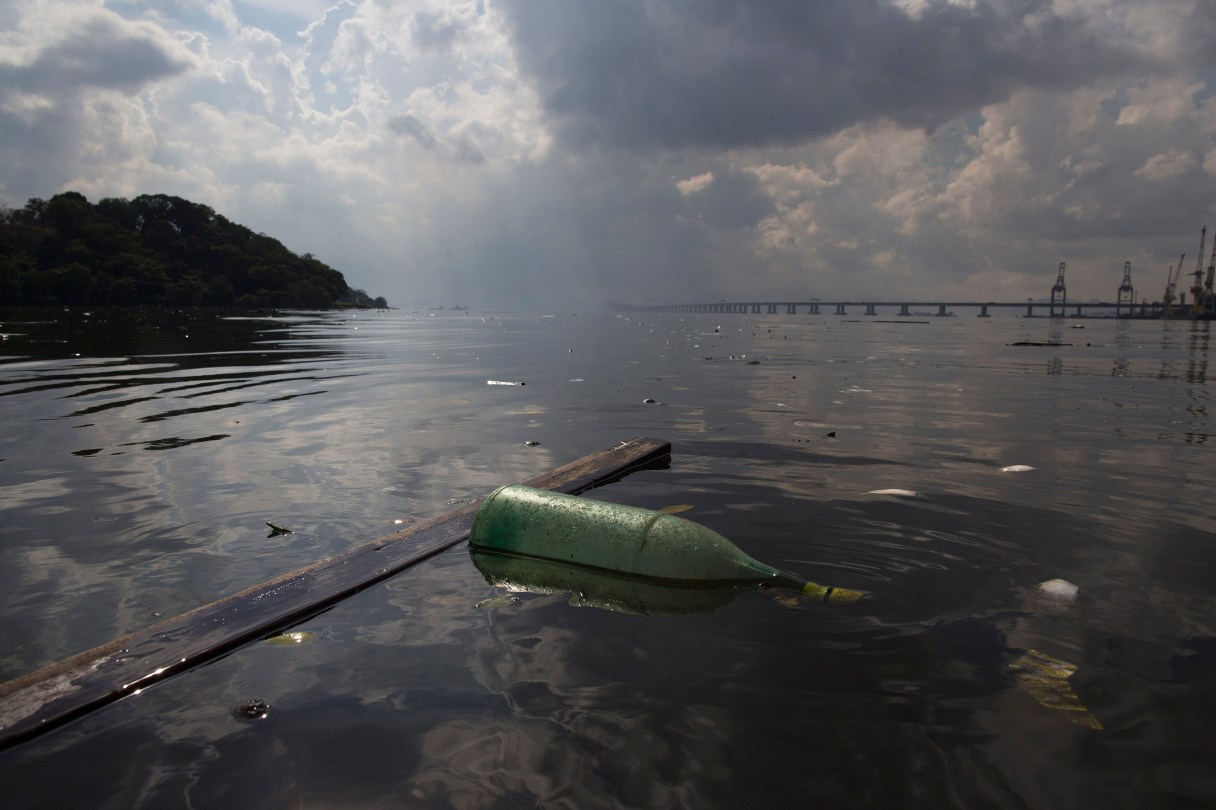
RIO DE JANEIRO (AP) – The day is still dark when Edmo Rodrigues da Costa sets out in his 20-foot fishing boat, carefully maneuvering around clumps of trash and mounds of putrid sludge in the sewage-infested waters of Rio de Janeiro’s Guanabara Bay.
For 30 years, Costa has trolled the bay that will host Olympic sailing events in 2016, setting his nets by the pink dawn light, hoping to catch sea bass, Atlantic bigeyes and shrimp.
But slowly, year after year, the catches have diminished.
A good day out two decades ago would bring in $200 worth of fish. Today, Costa says a successful haul fetches $50. Sometimes, the floating refuse he finds is worth more than his catch, like the recent day he found two large planks of hardwood and yanked them aboard.
He and 30 or so other fishermen work out of the garbage-strewn docks sitting right under the Red Line highway leading to the international airport, where the polluted waters of the Fundao and Cunha canals meet to flow into Guanabara. The men blame industrial and sewage pollution for their empty nets.