
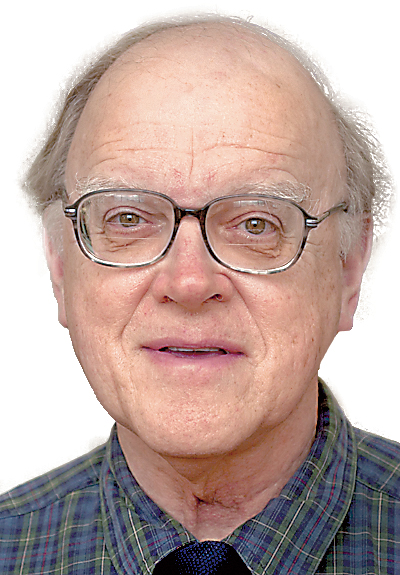
 Clif Cleaveland
I began to people-watch aboard the trolleys of Atlanta in the 1940s. Visits to the city from my hometown of LaGrange were highlighted by rides on the bright-yellow cars.
Each ride was an adventure. A wandering auto might prompt a jolting stop. Sometimes the motorman had to disembark to reposition steel poles that had detached from the overhead electric wires.
In those tightly segregated times, the areas for African-American riders were clearly demarcated in the rear of each vehicle. White passengers always had priority for seating.
As riders entered or exited the trolley, I would study them and imagine stories of where they had been and what they might be carrying in their satchels or shopping bags. The key to my activity was to observe without being detected. Perhaps I considered myself a juvenile Sherlock Holmes in search of perpetrators of some crime.
Subsequent rides during succeeding years aboard trains, buses and ferries offered the same opportunities to watch and imagine. The mixture of passengers became progressively diverse.
A recent visit to New York City allowed me to indulge my observation of strangers during multiple trips aboard the city’s subway trains. On an unseasonably warm evening in December, my wife and I boarded a packed southbound Lexington Avenue express train toward the Brooklyn Bridge. Because of our age, various people offered us their seats. I declined, preferring to stand near one end of the car, the better to watch my 200 or so fellow commuters.
We passengers represented a broad spectrum of the world’s races, religions and ethnicities: head-scarfed Middle Eastern women, a Sikh male, Pacific Islanders, Oriental men and women, African-Americans and Caucasians of various ages and sizes. Some families had obviously been shopping; parents struggled to keep children and packages contained in limited spaces.
We represented a broad economic spectrum. Some men and women wore the prescribed dress of office jobs; others wore the uniforms of their day jobs in security, transportation, food service and the post office. A trio of Latino painters wore their spattered coveralls.
Many of the workers seemed fatigued after another day on the job. An apparently homeless man, wrapped in a blanket, his head resting on his chest, slept in a corner seat where no one took notice of him. Teens and young adults wore an amazing array of thrown-together apparel, with short sleeves often revealing tattoos of wild design. Many passengers scrolled their cellphones. Earbuds isolated some in a personalized world of sound.
A babble of the world’s languages filled the car. I recognized Spanish, French, a Slavic tongue and caught snatches of Oriental and other Asian dialects. A young woman read “To Set a Watchman” while holding onto a vertical support. An older man worked a crossword puzzle. Another read a Bible.
Apart from our immediate companions, we were all strangers and we were at peace with one another. Except for the homeless man, each passenger likely had a destination, lodging, something to eat, a structure of responsibilities and abiding concerns.
We were a car full of immigrants, differing only in the time and circumstance of our arrival in America. I imagined us aboard a spaceship bound for a distant planet which we would settle.
Those within our world and within our nation who speak and act to isolate us from one another would have been appalled by the spectacle of companionable co-existence among such widely different people. A subway ride in New York provides unique insights into what makes America great.
Contact Clif Cleaveland at ccleaveland@timesfreepress.com.