
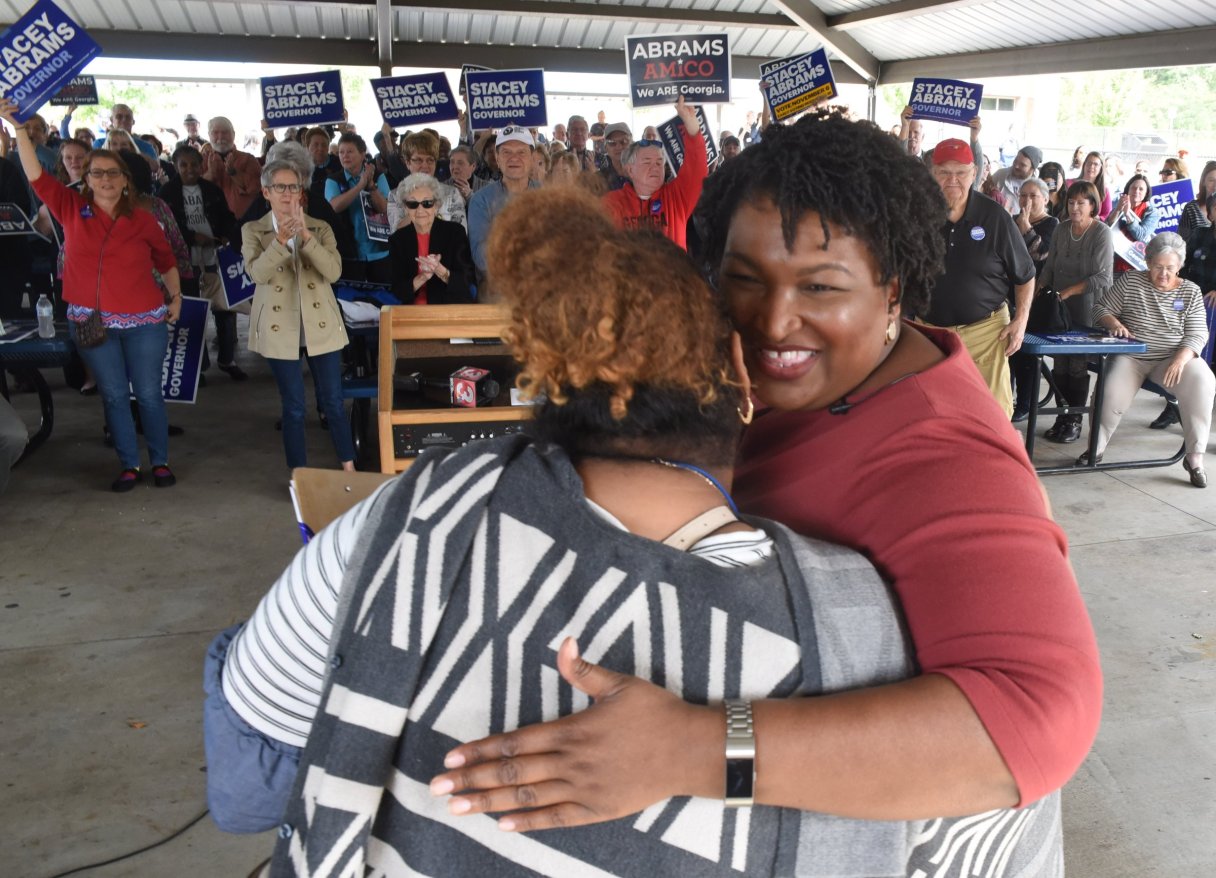
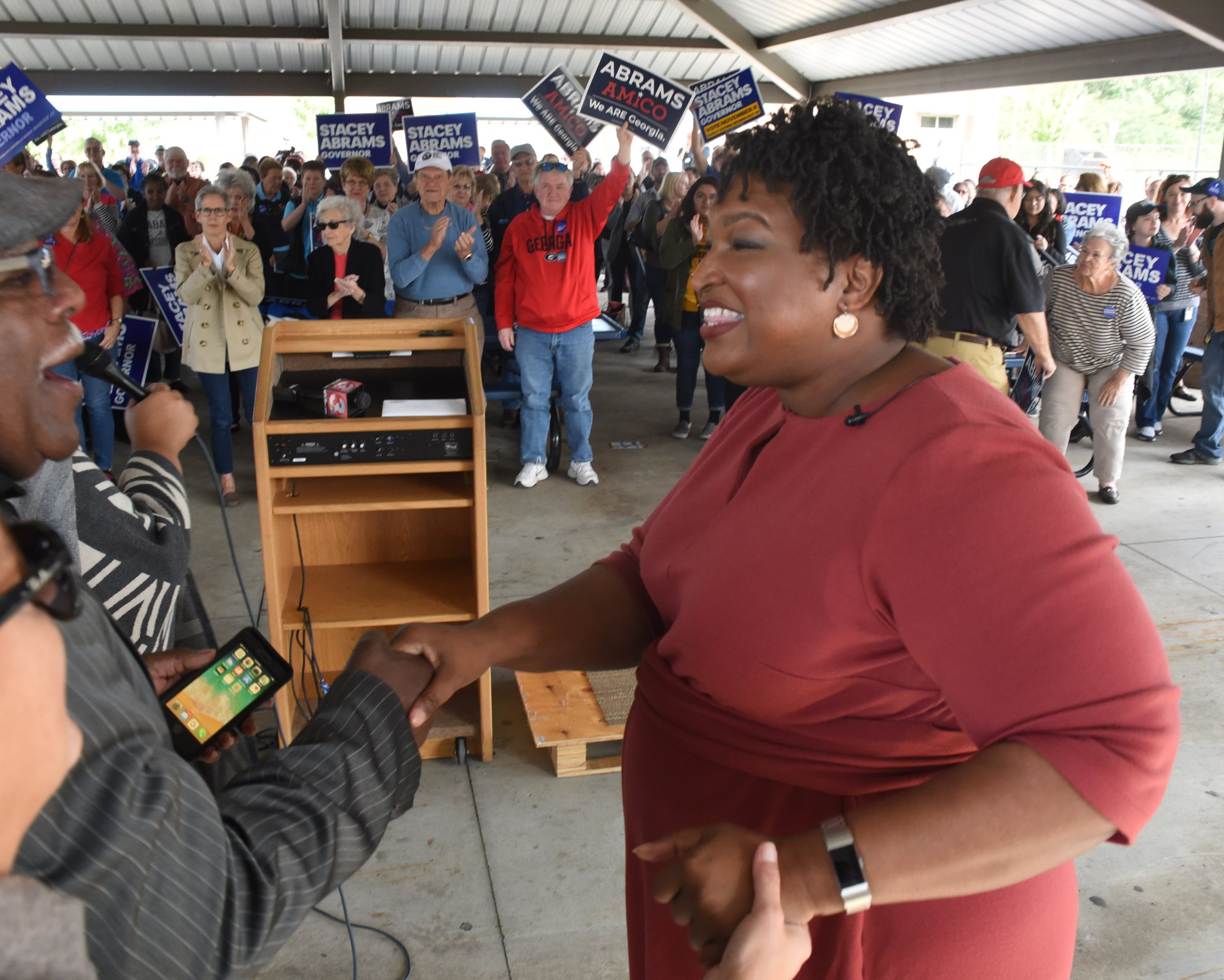
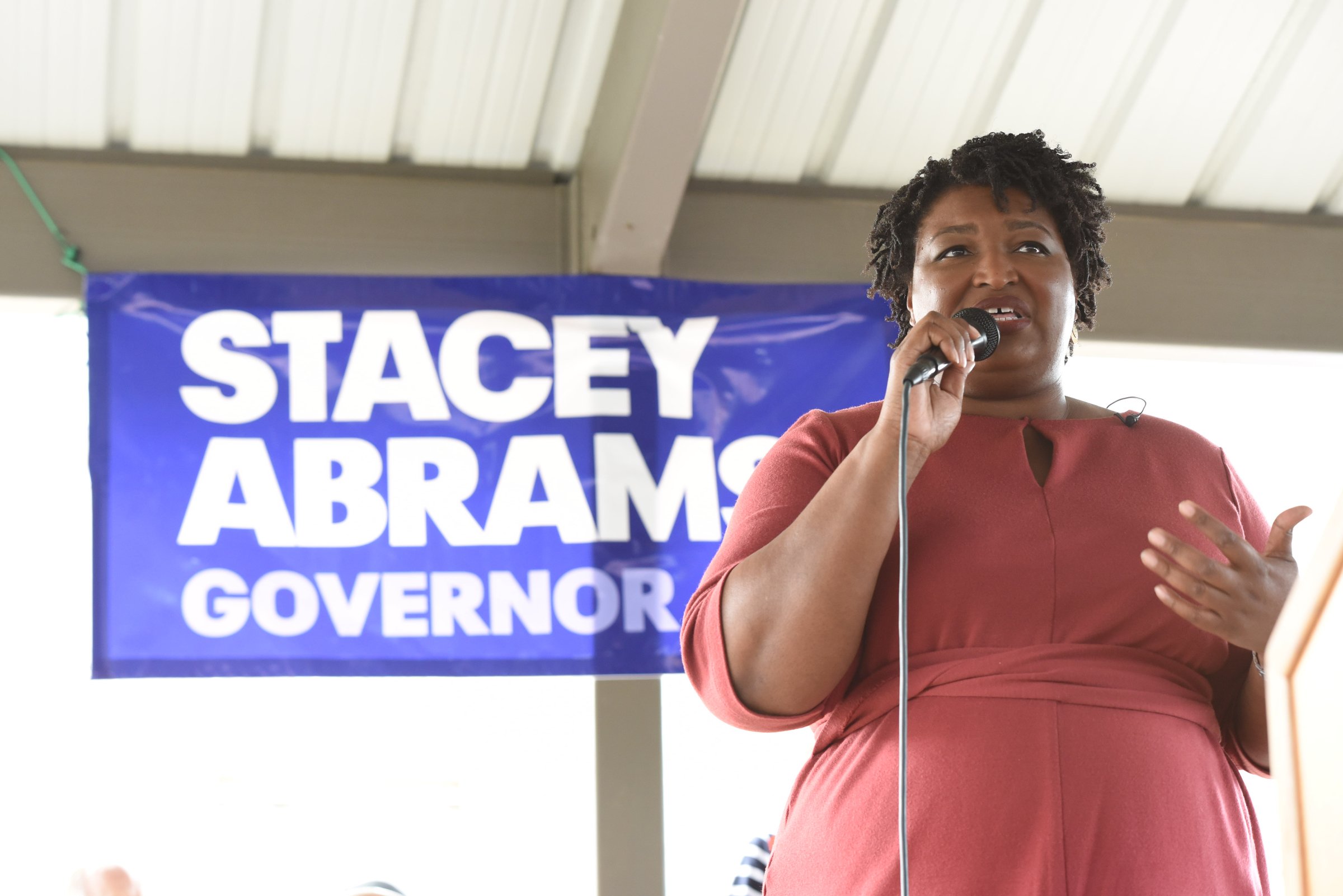
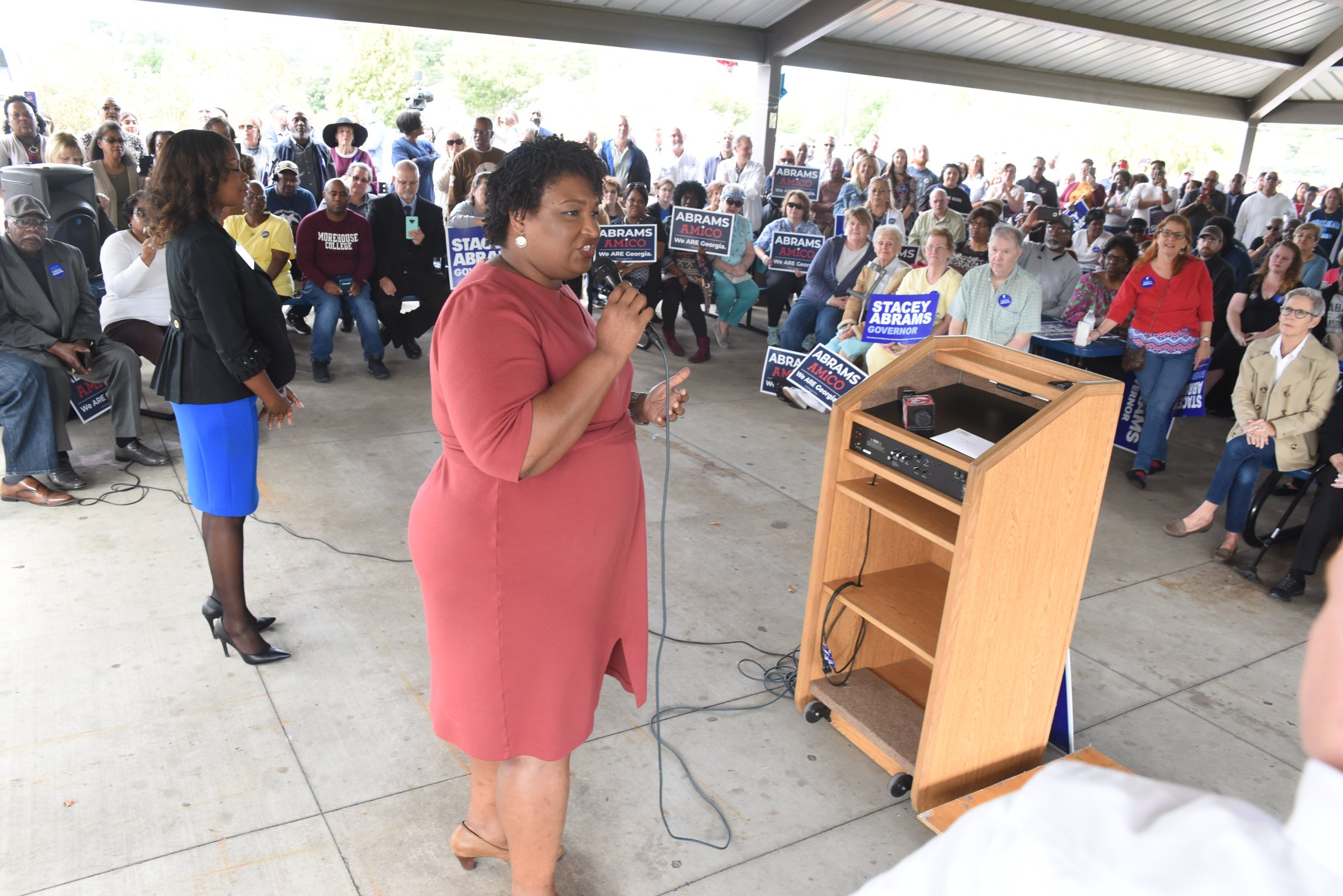

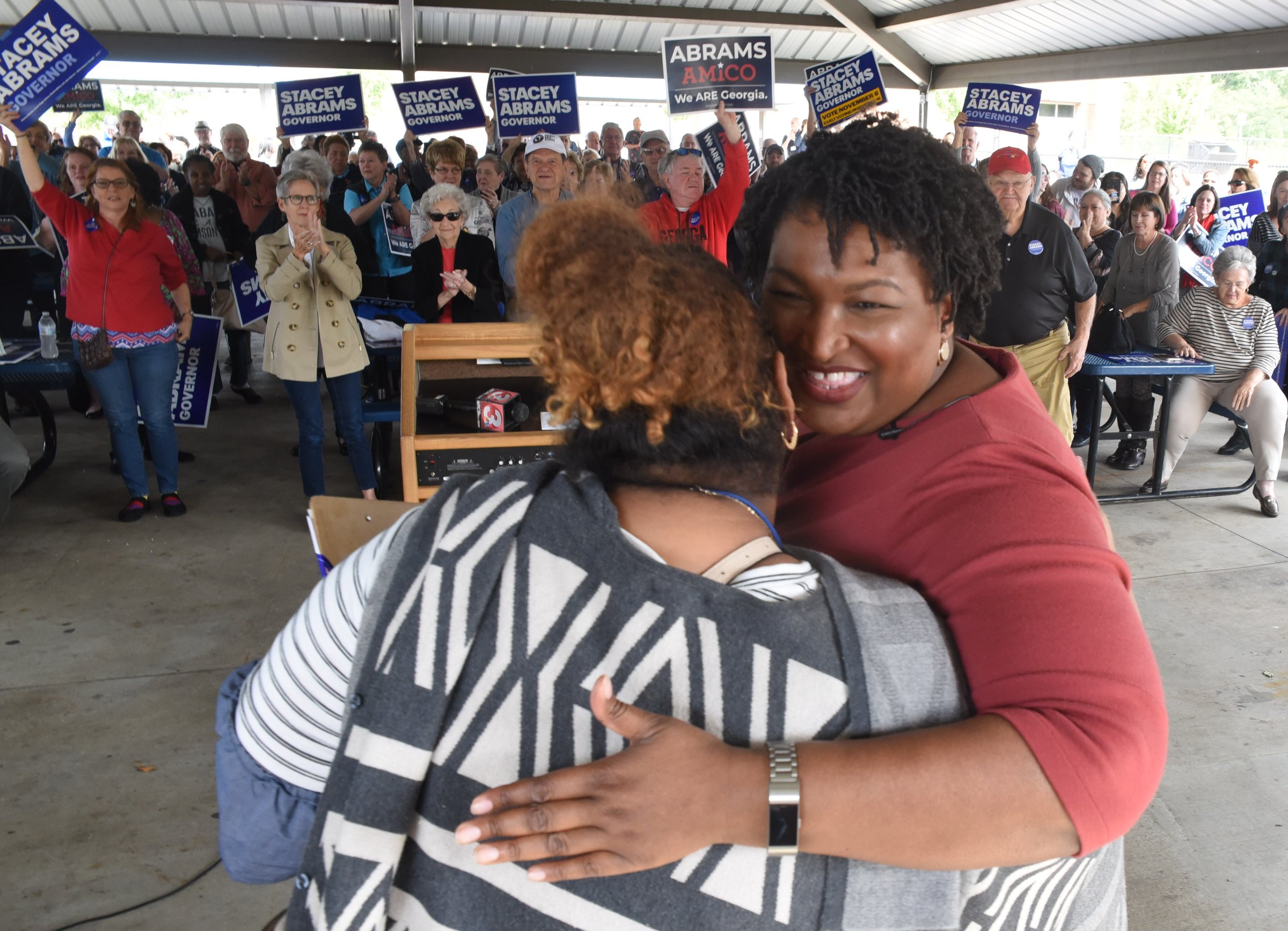
DALTON, Ga. – Democratic candidate for governor Stacey Abrams called for an end to a state law that filters voter registrations during a stop here Friday afternoon.
“The way voter suppression works is not just physically blocking you from voting,” she told a crowd outside the Mack Gaston Community Center. “It’s not just making you worried that you can’t vote. It’s bringing a sense of fear among everyone that their vote doesn’t matter. That’s how they win. But the thing of it is, if they thought your votes didn’t matter, they wouldn’t be working so hard to stop you.”
Abrams and her opponent, Republican Brian Kemp, have traded barbs over the state’s exact match law for more than a week, following news that 53,000 registered voters are in a sort of limbo. Citizens are purged from the rolls if the names on their voter registration applications do not match their driver’s licenses. They can be flagged for minor discrepancies, like if a hyphen appears on one form and not the other.
In an analysis, the Associated Press concluded that the state flagged black people much more often than whites. Despite making up about one-third of the state’s population, African American voters make up about 70 percent of people currently flagged.
Kemp, Georgia’s secretary of state, has overseen two versions of the exact match law since 2010. He balked at allegations that his office is racist or has tried to suppress the vote. Since he took office, the number of registered voters in Georgia has grown from 5.8 million to 6.9 million. He also oversaw the creation of an online voter registration system and a voter registration app.