
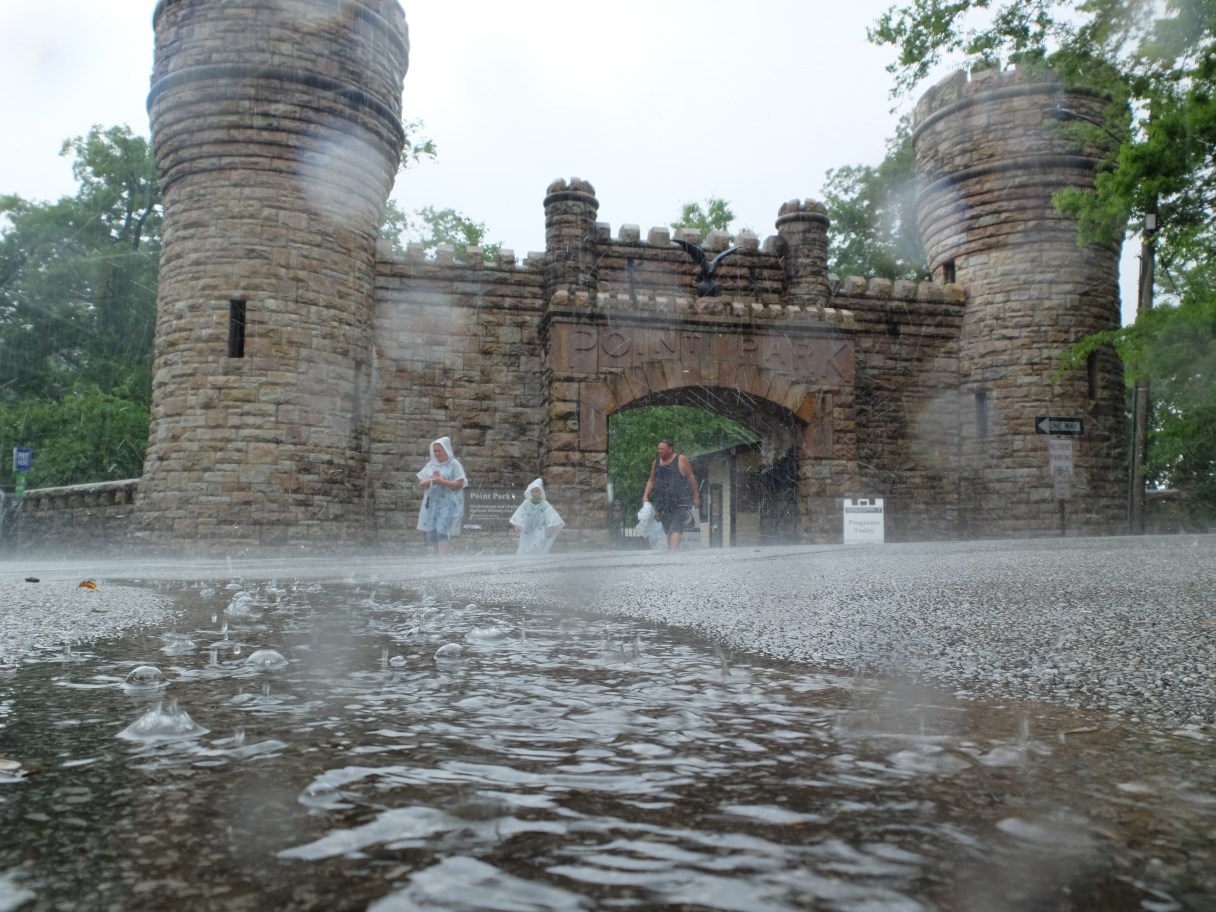
BIRMINGHAM, Ala. – Mudslides triggered by the soggy remnants of Alberto forced evacuations below a dam early Wednesday and closed a highway in western North Carolina as the center of the storm lashed the nation’s midsection hundreds of miles away.
The National Hurricane Center said Alberto ceased to be a subtropical storm Wednesday afternoon, but was expected to continue to bring wind and rain as it moved across the Great Lakes.
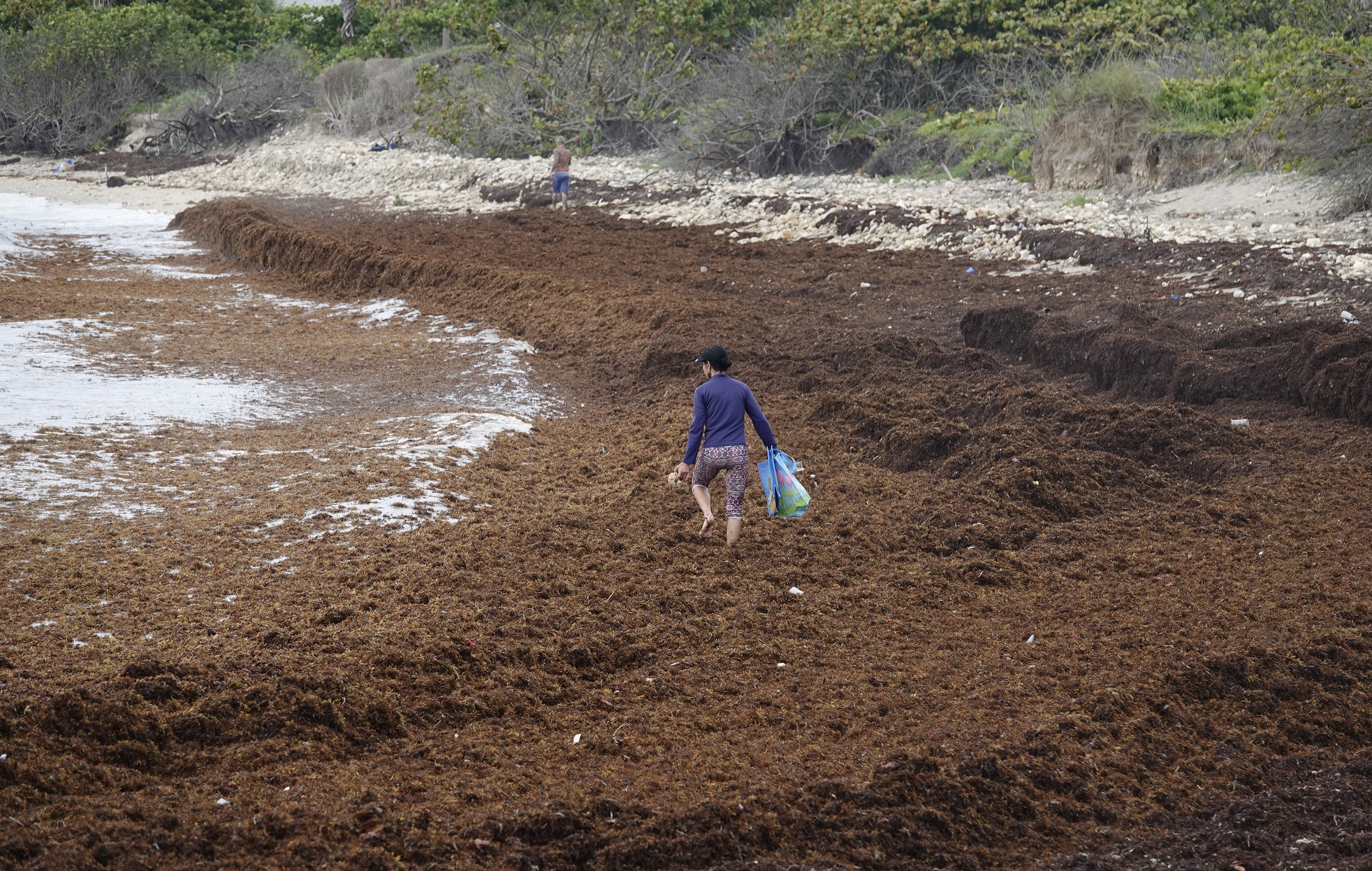 Mindy Borkson, of Hollywood, Fla., walks through a bed of seaweed washed up along the beach, Tuesday, May 29, 2018, at Dr. Von D. Mizell-Eula Johnson State Park in Dania Beach. Fla.. She often collects shells and coral from the beach and said “I have never seen it like this,” after the Memorial Day weekend storm. (Joe Cavaretta/South Florida Sun-Sentinel via AP)
The heavy rains had stopped, at least for the time being in North Carolina, but Gov. Roy Cooper said several other dams could be in danger as rivers continued to rise. He sent a team of state inspectors to check on at least four of them.
The inspections came after about 2,000 people were evacuated for several hours when emergency managers said the Lake Tahoma dam was in danger of “imminent failure” early Wednesday. Heavy rain triggered landslides at the dam and along Interstate 40, which was closed near Asheville.
Engineers inspected the dam further in daylight. McDowell County officials announced in a public alert just after 10 a.m. Wednesday the dam was safe and people could return home.
Cooper declared a state of emergency in western North Carolina as heavy storms were forecast for much of the rest of the week, bringing a possibility of more flooding and mudslides.
“This storm isn’t yet over. I’m urging people to keep a close eye on forecasts and flood watches, and asking drivers to use caution especially when travelling in our western counties,” Cooper said in a statement.
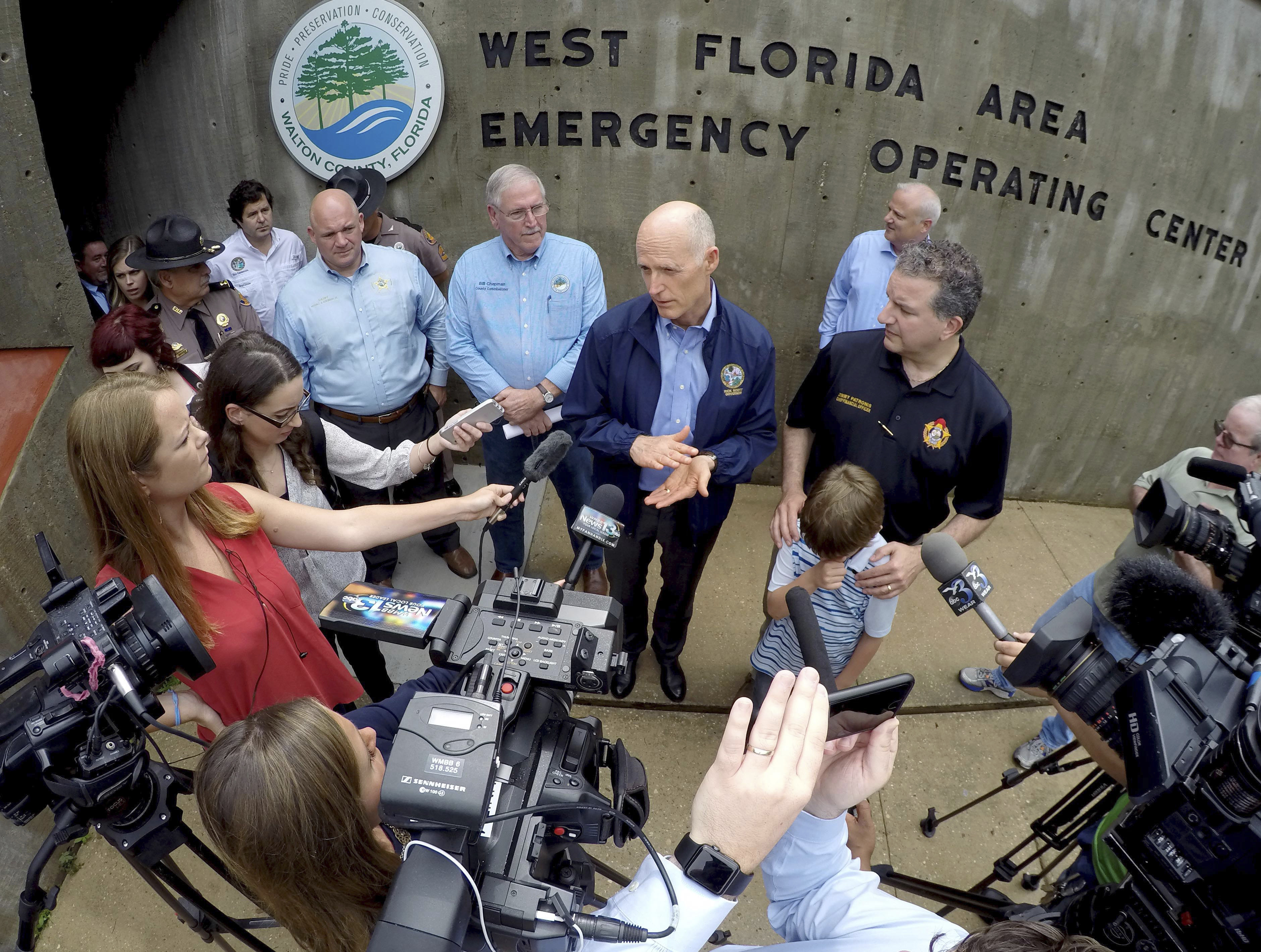 Florida Governor Rick Scott addresses members of the media on Tuesday May 29, 2018 outside of the West Florida Area Emergency Operating Center in DeFuniak Springs, Fla. Scott visited with officials to determine what they need following the landfall of Subtropical Storm Alberto in Walton County on Monday. (Nick Tomecek/Northwest Florida Daily News via AP)
Some areas of the North Carolina mountains have received up to 20 inches (51 centimeters) of rain in the past 15 days.
A north Georgia town was also dealing with flooding.
Up to 7 inches (18 centimeters) of rain caused flooding in Helen, Georgia, around 10 a.m. Wednesday, the National Weather Service said. Atlanta station WAGA-TV reported that several roads near the downtown area were shut down because of the rising water. No injuries or structural damage had been reported.
The center of a depression that had been Alberto was about 400 miles (640 kilometers) west near Hopkinsville, Kentucky, where high winds and heavy rains gave Sherry Key a fitful night’s sleep.
“I have dogs and they’re terribly afraid of storms, so they were on top on top me all night,” said Key, an airport office manager.
The big, messy storm caused more than 25,000 power outages in Alabama, many of which were triggered by trees rooted in soggy soil falling across utility lines.
“We’ve had a lot of rain, but we got lucky. It was a constant rain but not a heavy rain,” said Regina Myers, emergency management director in Walker County northwest of Birmingham.
In the Chattanooga area, Alberto was expected to bring more wet weather, with scattered rain and storms possible today. Thursday and Friday also could see some more rain, according to WRCB News Channel 3 Chief Meteorologist Paul Barys.
Saturday should be fairly dry, Barys said, and after that, the weather pattern will return to the regular summer scattered showers.
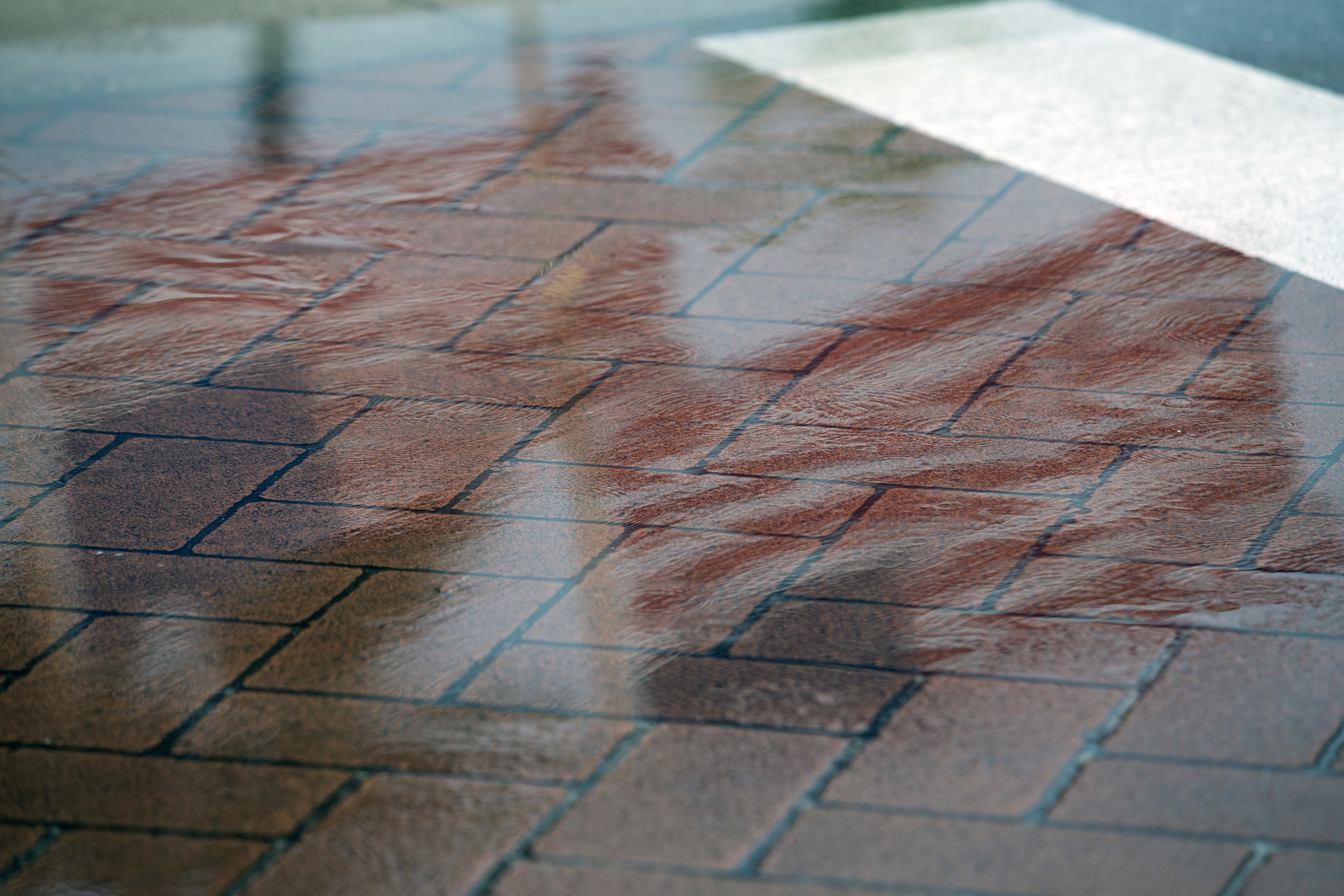 American flags placed in honor of Memorial Day are reflected in puddles at the Panama City Marina as Subtropical Storm Alberto approaches Panama City, Fla., Monday, May 28, 2018. (Joshua Boucher/News Herald via AP)
The National Weather Service issued flash flood warnings across most of northern Alabama and Georgia and Southeast Tennessee through this morning. But the floods were expected to be localized and remain in flood prone, low-lying areas.
TVA said it does not anticipate the heavy rains will push any reservoir levels to flood stage. It also said it did not anticipate major power outages as the storm moves north, although local distributors could face some electrical delivery problems and flash floods.
Radar showed rain extended as far south as the Gulf Coast, where the storm came ashore at the Florida Panhandle on Monday, and north to the Great Lakes region.
Forecasters warned the leftovers of the Atlantic hurricane season’s first named storm were still capable of causing treacherous flooding as heavy precipitation spreads deeper into the nation’s midsection. Flash flood watches and warnings were in effect for parts of several states from Alabama through Tennessee, Kentucky, Illinois, the Carolinas and Virginia and West Virginia.
In the mountains of western North Carolina, McDowell County Emergency Management deputy director Adrienne Jones said about 200 residents spent the night in three shelters, set up in Marion, Old Fort and Glenwood. She said five minor injuries were reported during water rescues as creeks and streams overflowed their banks and rock slides closed roads.
Two Department of Transportation workers survived a close call when their dump truck was swept away by a mudslide in McDowell County while trying to clean debris from an earlier slide. The men were able to climb from the overturned truck and stand on its side in the Catawba River until they were rescued, the governor said.
A television news anchor and a photojournalist were killed Monday in North Carolina while covering the weather, when a tree became uprooted from rain-soaked ground and toppled onto their SUV, authorities said. WYFF-TV of Greenville, South Carolina, said news anchor Mike McCormick and photojournalist Aaron Smeltzer were killed.
Authorities in Cuba say Alberto left four people dead there as the storm drenched the island in heavy rain. Interior Minister Julio Cesar Gandarilla said late Tuesday they died as a result of “recklessness” during the storm. He gave no details. The deaths occurred as authorities worked to contain an oil spill in central Cuba’s Cienfuegos Bay that followed the flooding of nearby oil refinery.