
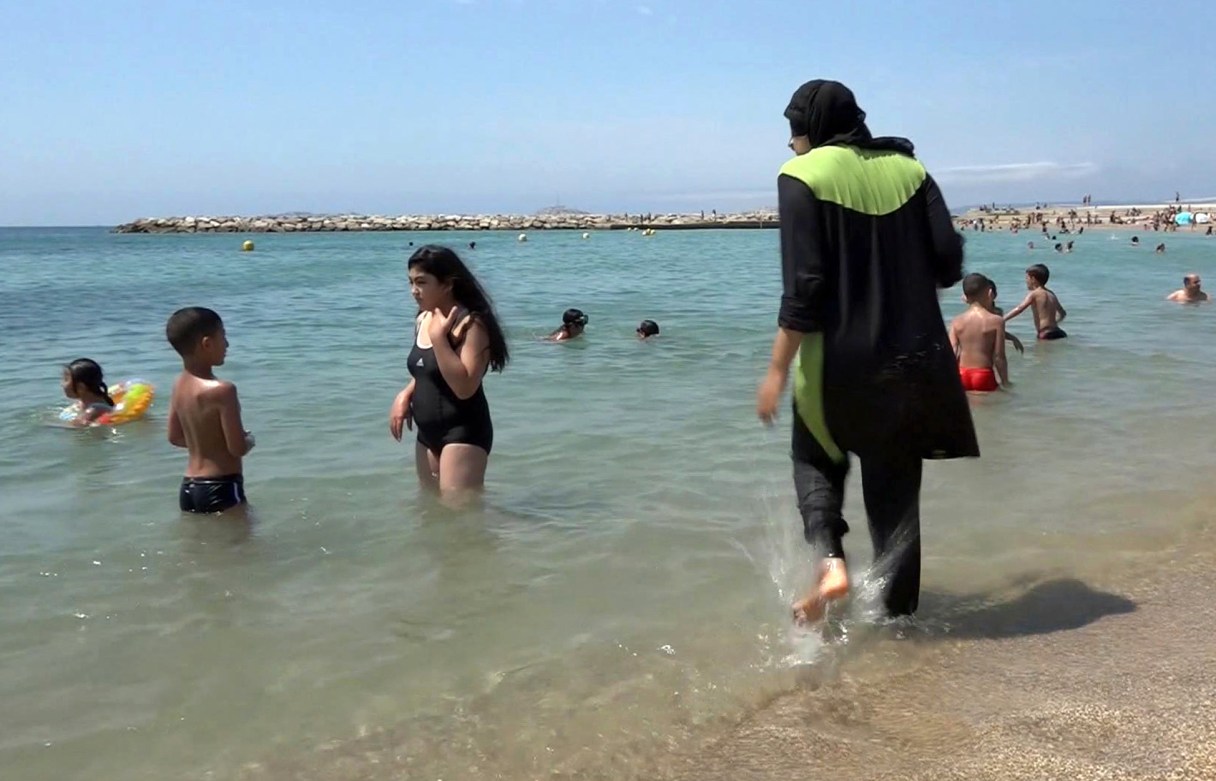
Male officials are dictating what women can wear on French beaches – and people across a wide swath of French society say that’s a good thing.
Decrees issued by several mayors this month ban the body-encompassing burkini swimsuit, which France’s secular political class says subjugates women and is incompatible with a country whose motto celebrates equality and freedom.
To many Muslim women, that’s pure hypocrisy. They see the burkini bans themselves as sexist, not to mention racist and a reactionary backlash to terrorism fears.
Even though it’s only worn by a tiny minority, the burkini – a wetsuit-like garment that covers the torso, limbs and head – has prompted a national discussion about Islam and women’s bodies. At least five towns have banned them this summer, and others are threatening to follow suit.
Prime Minister Manuel Valls says the swimsuit reflects a worldview based on “the enslavement of women.” In an interview published Wednesday in the La Provence newspaper, he says the belief that women are “impure and that they should therefore be totally covered” was part of an “archaic vision.”