
Monday, November 16, 2026Nov 16

Louisiana’s appeal: Gay marriage is ‘novel’ and risky

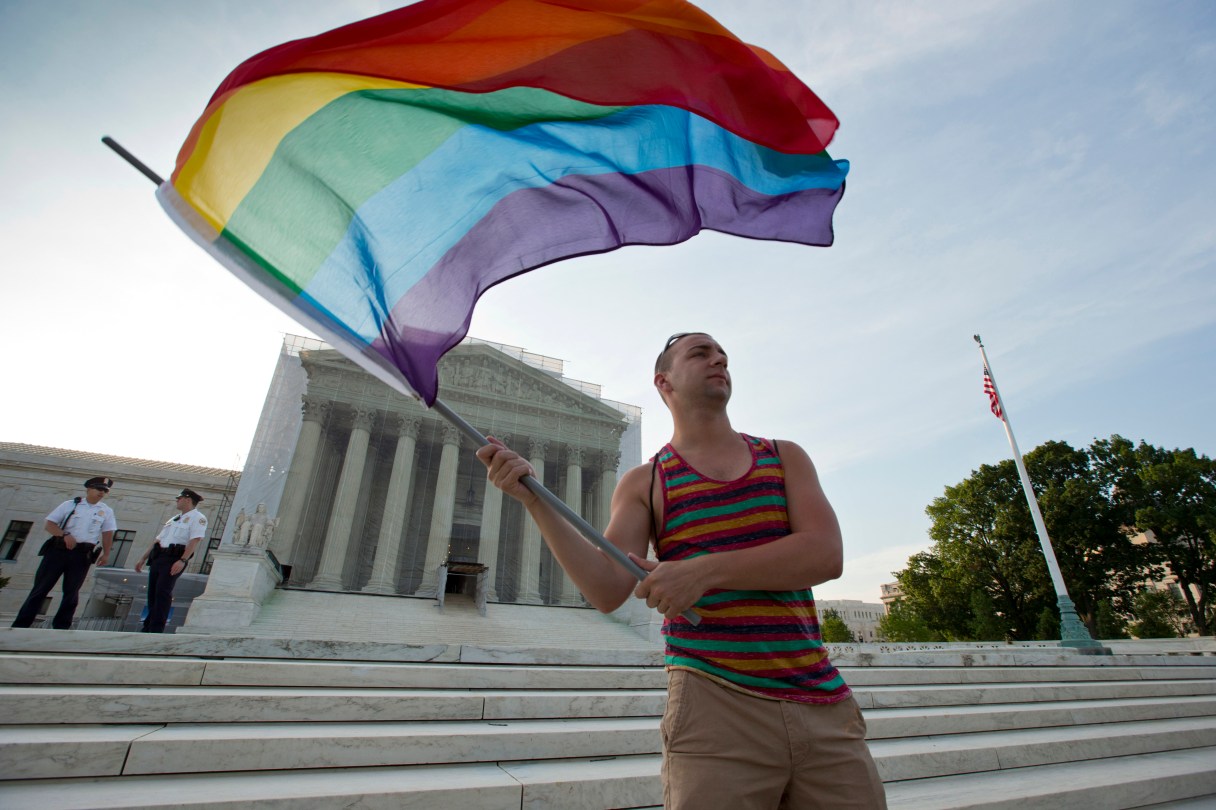
FILE- In this June 26, 2013 file photo, gay rights advocate Vin Testa waves a rainbow flag in front of the Supreme Court in Washington. The Supreme Court has quietly engineered a dramatic increase in the number of states that allow gay and lesbian couples to wed _ at the same time raising the likelihood the justices soon will definitively settle the legal debate. Some justices had expressed reluctance about directly confronting the issue when more than half the country prohibited same-sex unions, but 36 states now allow them, nearly twice as many as three months ago. (AP Photo/J. Scott Applewhite, File)

NEW ORLEANS (AP) – Three staunchly conservative Southern states were taking their last stands against same-sex marriage Friday before the U.S. Supreme Court is expected to settle the issue once and for all.

Louisiana went first, telling a federal appellate panel that giving gays and lesbians marriage rights is so risky and unproven that states must be allowed to protect their citizens against it.

Same-sex marriage is “a novel perception” in terms of recorded history, said Louisiana’s special counsel, Kyle Duncan.

Only ten years of data has been gathered since Massachusetts became the first U.S. state to legalize same-sex marriages, he said – not enough to know the consequences if courts keep overturning state-imposed bans.

“There are now 36 states and the district of Columbia that allow same-sex marriage and nothing has changed,” countered Camilla Taylor, a Lambda Legal Defense Fund attorney representing seven couples challenging Louisiana’s ban.