
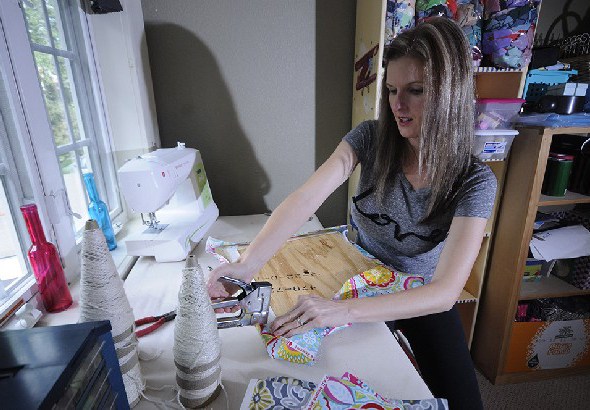
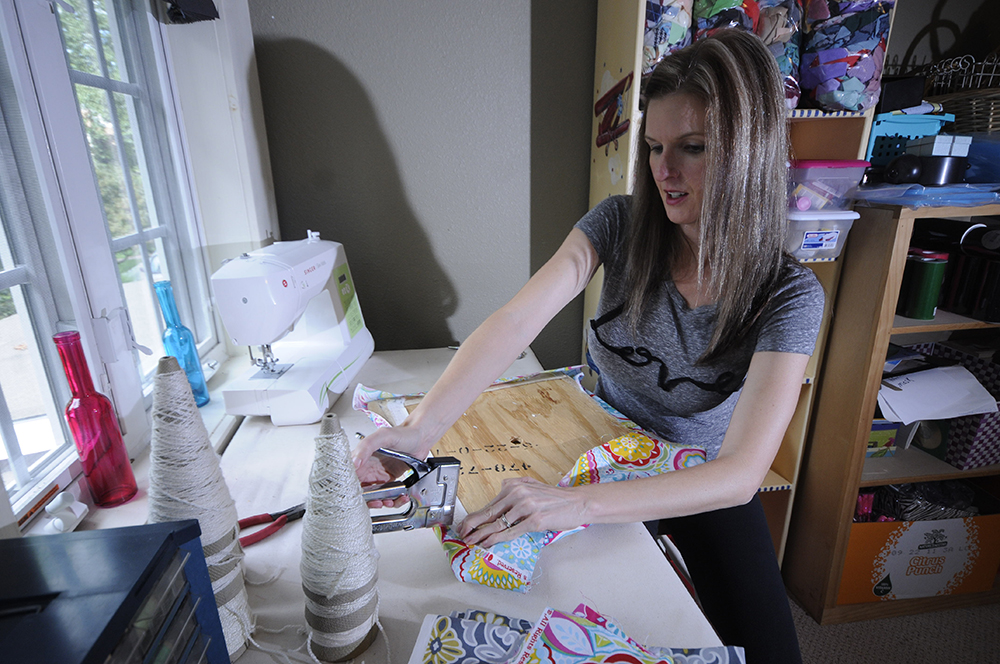
 Lindy Smith staples new fabric to reupholster the seat of an old chair in her home workshop.
TOOLS OF THE TRADEYou can start with a flathead screwdriver, pliers and a stapler, but as you get more serious, you’ll want to get several of these also:• Staple gun: Pneumatic is best, but a heavy-duty will work.• Upholstery tacks: When not using staples.• Rubber mallet or magnetic hammer: For hammering in the tacks without damaging the wood.• Staple puller or ripping chisel: For getting the old ones out.• Upholstery pins: Especially helpful when working alone for holding fabric in place.• Webbing stretcher: Helps get the fabric tight and holds it in place.• Sharp scissors: You’ll want clean cuts.• Needle-nose pliers: For those hard-to-reach staples, and you can hold a tack with them while you get it started.• Hot glue gun: Can be used to hold materials in place.• Utility knife: For material removal and cleanup.• Regulator: It looks like a long needle, but is heavier and used for moving stuffing around.• Flathead screwdriver: Used for many things, including staple removal.
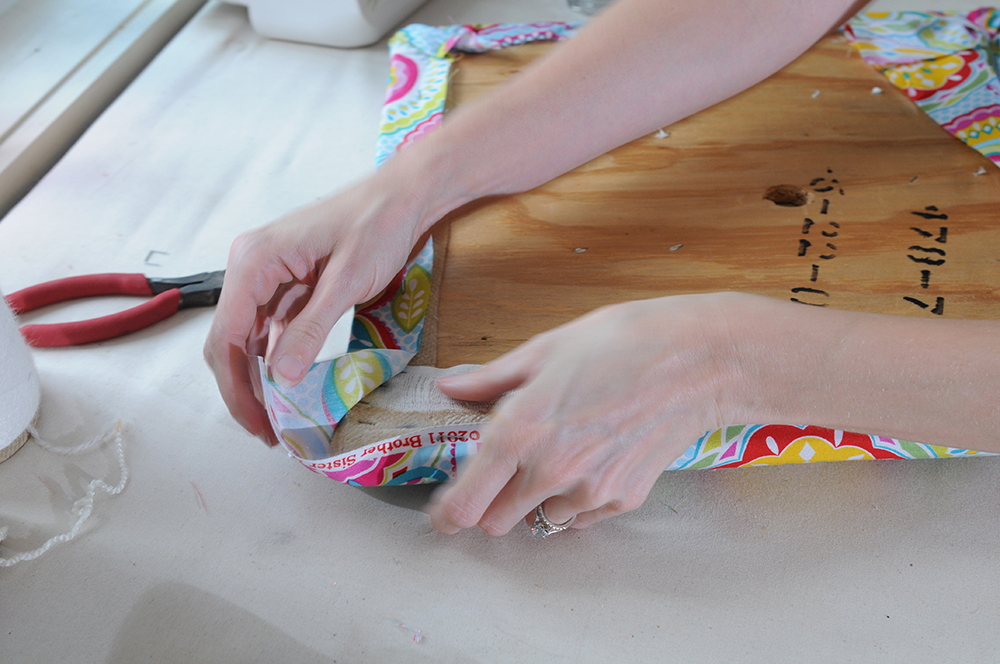 Lindy Smith staples new fabric to reupholster the seat of an old chair in her home workshop.
When Lindy Smith found a dining room table and five chairs at a thrift store, she snatched them up with the idea that she would replace the old, tattered, non-matching fabric herself.
Only problem: She had zero upholstery experience.
So the Brainerd resident did what all would-be do-it-yourselfers do these days, she got online and started watching how-to videos. She also reached out to friend and professional upholsterer Lori Coleman, owner of The Brick Path Studio, a home decor business in Red Bank. And she started looking for projects to practice on.
“I’ve done a couple of just basic antique chairs that I find at thrift stores,” she says.