
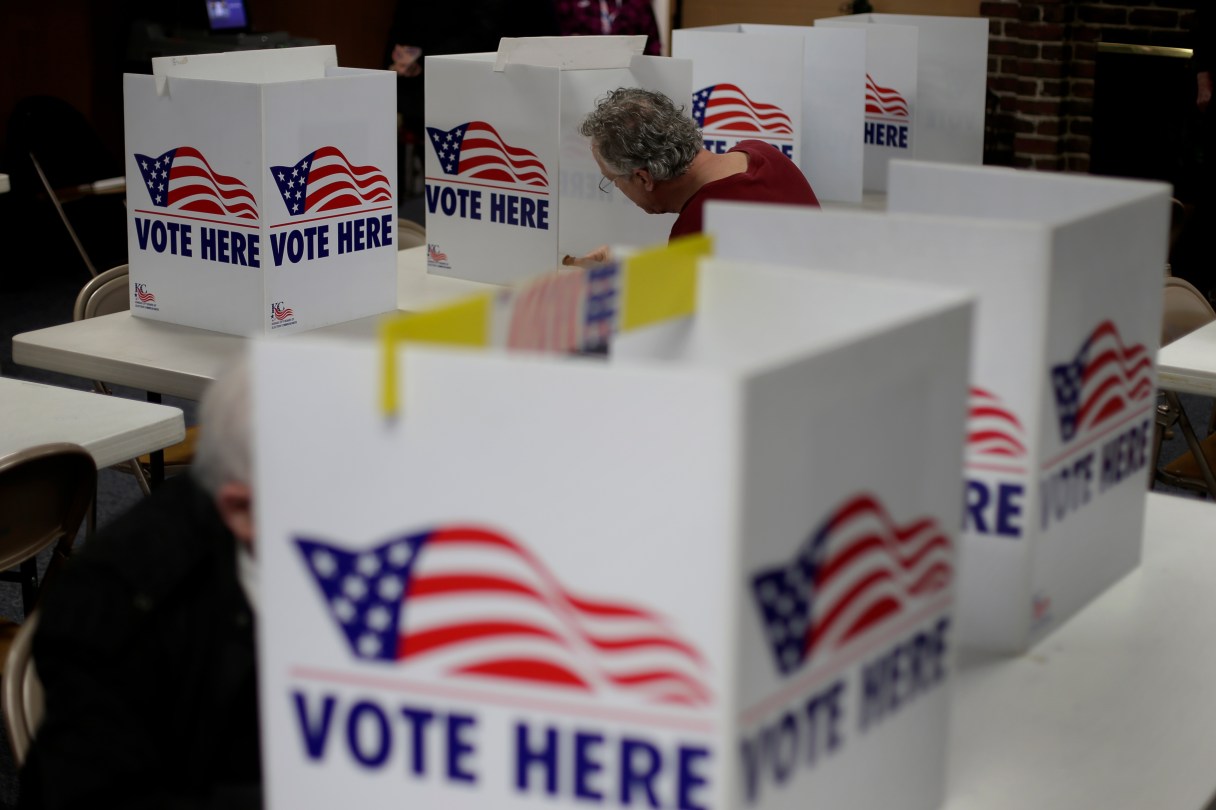
BELLE PLAINE, Kan. (AP) – A federal appeals court panel ruled Wednesday that Kansas can’t require voters to show proof of citizenship when they register, dealing a blow to efforts by Republicans in several states who have pursued restrictive voting laws as a way of combating voter fraud.
The 10th Circuit Court of Appeals panel in Salt Lake City upheld a federal judge’s injunction nearly two years ago that prohibited Kansas from enforcing the requirement, which took effect in 2013. The appeals court, in a ruling that consolidated two appeals, found the statute former Gov. Sam Brownback signed into law violates the U.S. Constitution’s Equal Protection Clause and the National Voter Registration Act, commonly known as the “motor-voter law.”
Many experts say voter fraud is extremely rare, and critics contend the Republican-led efforts are actually meant to suppress turnout from groups who tend to back Democrats, including racial minorities and college students.
The law was championed by former Kansas Secretary of State Kris Kobach, who led President Donald Trump’s now-defunct voter fraud commission. Kobach was a leading source for Trump’s unsubstantiated claim that millions of immigrants living in the U.S. illegally may have voted in the 2016 election.
Dale Ho, director of the American Civil Liberties Union’s Voting Rights Project, said that the ruling doesn’t immediately affect other states because Kansas’s law was unique in requiring people to show a physical document such as a birth certificate or passport when applying to register to vote. However, Ho said the ruling is grounded in a broader constitutional principle that when a state significantly burdens the right to vote, it has to justify it.