
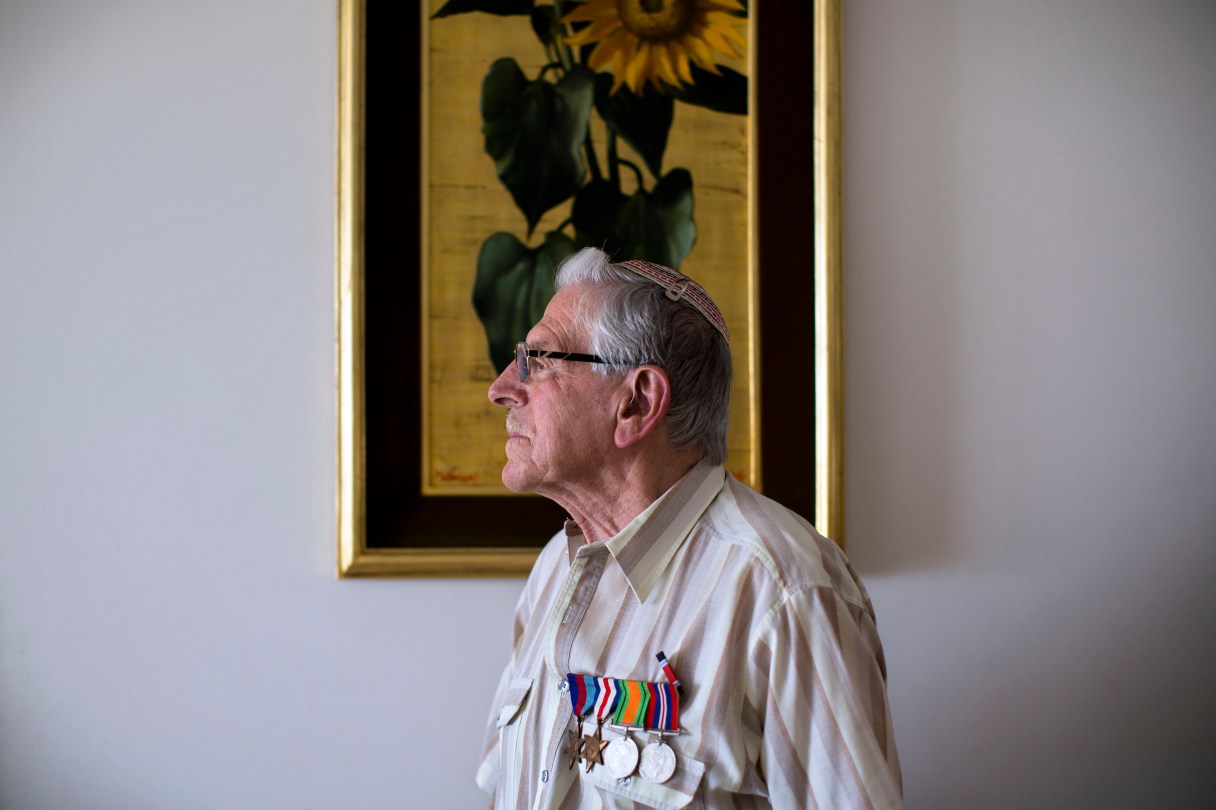
JERUSALEM (AP) – As a proud patriot, Brooklyn-born Dan Nadel enlisted in the U.S. army right after the Japanese attack on Pearl Harbor. But there was another force driving him to battle – his Jewish faith.
“What Hitler was doing to the Jews, I knew he had to be killed and stopped,” the 95-year-old decorated veteran said from his home in Jerusalem. “That was my motivation.”
Nadel is among a dwindling population of Jewish war veterans who battled the Nazis – a group that until recently received little recognition in the Jewish state. Seventy years after the war ended, Israel is finally paying homage to the 1.5 million Jewish soldiers with a planned museum and research center.
Nadel became an officer and landed on Normandy shortly after D-Day. He went on to earn five battle stars while leading combat engineer troops in the Battle of the Bulge and the liberation of France. Eventually, he helped free his fellow Jews from Nazi concentration camps.
“You can’t imagine what it was like. The stench, people walking around just like skeletons, just bones and skin, that’s all,” he recalled. “It was terrible. Our general, Patton, when he went into the camps, he puked.”