
BOGOTA, Colombia (AP) – It’s enough to make an aging U.S. Cold Warrior shudder.
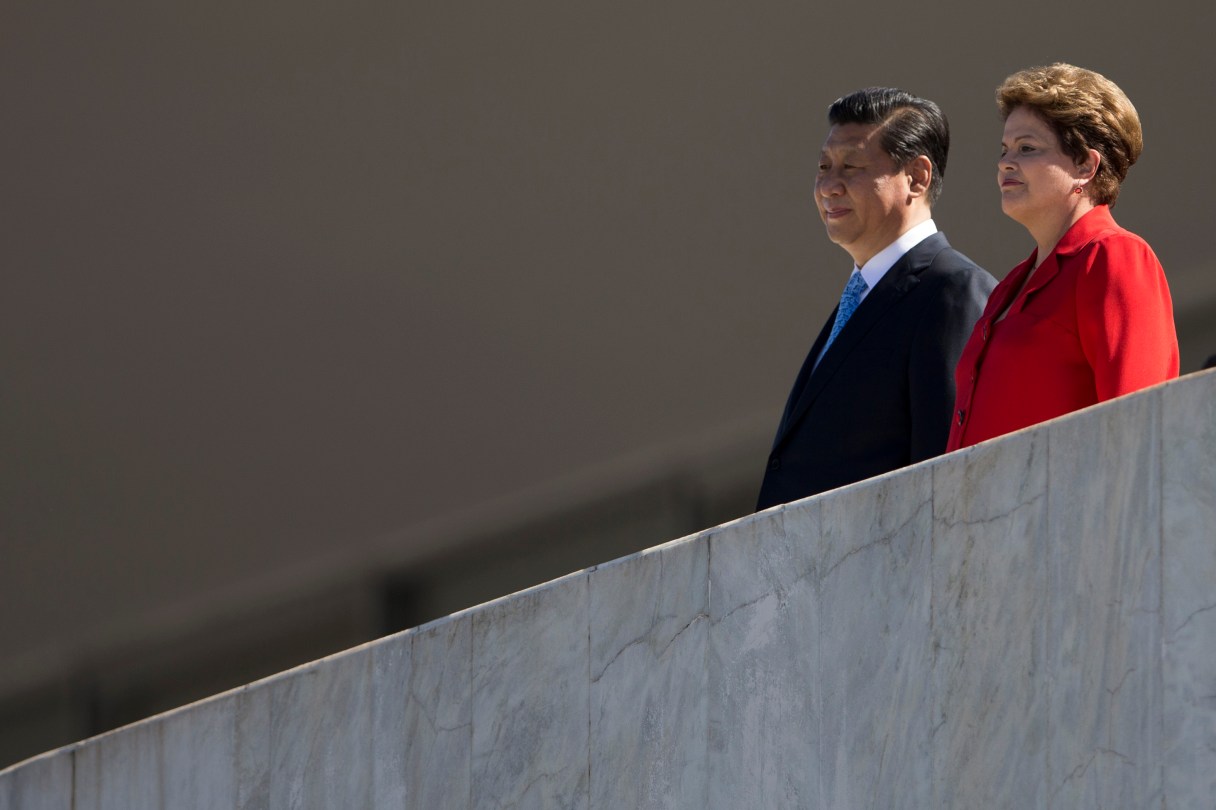
During overlapping visits to Latin America, the leaders of China and Russia have been welcomed with open arms by governments that are among the most hostile to Washington, including Cuba, Nicaragua and Venezuela. Together with stops in Argentina and Brazil, which both have distanced themselves from the U.S. in recent years, the tours underscore the mix of ideology and economics that’s allowing the two superpowers to expand their influence in America’s backyard.
“These are all countries the U.S. has some real question marks about,” said Kevin Gallagher, a Boston University economist and expert on Chinese-Latin American ties. “It’s going to require some PR so as not to be interpreted in certain, phobic circles as an overt alignment with left-leaning governments at odds with the U.S.”
Both Chinese President Xi Jinping and Russian leader Vladimir Putin said their visits were focused on expanding commercial ties, not taking aim at the U.S. The timing was triggered by a summit Tuesday in Brazil of leaders from the so-called BRICS group – Brazil, Russia, India, China and South Africa.
At the summit, BRICS leaders agreed to create their own development bank worth $100 billion, a move seen as a strong push against the World Bank and the International Monetary Fund, which they perceive as too U.S.-centric.