
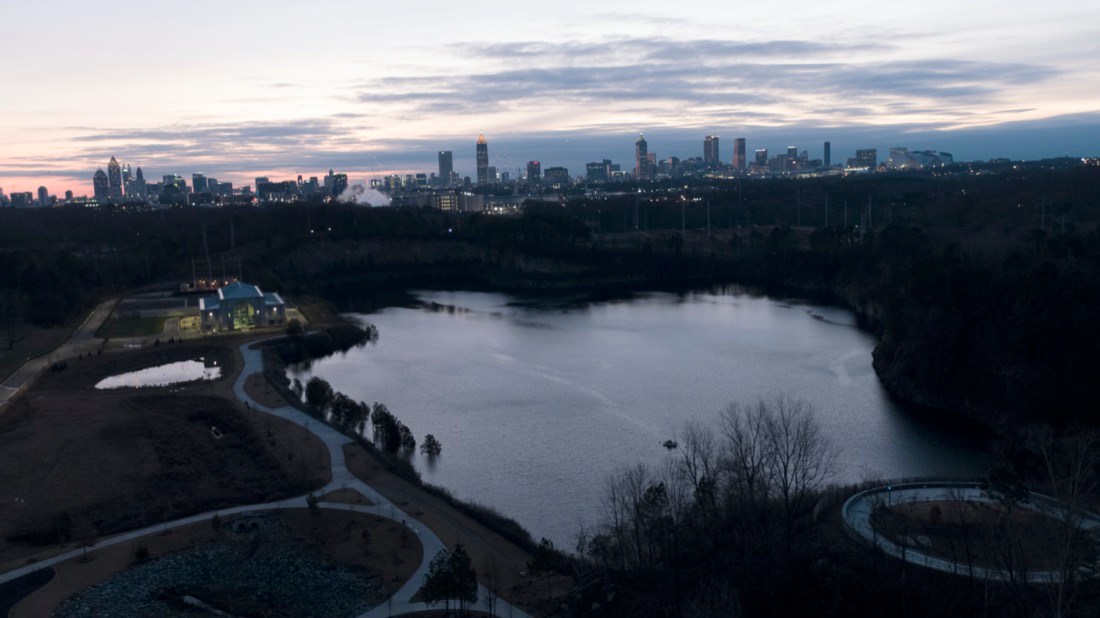
ATLANTA (AP) – The City of Atlanta’s official seal shows a phoenix rising from the ashes of the Civil War. What it doesn’t show is that Atlanta was rebuilt with slavery’s successor: convict labor, working in horrific conditions to break granite at the Bellwood Quarry and burn clay at the Chattahoochee Brick Company.
Thousands of Black men, women and children were pulled off the streets and convicted of petty or nonexistent crimes before vanishing into camps and factories where many were worked to death. The peonage system lasted across the South for seven decades until World War II, yet many Americans have never heard of it.
Restoring this long-ignored chapter of U.S. history to public memory is the goal of a coalition of politicians, executives, foundation chiefs, historians, educators and grassroots activists that has taken shape over the past few months.
“In the same way we served as an example during the civil rights movement of what’s possible in America, I believe that that moment is before us now,” Atlanta Mayor Keisha Lance Bottoms told The Associated Press. “I think it’s very important for our children and for adults to know what that history is all about.”
Advocates for Atlanta’s struggling west side want memorials to forced labor erected at the quarry site and the abandoned brick company, which the city council voted to preserve this month. Another would go downtown, where white mobs killed 25 Black people in 1906 after rival newspaper publishers stirred outrage with false stories about rapes of white women while running for governor.