
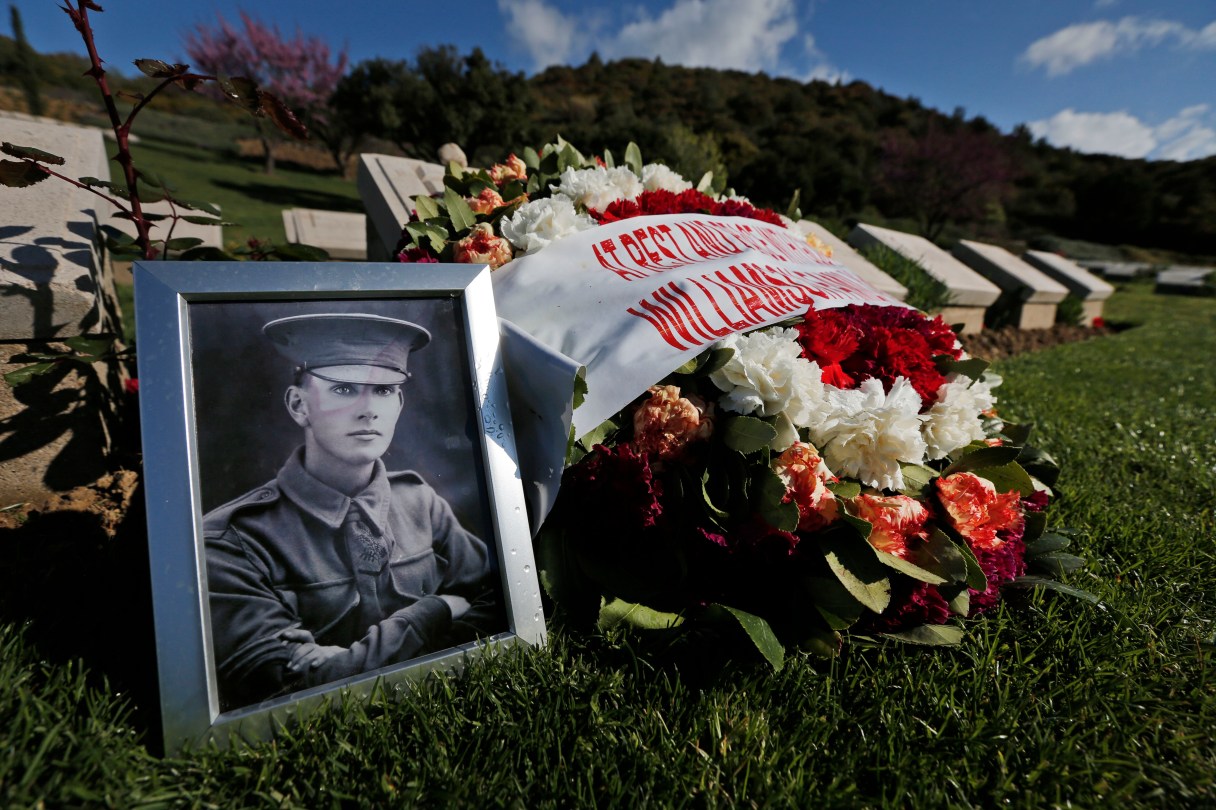
GALLIPOLI, Turkey (AP) – Whenever he leaves the house, Kenan Ersoz hides the bayonet his father used to defend the crumbling Ottoman Empire against the British-led invasion of Gallipoli a century ago. The father saw it as a friend that kept him alive. The son keeps it as his most prized possession.
The campaign is no less present for descendants of soldiers from Australia and New Zealand who played a leading role fighting for the other side.
John Carnell traveled from Sydney with his wife, Carol, and two children, Kate and Tom, to visit spots where his great-grandfather landed on the peninsula – and where he was mortally wounded months later. In the lottery to obtain tickets for the 100th anniversary commemoration this week, Carnell wanted his children to come more than he wanted to come himself.
“People only really die when the living stop talking about them,” he said. “I can bang on about my ancestor for another 20 years or so. My children can do it for 50 and they can tell their grandchildren.”
As world leaders gather Thursday and Friday with the descendants, the memories of one of the most harrowing campaigns of the 20th century have come surging back to life. The doomed Allied offensive to secure a naval route from the Mediterranean to Istanbul through the Dardanelles, and take the Ottomans out of the war, resulted in over 130,000 deaths on both sides. It came to be seen as a folly of British war planning.