
Friday, November 13, 2026Nov 13

Spreading Zika virus a new economic strain for Latin America

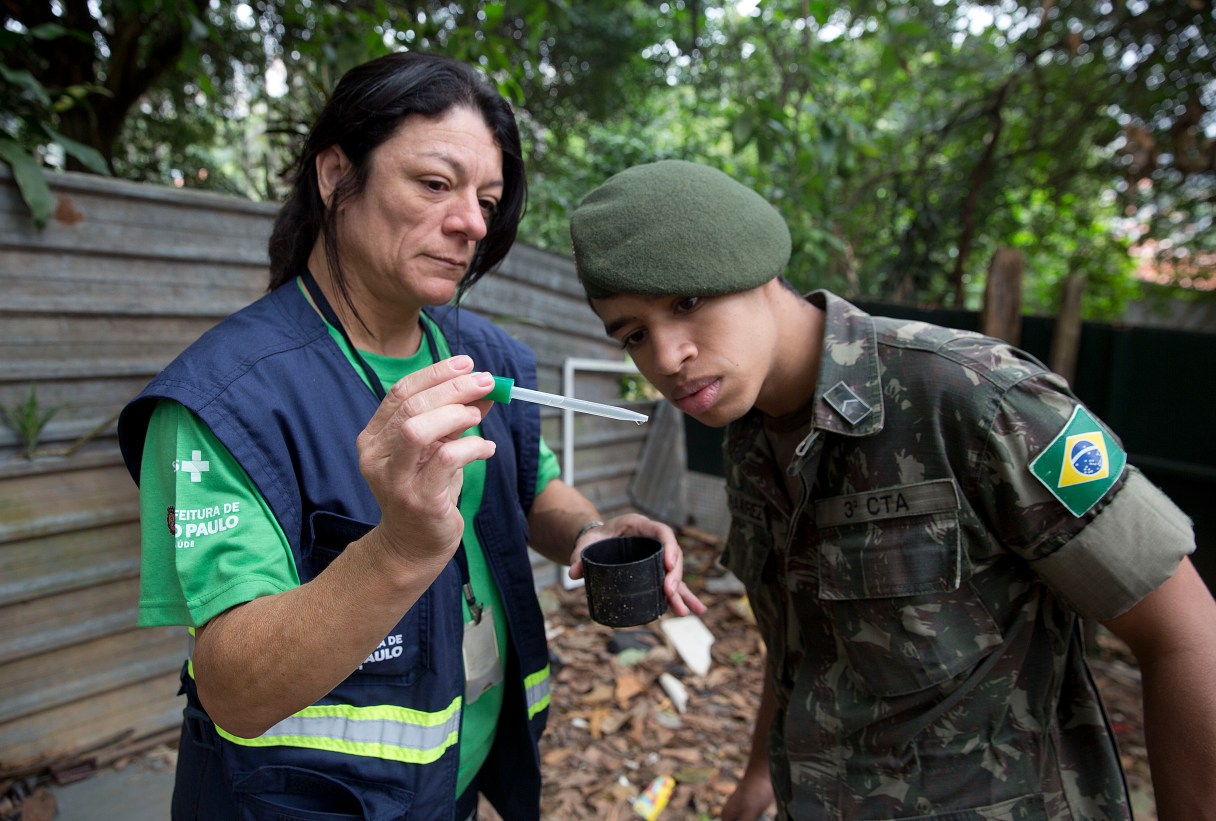
A health agent from Sao Paulo's Public health secretary shows an army soldier Aedes aegypti mosquito larvae that she found during clean up operation against the insect, which is a vector for transmitting the Zika virus, in Sao Paulo, Brazil, Wednesday, Jan. 20, 2016. A U.S. warning urging pregnant women to avoid travel to Latin American countries where the mosquito-borne virus is multiplying threatens to depress tourism to the region, one of its few bright spots at a time of deep economic pain.  (AP Photo/Andre Penner)
A health agent from Sao Paulo's Public health secretary shows an army soldier Aedes aegypti mosquito larvae that she found during clean up operation against the insect, which is a vector for transmitting the Zika virus, in Sao Paulo, Brazil, Wednesday, Jan. 20, 2016. A U.S. warning urging pregnant women to avoid travel to Latin American countries where the mosquito-borne virus is multiplying threatens to depress tourism to the region, one of its few bright spots at a time of deep economic pain. (AP Photo/Andre Penner) A health agent from Sao Paulo's Public health secretary shows an army soldier Aedes aegypti mosquito larvae that she found during clean up operation against the insect, which is a vector for transmitting the Zika virus, in Sao Paulo, Brazil, Wednesday, Jan. 20, 2016. A U.S. warning urging pregnant women to avoid travel to Latin American countries where the mosquito-borne virus is multiplying threatens to depress tourism to the region, one of its few bright spots at a time of deep economic pain. (AP Photo/Andre Penner)

BARRANQUILLA, Colombia (AP) – A U.S. warning that pregnant women should avoid Latin American countries where a mosquito-borne virus is multiplying couldn’t have come at a worse time for a region that’s counting on tourism to give it a boost at a time of economic crises.

The alert issued Friday by the Atlanta-based Centers for Disease Control and Prevention covers 14 countries and territories in the Americas where the Zika virus has been detected.

It’s especially hard for Brazil, where there’s been a wave of birth defects that officials there believe is related to Zika at the same time it has been battling its deepest recession in three decades.

Brazilian health officials said Wednesday that the number of cases of microcephaly, a rare brain defect in babies, has risen to 3,893, since authorities began investigating the surge in cases, in October. Fewer than 150 such cases were seen in all of 2014 – before Zika began to spread across the country.

The outbreak comes as about 1 million people, a third of them foreigners, are expected to flood Rio de Janeiro in the coming month to celebrate Carnival. And hoteliers and others have invested billions of dollars in anticipation of a flood of visitors to the Summer Olympics in Rio in August.