
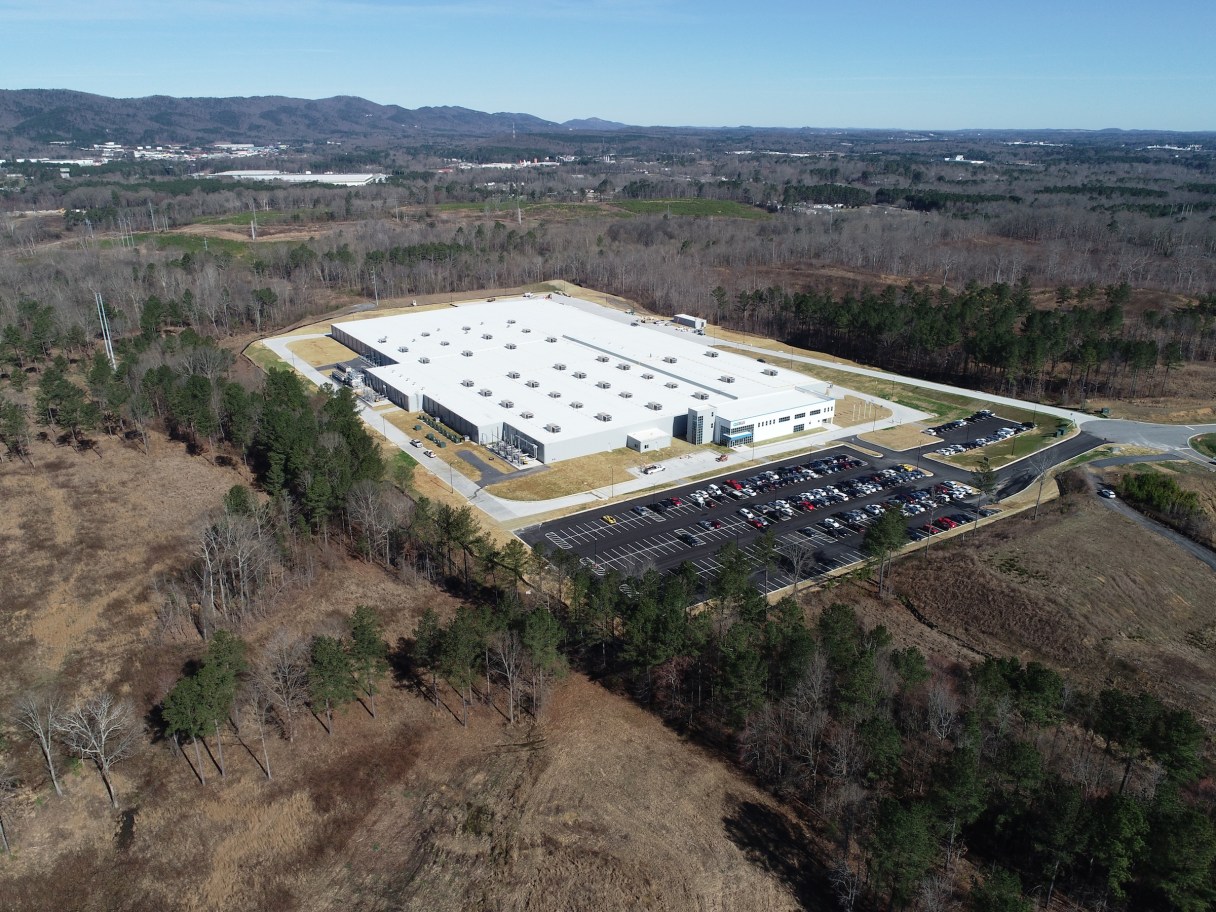
One of the world’s biggest solar panel makers which recently began shipping photovoltaic modules from its new plant in Dalton, Georgia is suing three rival solar manufacturers, claiming they are illegally infringing on patented technology to improve their products.
Hanwha Q Cells and Advanced Material Corp., said Tuesday it has filed lawsuits in U.S. and German courts and with the U.S. International Trade Commission, claiming that two Chinese competitors and a Norwegian rival are using Hanwha’s passivation technology on their equipment. Hanwha Q Cells alleges that Chinese panel manufacturers Jinko Solar and Longi Solar and the Norway-based REC Group are illegally using a patented technology, which helps boost the power output from light in creating electricity from solar panels.
The request for an ITC investigation and court order against the three rival firms comes as Hanwha Q Cells gears up production at the $157 million plant the company has built in the Carbondale Business Park in Dalton. The new facility, which was announced last May, is scheduled to employ more than 600 employees by the end of the year as part of Hanwha Q’s strategy to capitalize on the growth of America’s solar industry, which the Solar Energy Industries Association projects will double in the next five years.
“We have taken these actions both to protect our property rights and to give the market confidence that research and development initiatives to develop future technologies can continue,” said Hee Cheul (Charles) Kim, chief executive of Hanwha Q CELLS and Advanced Materials Corp. “Our high-efficiency modules rely on this patented technology and set us apart from competitors.”
The 300,000-square-foot production plant Hanwha Q Cells is building in Dalton is equipped to produce up to 1.7 gigawatts of solar panels when it is in full production later this year. The Dalton plant began shipping the first solar panel parts last month.