
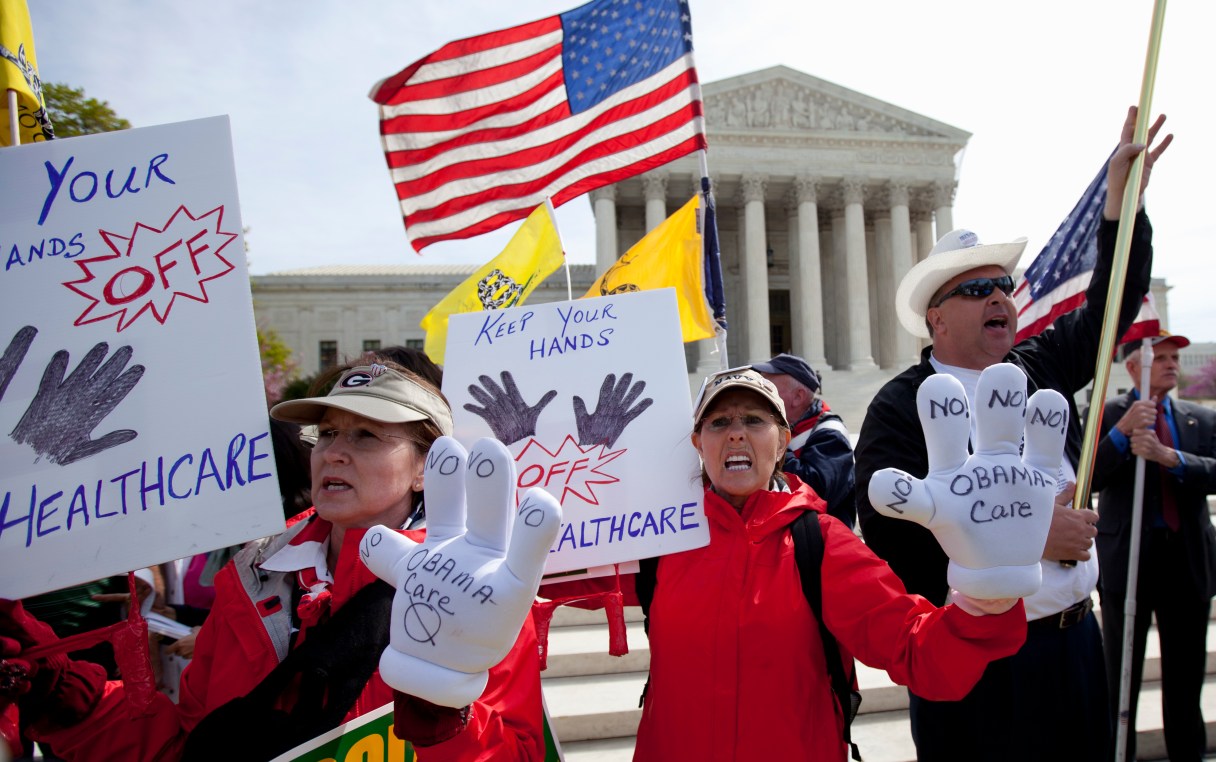
WASHINGTON (AP) – Supreme Court justices have their first chance this week to decide whether they have the appetite for another major fight over President Barack Obama’s health care law.
Some of the same players who mounted the first failed effort to kill the law altogether now want the justices to rule that subsidies that help millions of low- and middle-income people afford their premiums under the law are illegal.
The challengers are appealing a unanimous ruling of a three-judge panel of the federal appeals court in Richmond, Virginia, that upheld Internal Revenue Service regulations that allow health-insurance tax credits under the Affordable Care Act for consumers in all 50 states. The appeal is on the agenda for the justices’ private conference on Friday, and word of their action could come as early as Monday.
The fight over subsidies is part of a long-running political and legal campaign to overturn Obama’s signature domestic legislation by Republicans and other opponents of the law. Republican candidates have relentlessly attacked Democrats who voted for it, and the partisanship has continued on the federal bench. Every judge who has voted to strike down the subsidies was appointed by a Republican president.
The appeal has arrived at the Supreme Court at a curious time; there is no conflicting appeals court ruling that the justices often say is a virtual requirement for them to take on an issue. Justice Ruth Bader Ginsburg cited that practice, for example, as a reason she and her colleagues decided not to take on the same-sex marriage issue. And in the gay marriage cases, both sides were urging the court to step in.