
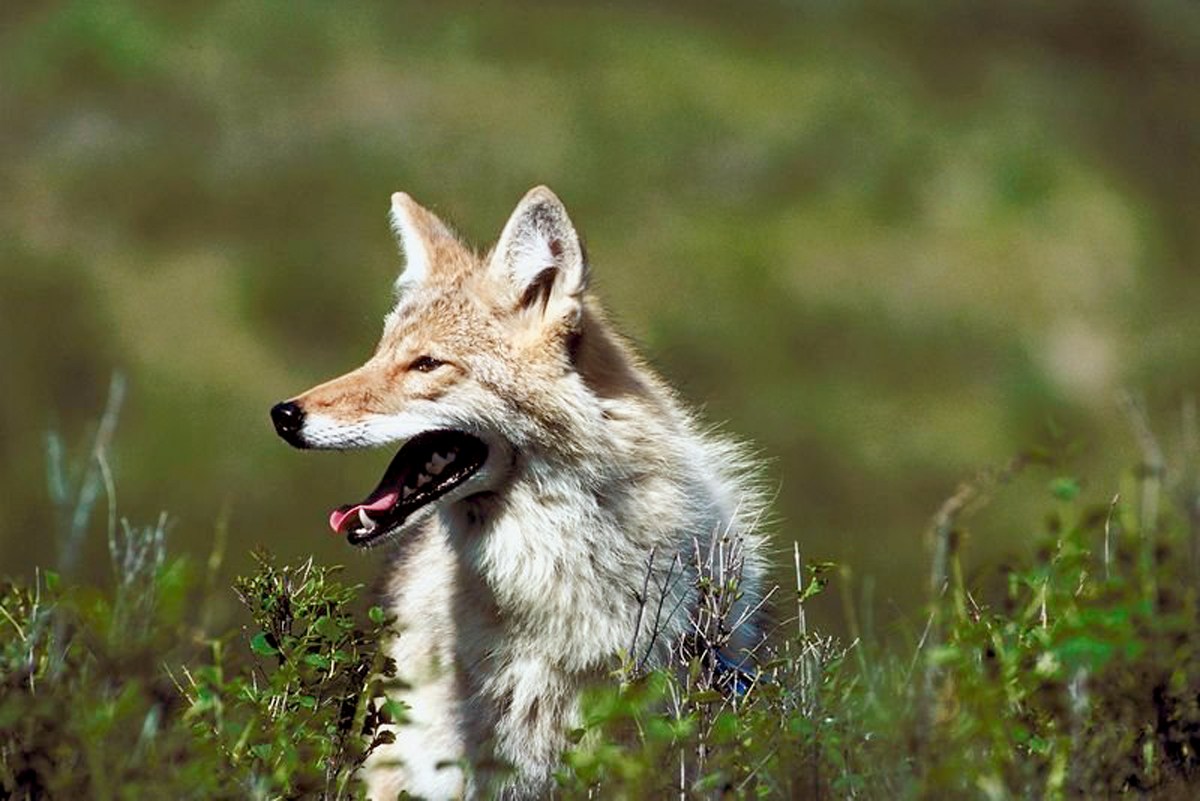
Almost every night, Jon Larson sees coyotes bold enough to lurk under street lights near his home on Dartmouth Street in the heart of North Chattanooga.
He says he hears them dismembering unlucky pets and small animals in the nearby woods.
City officials, animal control officers and Tennessee Wildlife Resources Agency personnel tell him there’s nothing they can do.
So who can, Mr. Larson wonders.
“If I shoot them, will I be cited for discharging a weapon in city limits?” he asks.
The answer is yes, if he’s caught. And urban residents throughout Tennessee and Georgia face the same problem. Coyotes are a growing problem in both states, according to wildlife and animal control officials.
Northwest Georgia officials with the Department of Natural Resources say they’re on track to record about 400 coyote complaints this year, up from 74 in 2002.
Southeast and Middle Tennessee authorities with the Tennessee Wildlife Resources Agency don’t keep a formal tally. But telephone receptionists in the Crossville office, which includes the Chattanooga area, say they get two to three calls a week for multiple coyote complaints.
The Middle Tennessee office, which covers the western area of the Chattanooga region, gets two to three calls a day, according to TWRA secretary Sandie Heidenway.
Last month, a Whitfield County man told authorities that coyotes killed his dachshund. His neighbor said the coyotes were killing his calves.
PDF: Ga Coyote Fact Sheet PDF: TN coyote control
But officials with local animal shelters and control offices say their job is to deal with domesticated animals such as dogs and cats, not wild animals such as coyotes.
Diane Franklin, the Whitfield County rabies officer and veterinary technician for the Whitfield County Animal Shelter, said officials there are receiving lots of complaints about the newest members of the region’s wildlife community.
“We’re hearing about a lot of damage they’re doing, but there’s really not anything we can do,” Ms. Franklin said. “We don’t actually deal with wildlife … Each property owner has to deal with them themselves, and you really can’t trap them because they’re too smart.”
City of Chattanooga spokesman Richard Beeland echoed her statement.
“The last time I dealt with (a coyote complaint) was a problem on Stringer’s Ridge,” he said. “But we don’t do anything, and TWRA doesn’t, either. And McKamey (Animal Shelter) doesn’t, either.”
“We view it as the same as if you have a rat problem in your house or property. There’s not really anything we can do but refer people to the Yellow Pages and pest control,” Mr. Beeland said.
Where is help?
Dan Hicks, a biologist and spokesman for the Tennessee Wildlife Resources Agency, said coyotes, once ranging only in the western part of the state, are prevalent now in every area.
But what to do about them is “a hard answer,” he said.
“A lot of times people become alarmed and excited when they see coyotes, but most of the time these animals are shy,” Mr. Hicks said. “Typically, they run from humans. If (coyotes) challenge or approach, red flags should go up.”
Such behavior could mean that the animal is especially aggressive or even that it might have rabies or distemper, he said.
Mr. Hicks and David Gregory, a senior wildlife biologist with the Georgia Department of Natural Resources, said the best offense is to make your home and neighborhood unattractive to the wandering opportunists.
“When people leave food out to feed wild cats or another animal, that attracts coyotes,” Mr. Hicks said.
In both Tennessee and Georgia, only a handful of pest control operators are licensed to handle nuisance wildlife. While there is no hunting limit on coyotes in either state, it is illegal to transport the animals without the special permits.
Tanner Flowers with Tennessee Technicians is registered to trap and destroy coyotes and other “nuisance” wildlife. He said he can’t offer a price on the service until he sees the area where coyotes have been seen.
The first thing he does is look for tracks, then he makes a plan, sets snare traps and comes back daily to check. If he catches a coyote, he kills it.
“You have to put them down. That’s state guidelines. You can’t transport them. The best method, just shooting them,” he said. “When they’re caught, they are already in attack mode. They can and will attack.”
Some reports indicate coyotes are becoming more aggressive even when they are not cornered.
Recently in Greenburg, N.Y., a coyote attacked a woman walking near her home.
The incident, though rare, has helped prompt Sam Powell, a Signal Mountain resident and founder of the Cumberland Trail, to begin organizing a meeting in the next several weeks to inform residents locally about living with coyotes.
Mr. Powell, also registered to trap and destroy nuisance wildlife, said he recently walked up on several coyotes on the new Shackleford Ridge trails near the Signal Mountain Middle-High School.
“As soon as they saw me, they ran,” he said. “But we made that trail so a mom could push a buggy on it. And I just couldn’t bear it if some child got hurt.”
COYOTE FAST FACTS
* Coyotes usually hunt in groups of two or three.
* This is mating season for coyotes, and litters, born in April and May, usually number from 5-7, but sometimes 16-19.
* Coyotes can breed with both domestic dogs and wolves. A dog-coyote mix is called a “coydog.” Possessing them is illegal and unwise, as their wild instinct is unpredictable.
Source: Wildlife experts
MAKE THEM FEEL UNWELCOME
* Don’t feed pets outside.
* Don’t feed stray animals outside.
* Don’t leave garbage open.
* Be aware that feral cats are a favorite food source.
* Know that a small dog in a back yard, on a leash or on a chain looks like an easy meal.
* If you see a coyote, make noise and flash lights.
* Don’t put food out for coyotes or other wildlife.
Source: Wildlife experts