
RAHIM FAIEZ
Associated Prses Writer
KABUL – Afghan forces tightened security in Kabul on Tuesday, a day after a brazen Taliban assault on the capital left 12 people, including seven militants, dead and raised concerns about the government’s ability to protect even urban centers.
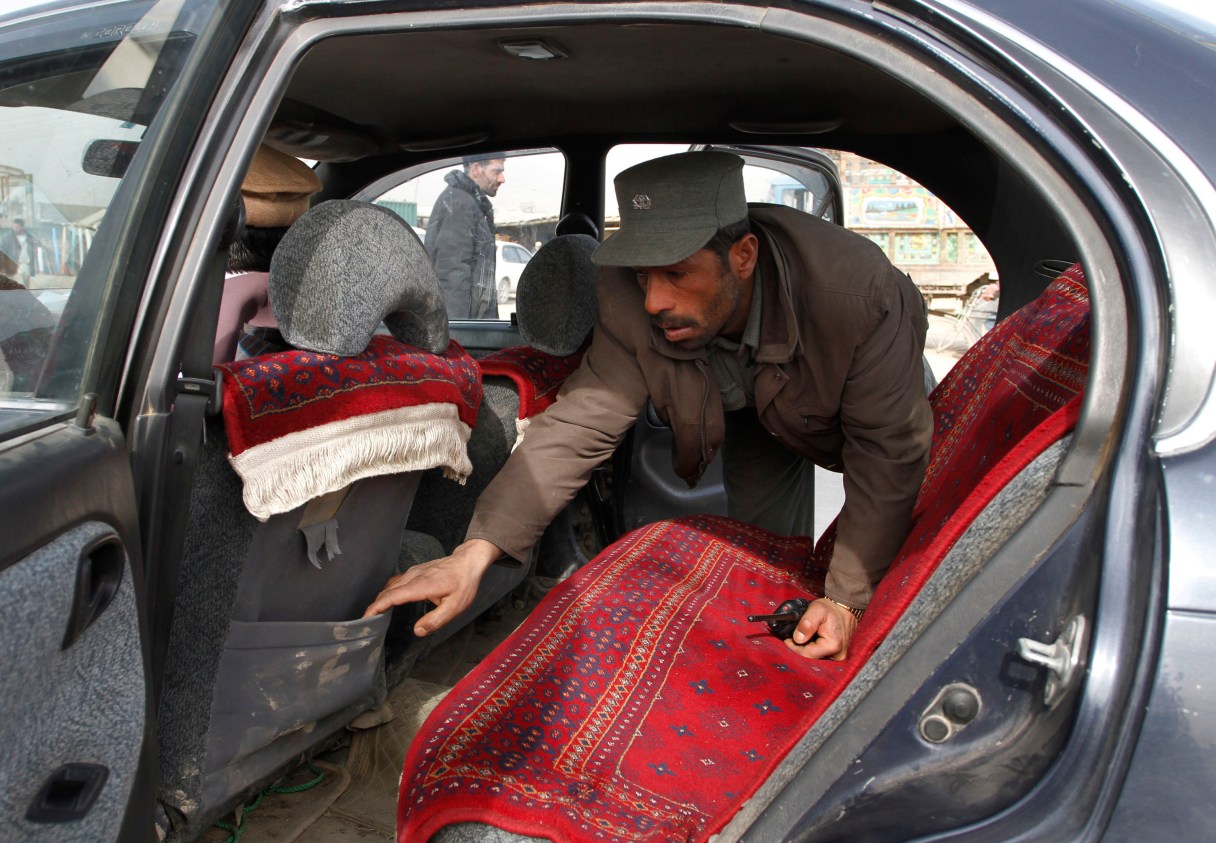
Troops searched vehicles entering the city and increased the number of checkpoints, along with foot patrols and vehicle patrols, said deputy police chief Mohammad Khalil Dastyar.
The streets were otherwise calm, and traffic was back to normal a day after the attack, which left many roads deserted except for security forces as terrified Afghans raced for cover from explosions and machine-gun fire that echoed across the city. Afghan forces along with NATO advisers managed to restore order after nearly five hours of fighting.
The assault by a handful of determined militants dramatized the vulnerability of the Afghan capital, undermining public confidence in the ability of the government and its U.S.-led allies to provide security. A handful of gunmen – perhaps fewer than a dozen – paralyzed a city of 4 million for hours, forcing government ministries to stop work as police used the buildings for firing positions.
Mohammad Nasir, a taxi driver, said the government needs to do more to stop foreign attackers from crossing the border.
“They always say that these attackers are coming from outside, but they don’t have wings to fly from the sky and come here, so they come from the ground,” he said. “If we had professional Afghan forces, they could stop them … but we see we don’t have professional forces to keep them from coming.”
Seven attackers either blew themselves up with suicide vests or died in fierce gunbattles. The civilian casualty toll, meanwhile, was relatively low – two, including one child. Three security forces also were killed.
Most of the 71 people wounded suffered light injuries and all but three had been treated and released by Tuesday, according to Said Kabir Amiri, who oversees hospitals in Kabul.
One man who owned a store in a shopping center that was the site of one of the fiercest standoffs on Monday said the militants told the manager to evacuate the building before the fighting started.
“They did not take any one hostage. They had Kalashnikovs, but we came out without any harm,” Abdul Ghafar said Tuesday as he surveyed the charred exterior of the four-story building.
He criticized government forces for opening fire at the building instead of forcing the militants out by other means.
“Four or five families were dependent on each shop in here. Two, three or more were as partners in each shop and shared their money and invested in the mall,” he said.
NATO said the operation to secure the capital on Monday was Afghan-led, though it had explosives experts and other troops in supporting roles.
New Zealand’s Prime Minister John Key said Tuesday that some of his country’s troops were caught up in the fight.
“A small element of the SAS (special air service commandos) were among those who took up positions close to the incident,” Key told reporters, adding their involvement was very limited. “They were quite a long way back from the building (where insurgents holed up) as I understand it.”
New Zealand has five soldiers attached to the headquarters of NATO’s International Security Assistance Force in Kabul and another 140 troops involved in provincial reconstruction and security in Bamiyan province northeast of Kabul.
NATO military chief Adm. James Stavridis, who arrived in Kabul for a visit Monday as the attack was under way, lauded the Afghans for successfully containing the violence.
“Afghan national security forces effectively countered an insurgent attack in downtown Kabul,” he said in a statement, adding the coordinated effort “highlights their improved effectiveness in protecting Afghan citizens.”
The attacks also sent a message that the mostly rural Taliban are prepared to strike at the heart of the Afghan state even as the United States and its international partners are rushing 37,000 reinforcements to join the eight-year war.
It was the biggest assault on the capital since Oct. 28, when three gunmen with automatic weapons and suicide vests stormed a guest house used by U.N. staff, killing at least 11 people including five U.N. workers. Taliban suicide bombers and gunmen also struck government buildings in the capital last February, killing more than 20 people.
But Monday’s fighting persisted longer than any initiated by the Taliban in the capital since they were driven from power by the U.S. and its allies in 2001.
“The government should maintain good security at the four main entrances of Kabul city and should not let the suicide attackers and bad people enter our land and kill innocent people,” said Mohammad Amin as he stood in front of a charred shopping center that was destroyed Monday after two suicide bombers detonated their vests inside during a gunbattle with Afghan troops.
Elsewhere, four Afghans who had been kidnapped along with two Chinese engineers were released Tuesday with the help of village mediation, three days after they were seized by Taliban militants on their way home from working on a road construction project in northwestern Afghanistan, an official said.
Afghan and NATO forces in the Ghormach area of Faryab province also killed 10 Taliban militants and detained three others late Monday in an operation linked to the kidnapping, the deputy provincial governor, Abdul Sattar Barez, said without elaborating.
Chinese Foreign Ministry spokesman Ma Zhaoxu said the kidnapping was being investigated.
___
Associated Press writer Amir Shah contributed to this report.