
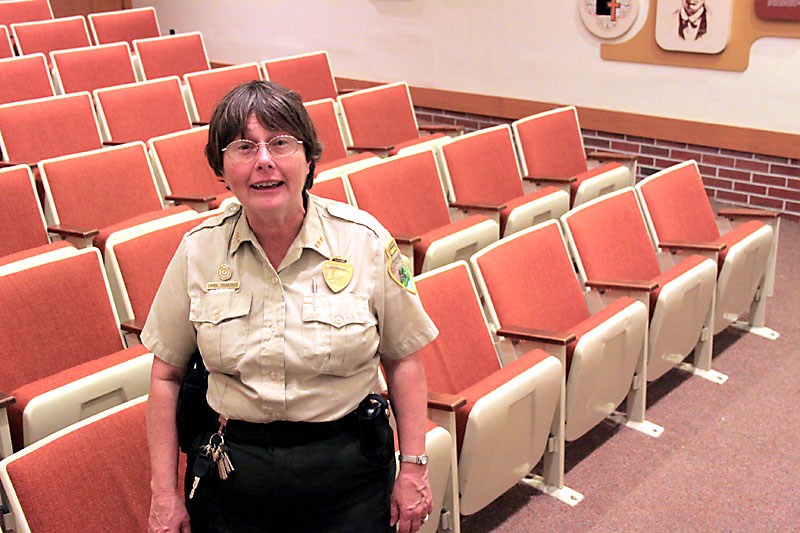
CLEVELAND, Tenn. — After nearly three decades, the introduction film shown to audiences at Red Clay State Historical Area is in need of an upgrade.
“People go in and watch it, and sometimes they get up and leave before it’s over,” said Park Manager Carol Crabtree. “It’s very dry.”
The seven-minute documentary about the historical significance of the park has been shown in the visitor’s center theater since 1981, two years after the historical area first opened, and consists of blurry still pictures accompanied by narration.
“We do not have a good video,” Mrs. Crabtree said. “We may be missing that one little spark which might ignite someone’s heart and make a big difference in a person’s life.”
So several months ago, her husband, James, began writing a script for a new documentary to be shot in live-action with a cast of dozens.
At the moment, the screenplay is under review by the Eastern Band of the Cherokee Nation and the Cherokee Nation in Oklahoma, said Mr. Crabtree, who is part Cherokee.
Mr. Crabtree said he submitted the script to the Cherokee Nation because he wants the film to be completely accurate in its portrayal of the pivotal council meetings held at Red Clay — the seat of Cherokee government from 1832 until the Trail of Tears began in 1838.
“I just wanted to leave a legacy for my ancestors and for people to learn more about the Cherokee,” he said. “Not many people really know what the Cherokee are about.”
Despite never writing a script in his life, Mr. Crabtree said the local production company helping to produce the film, Charter Media, gave the draft a read-through and thought he had been writing screenplays for years.
The new film would portray Red Clay as an active area where history is still made, Mrs. Crabtree said. But in order to make the movie, the park must come up with an estimated budget of $90,000 to pay for the production crew, advertising, costumes and lodging for the actors.
Mrs. Crabtree completed a grant application and submitted it to the Cherokee Preservation Foundation at the beginning of the month, but said she won’t hear back until early October.
If the grant doesn’t come through, filming won’t commence in October as scheduled, Mrs. Crabtree said.
Even if the grant is fulfilled, the park still needs to raise an additional $17,000 to shoot the movie.
“We’re having a hard time getting the donations we need to make this thing happen,” Mr. Crabtree said.
Shooting the entire movie will take about four days and will involve 35 children and seven actual Cherokee elders, she said. The film is slated to run 15 minutes, nearly double the runtime of the current documentary.
Mrs. Crabtree said the film will be very emotion-driven, while still delivering solid information.
“Once it’s done, anyone who comes out of that theater without being moved has a heart of stone,” she said.
Online: Read previous stories.