
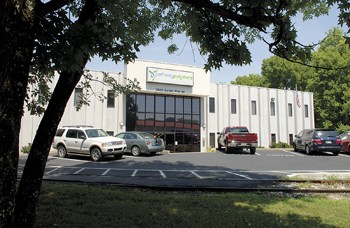

Pathway Polymers, inventor of the first polyurethane tire flat-proofing material in 1971, marked four years without a serious accident on Thursday.
“Health and safety is always an agenda item,” said Nigel Hay, chief executive of Pathway holding company Vita Group, at a barbecue picnic. “Four years is a fantastic achievement.”
The 34 employees responsible for the achievement feasted on pork, chicken and ribs, shielded from the 95-degree heat under a tent at the company’s Amnicola Highway location.
Pathway Polymers’ basic product is a synthetic mixture that, when combined, can be pumped into large off-road tires and hardens into a polyurethane filler that prevents the tires from going flat or rupturing. Construction, farm and industrial environments are the most popular destinations for the filler, according to John Danules, chief operating officer.
“In industries where they can’t afford downtime and large rental houses, they demand run-flats to avoid the cost of a flat tire on the job, which is about $450,” he said.
The company tests the integrity of the filler by attacking tires with glass or sharp metal, and even shooting them with bullets, officials said.
In fact, when recycling the tires, from which the company can recoup 65 percent of the recycled material, staff are required to use handheld metal detectors to locate wrenches, screwdrivers and other metal objects embedded in the tires that could interfere with the recycling operation, according to Joe Danules, brother to John Danules and chief executive officer.
He said that while the company only is able to put 65 percent of recycled material back into new TyrFil, as the product is known, work is under way to increase that percentage and to develop a product suitable for consumer road tires in the future.
“That’s the dream,” he said.
Pathway Polymers’ health and environmental safety officer, Eric Johnson, said his team is mindful of safety as they tackle the estimated 200-million-pound market for the company’s TyrFil product.
Some of the most effective techniques he found for accident prevention include checklists for every task with the possibility of danger, labeling on every product indicating what protective items should be used when handling it and, most importantly, constant encouragement to employees to speak out about safety.
“If you get employee input regarding a change, they’re much more likely to buy into what that change may be,” Mr. Johnson said.