
BY THE NUMBERS2 – Beekeepers who make a living from bees in the Chattanooga area4 – Wings on a honey bee 5 – Eyes on a honey bee15,000 to 50,000 – Bees in a typical hive 9 out of 10 – Honey bees killed by mitesSources: TVBA, honeybee.com
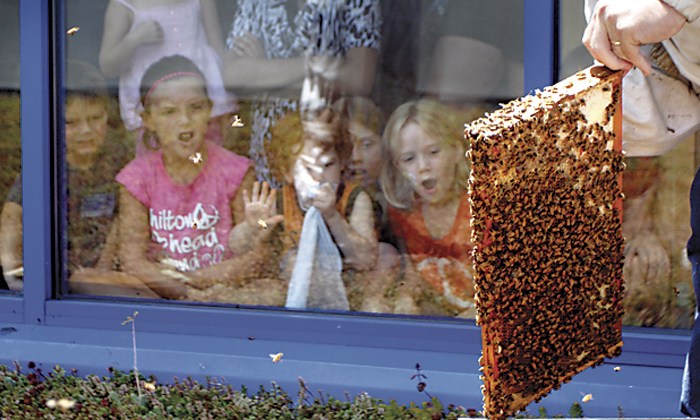
As Bob Gray lifted a frame out of the hive with hundreds of bees attached, the children behind the glass simultaneously uttered “whoa,” while several adults grimaced and gave thanks to the barrier between them and the flying insects.
“I’m not (scared of bees) now that I’ve seen them,” 6-year-old Caleb Kelley proclaimed.
“But you were glad to know that we were going to be on the inside and the bees were going to be on the outside, weren’t you?” his grandmother, Linda Kelley, asked.
Caleb agreed.
The Kelley family was one of many from the area that attended the Creative Discovery Museum’s 10th annual Honey Harvest on Sunday. The event featured demonstrations on how to make beeswax products, bee story time, honey taste testing, classes on how to extract honey and presentations showing the innards of people-made beehives.
One of the overall goals of local events like the Honey Harvest is to show the public that bees “are not something to be afraid of,” said Mr. Gray, a volunteer for the Tennessee Valley Beekeepers Association.
“You can have bees in your backyard,” he said. “They’re pretty gentle if you treat them gently and know the proper techniques.”
Beekeeping is becoming a rarity in the U.S., Mr. Gray said, noting problems with mites and diseases that are overtaking bee populations nationwide. These declines have hurt not only wax- and honey-related products, but also the many crops that are pollen-based, he added.
Mr. Gray said that though there are several bee hobbyists in the Chattanooga area, there are only two local beekeepers who make their livings from bee-related products.
“A lot of people just gave up,” Mr. Gray said.
Jason Goppel, who was demonstrating how to extract honey at Sunday’s event, said he and his fellow beekeepers in Clarksville, Tenn., have felt similar pains facing present-day beekeeping. He went into the winter with eight bee hives and came out with one, and one of his friends lost 300 hives in one year.
“It’s becoming increasingly difficult every year to sustain the hives,” said Mr. Goppel, president of the Montgomery County Beekeeping Association.
But despite these struggles, TVBA volunteers are striving to keep a local bee economy churning. They offer eight-month mentoring programs on how to become a beekeeper, as well as shorter-term programs.
The TVBA is scheduled to have its monthly meeting tonight at 7 at the Hamilton County Extension Service Office off Bonny Oaks Drive. The monthly meetings are open to anyone having an interest in beekeeping.
“Most of us got into (beekeeping) because we enjoy bees and want to do our little part for pollination,” Mr. Gray said. “The honey is just an extra side benefit.”