
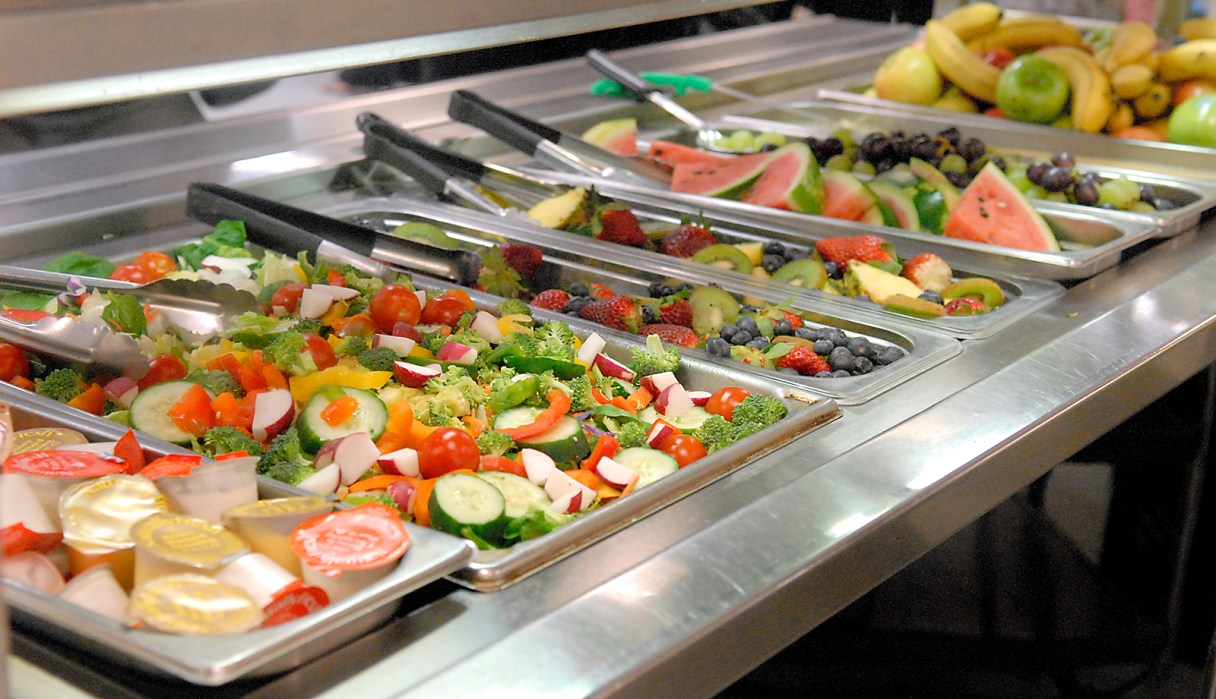

DALTON, Ga. — The school nutrition program developed by North Georgia’s Pyramid Partners is a model of success that she’ll pass on to the White House, USDA Deputy Under Secretary Dr. Janey Thornton said.
“I can hardly wait to get back to D.C. and send this information to the first lady’s office,” Dr. Thornton said Tuesday during her visit to North Georgia. “Obviously, this is exactly the kinds of things she has in mind for overall lifetime wellness.”
The Pyramid Partners’ program mirrors much of first lady Michelle Obama’s “Let’s Move” initiative, aimed at improving children’s health through better nutrition and physical activity, Dr. Thornton said.
PDF: Vegetables in school lunches
“I think the Partnership is great,” she said.
She called Dalton High School’s facilities, which include a pool, cardio room and weight room, “incredible” during a tour Tuesday with principal Debbie Freeman and Dalton food services director Amy Weaver-Akins.
The USDA contingent from Washington, D.C., listened to a presentation by each of the six Pyramid Partner schools systems led by Catoosa County’s Bonnie Safley, the primary initiator of the group formed in 2004.
The partnership includes Catoosa, Chattooga, Dade, Walker, Murray and Whitfield counties, and city systems in Dalton and Chickamauga.
Ms. Safley said the partners used USDA’s MyPyramid to find an easy way to provide the best nutrition by giving students choices within different food groups. She said they converted nutritional requirements for different age groups into serving sizes for each grade level.
The stop at Dalton High was followed by a visit to North Whitfield Middle School where the group sampled the school’s fare. North Whitfield principal Andrea Bradley said Tuesday’s menu was “as-is,” not doctored up for the special visitors.
North Whitfield Middle eighth-graders Grant Heath and Adan Frederico said they liked the lineup.
“I got nachos with cheese, okra and strawberry milk,” said Grant, who noted the menu usually has lots of choices.
Tuesday’s lunch was “pretty good, pretty tasteful,” said Adan, as he plowed through some baked chicken.
Lunchroom cashier Cindy Delgadillo said Tuesday’s most popular item was pork carnitas.
Whitfield’s nutrition director, Iris Graham, described meal management and strategies to get children to eat healthy food. Orange foods are a problem for some finicky eaters, but most students can always find something they like, she said.
Murray County’s Barbara Adair said educating lunchroom staff and visibly marketing healthy eating to students were important to implementing the plan in her system.
MyPyramidDeveloped in 1992, the original Pyramid translated nutrition recommendations from 1989’s USDA Dietary Guidelines and the Recommended Dietary Allowances into the kinds and amounts of food people should eat each day. MyPyramid replaced the original Food Guide Pyramid. The recommended amounts of the foods below depend on age and weight.Daily guide:* Eat at least three ounces of whole grains* Eat more dark green and orange vegetables than brown, and more dry beans and peas* Eat a variety of fresh, frozen or canned fruit, but go easy on fruit juices* Eat or drink low-fat or fat-free milk or other dairy products* Eat varied types of low-fat, baked, broiled or grilled meatsFor more information about MyPyramid and guidelines, go to http://www.mypyramid.gov/index.html.Source: U.S. Department of Agriculture
Training helps staff members understand the new approach, and marketing healthy food with graphic lunchroom illustrations keeps students on track when they talk about nutrition in the class and then head to lunch for some healthy eats, Ms. Adair said.
Ms. Weaver-Akins told USDA officials about the challenges of paying for good food. Most partners have joined together in a “buying co-op” that helped curb some costs, but the poor economy is causing costs to escalate, she said.
Phyllis Oliver, who heads school nutrition for Chickamauga’s small city system and Chattooga County’s district, said some systems face increasing challenges in funding school lunches. Chickamauga has a low percentage of free and reduced-price lunch participants in its student population, she said, while rural Chattooga has a high percentage.
Federal school lunch reimbursements no longer offset the rising cost of food, Ms. Oliver said.
Walker’s Michelle Coker, the newest member of the Pyramid group, said her system implemented the program slowly, which eased the financial and planning impact.
Dr. Thornton said she was impressed with the partners’ commitment in forging a new approach and making it part of the educational experience.
“Nutrition is one lesson they’ll use every day for the rest of their life,” she said.