
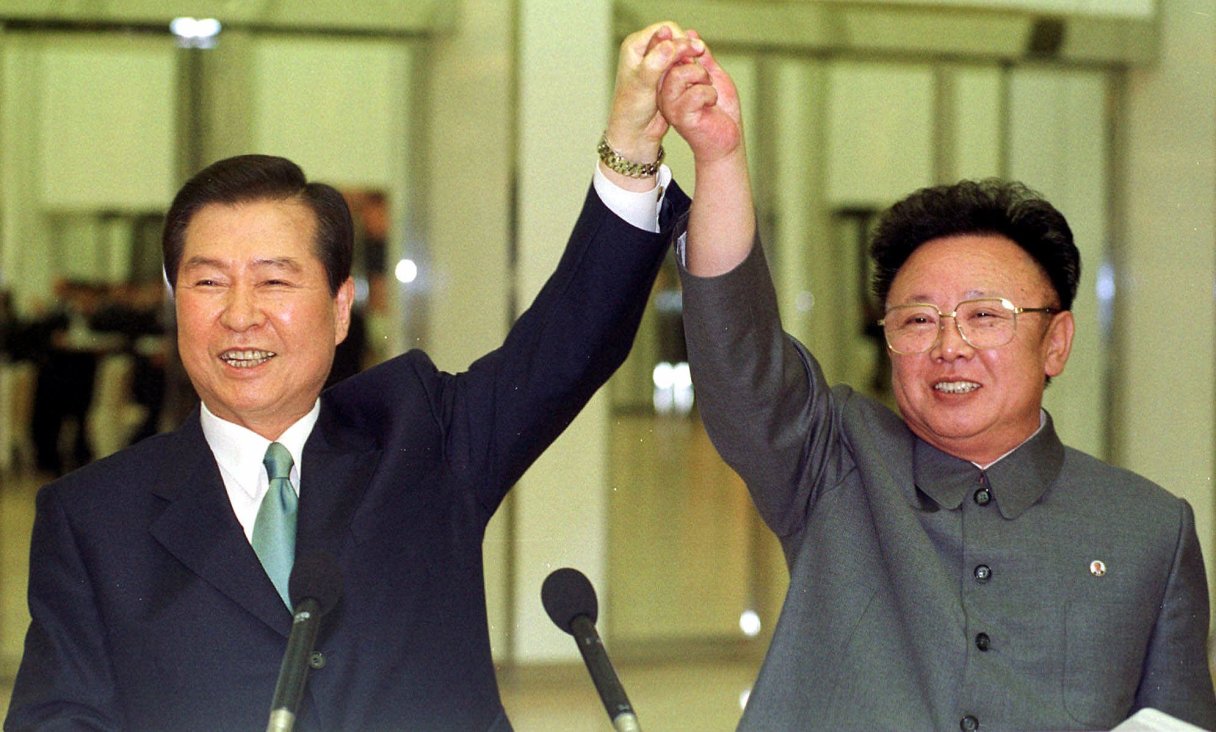
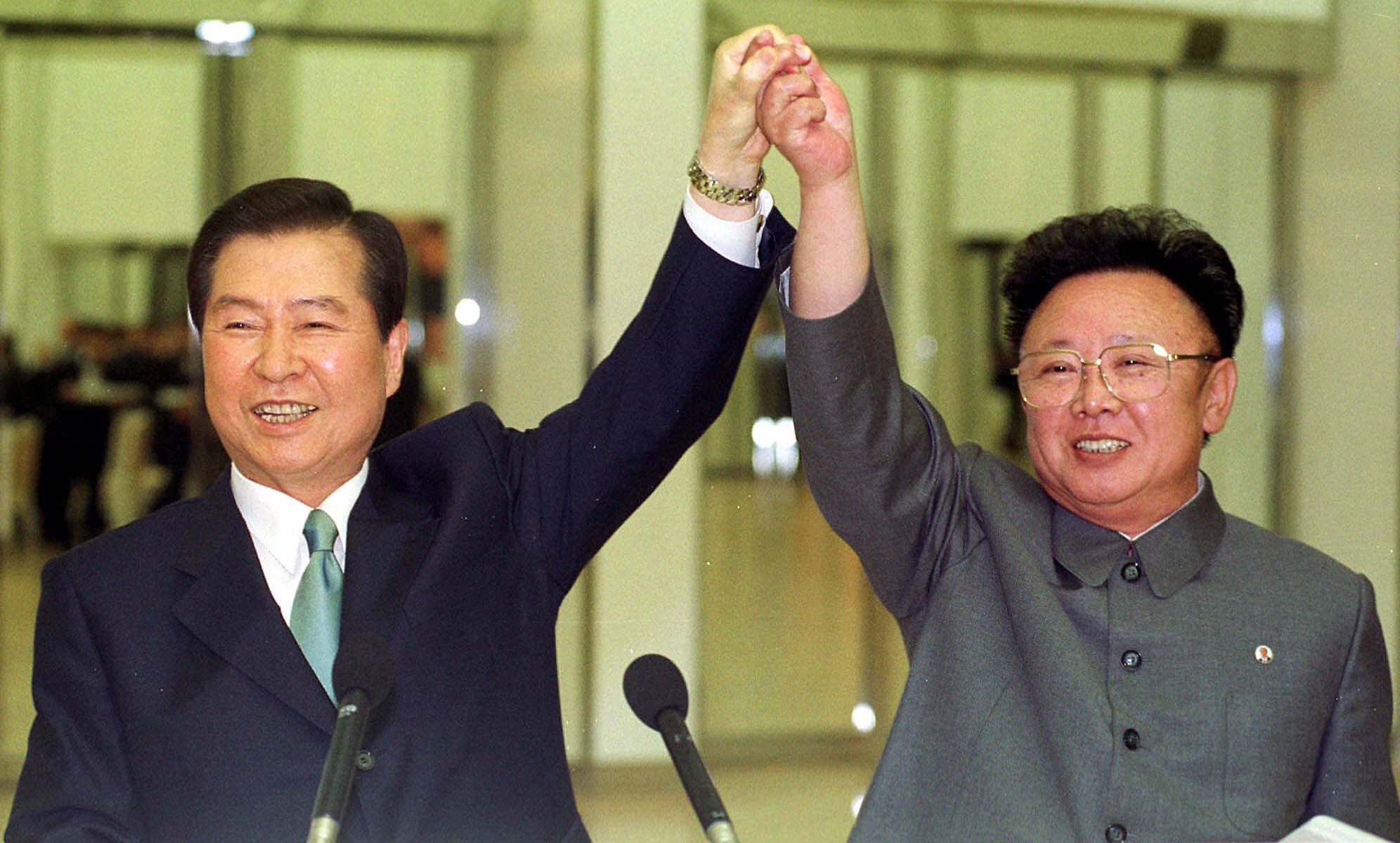
 In this June 14, 2000 file photo, North Korean leader Kim Jong Il, right, and South Korean President Kim Dae-jung raise their arms together before signing a joint declaration at the end of the second day of a three-day summit in Pyongyang. In a breakthrough at the historic summit, the two signed an agreement aimed at easing half a century of conflict on the heavily armed Korean Peninsula and working toward its eventual reunification. Kim Jong Il, North Korea’s mercurial and enigmatic leader whose iron rule and nuclear ambitions dominated world security fears for more than a decade, has died. His death was announced Monday, Dec. 19, 2011 by state television from the North Korean capital, Pyongyang. He was 69. (AP Photo/Yonhap, Pool, File)
WASHINGTON – The Obama administration says it remains committed to stability on the Korean peninsula and is closely monitoring developments there following the death of North Korean dictator Kim Jong Il and the apparent transfer of power to his son.
The administration had been expected to decide, possibly as early as Monday, whether to try to re-engage the reclusive country in nuclear negotiations and provide it with food aid, U.S. officials said Sunday. The officials, who spoke on condition of anonymity due to the sensitivity of the situation, said Kim’s death would likely delay the effort.
The officials said the U.S. was concerned about any changes Kim’s death might spark in the military postures of North and South Korea, but were hopeful calm would prevail.
The White House said it was in constant contact with allies South Korea and Japan, but it offered no substantive comment on the implications of Kim’s death. President Barack Obama spoke with South Korean President Lee Myung-bak at midnight and the two leaders agreed to stay in close touch.
“The president reaffirmed the United States’ strong commitment to the stability of the Korean peninsula and the security of our close ally, the Republic of Korea,” the White House said in a statement early Monday.