
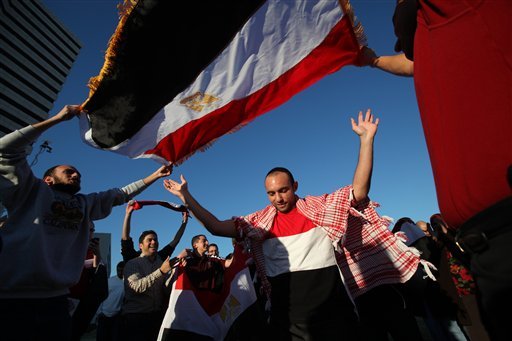
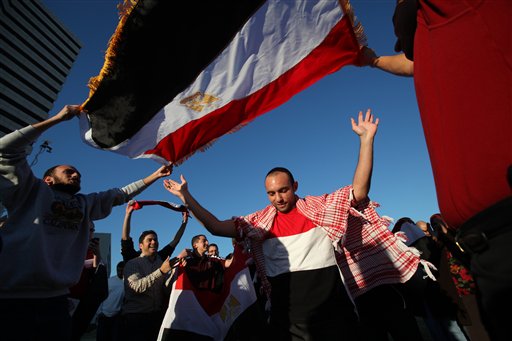
 Ramez Nasr, 23, dances with fellow Egyptians celebrating President Mubarak resignation from his post on Friday, Feb. 11, 2011, in Houston. (AP Photo/Houston Chronicle, Mayra Beltran)
WASHINGTON — The Obama administration got what it wanted when Hosni Mubarak surrendered power. Now it faces another daunting task: coaxing the country’s new military rulers to deliver the genuine democratic reforms they have resisted for decades.
The challenge is to preserve Egypt as a close U.S. ally while also supporting protesters’ demands for a more representative government — probably one that includes a greater role for the Muslim Brotherhood, Egypt’s largest Islamic group.
The U.S. will also try to persuade its other allies in the region to begin their own democratic reforms to avert the kind of protests that toppled Mubarak.
The process brings as much risk as promise for the U.S., which supported Mubarak because he was a reliable ally in a chaotic region who upheld the 1979 peace treaty between Israel and Egypt. The key concern for the White House is that any government that emerges deviates as little as possible from that.
Even as protesters celebrated in Cairo, U.S. officials admitted it was unclear whether the Egyptian military officers now running the country would make good on their promises to undertake real political reform.