
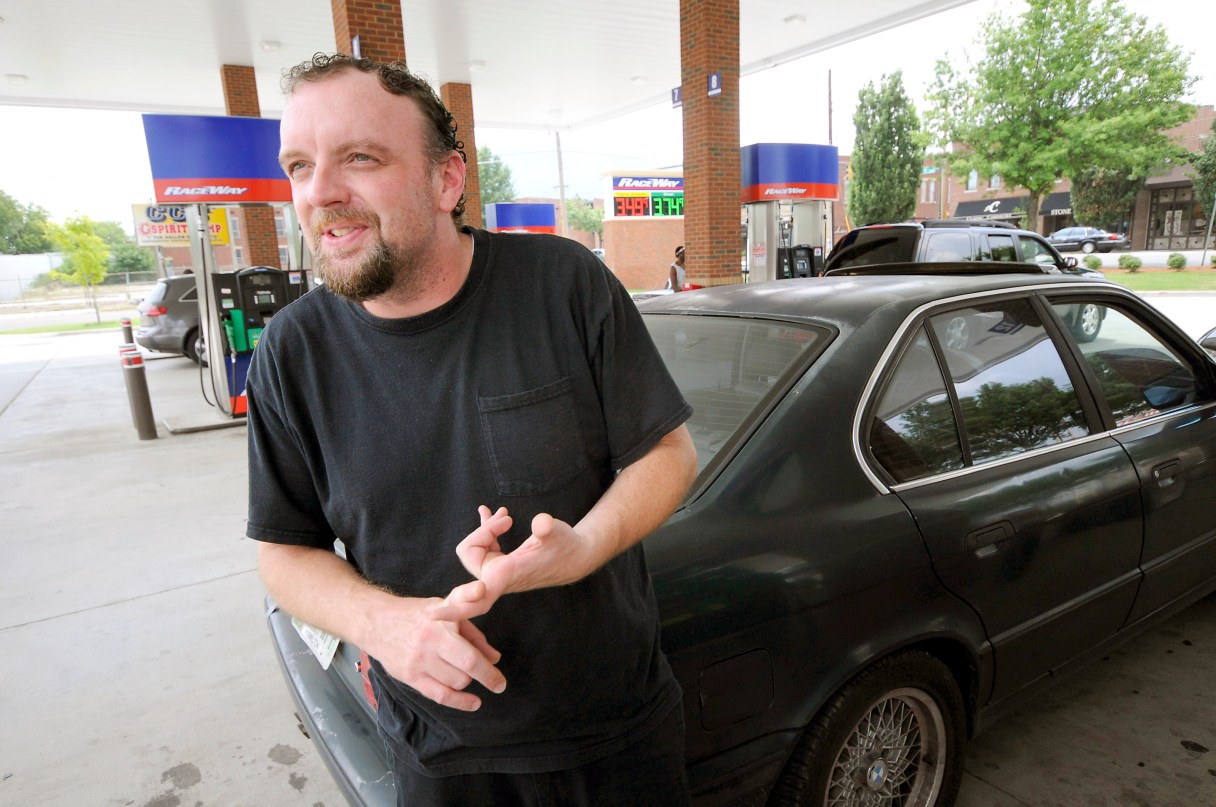
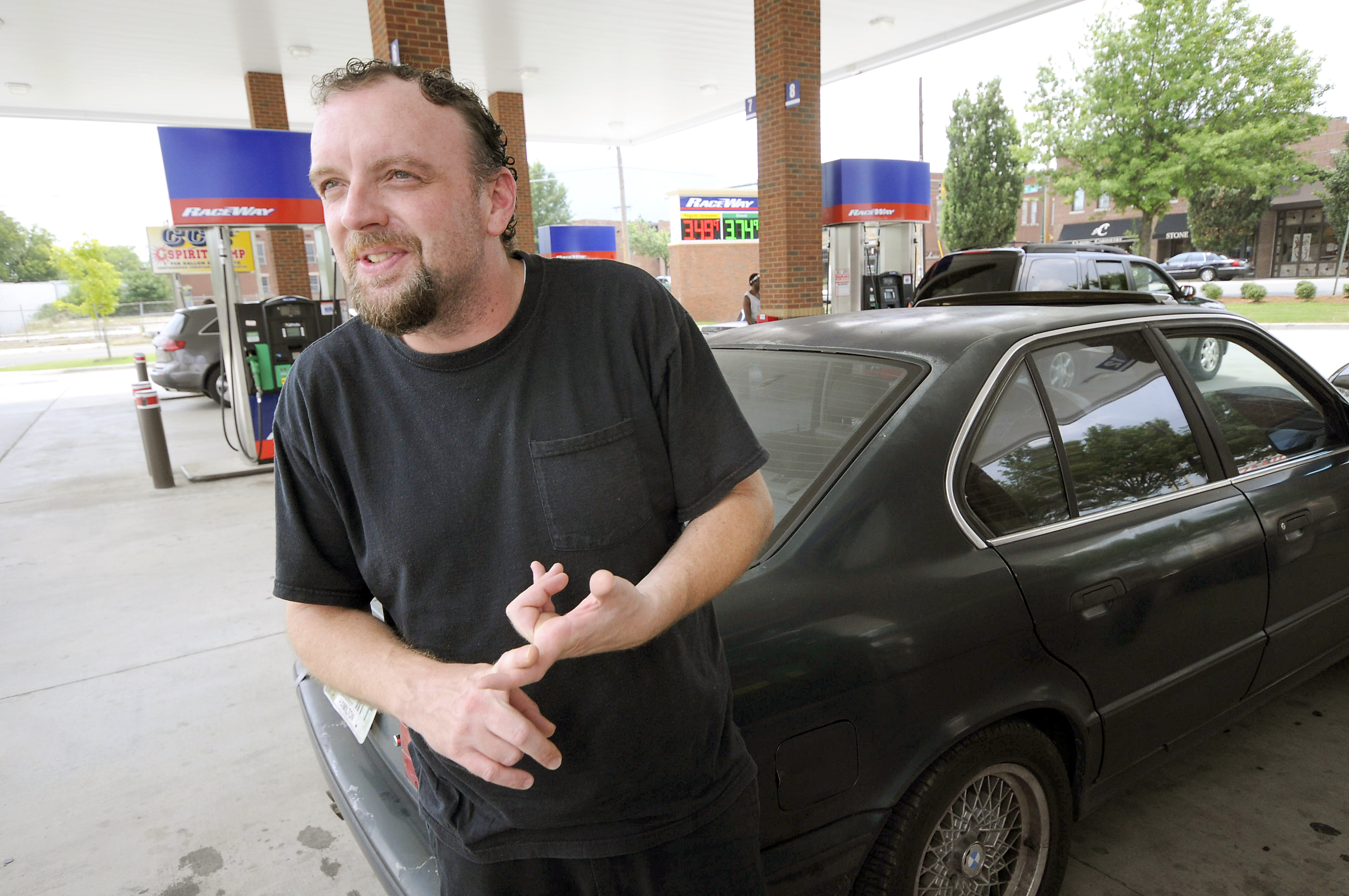
 Brian Floyd, 38, says he puts small amounts of gas in his vehicle at the Broad Street RaceWay because prices have been changing so much.
Brian Floyd only had a few dollars to spare one morning this week, so he put in just enough gas to get to his server job at Mount Vernon Restaurant.
After he earned a few tips, he went back to the RaceWay gas station at 2528 Broad St. the same day to fill up the rest of the way and noticed prices had gone up 6 or 7 cents. Driving home from work that night, he drove past the gas station again and noticed prices had jumped several cents again.
“It just blew me away,” he said.
Floyd isn’t alone. Gas prices have increased nearly 15 cents in Chattanooga in the past week, according to AAA’s daily fuel price report.
The recent spike was driven by two factors, according to AAA spokeswoman Jessica Bradey. China’s economy has faired better than expected while the U.S. dollar has weakened, she said.
Oil is traded in dollars, so the drop in the dollar’s value, coupled with increasing market confidence across the globe, has spiked both the demand and the price of oil, she said.
“We’ll start seeing the market going back to responding to any positive news to push oil prices higher,” Bradey said. “I don’t think they’re going to spike back down.”
Glenn Wilser, owner of Premium Lawn Care and Landscaping in Chattanooga, said gas prices are “really reducing our bottom line.”
“On my regular accounts I can’t really adjust my prices week to week; it’s pretty much the same all year long. I just can’t go up and say, ‘Well, gas is up this week; I’m going to charge you more.'”
Wilser has two trucks for mowing lawns and one general-purpose truck, so fuel accounts for a good chunk of his operating budget. When prices spike, turning a profit can be quite difficult.
“Some of the customers I’m not making enough on. I’ll try to go up on them just to cover to where I’m not losing money,” Wilser said. “I’m doing good just to be making what I was last year, even though inflation makes what I make even less. I just try to stay the same. That’s all I can do.”
Larger companies also are feeling the pinch. Chattanooga’s Stein Construction burns through thousands of gallons of diesel and gasoline each month, so price fluctuations equate to bottom-line drops.
“It’s particularly challenging to put a proposal out when two weeks ago we were paying $3.27 [a gallon] and now we’re paying $3.50,” Stein Vice President Adam Miller said. “It’s a cost we end up eating.”
Gas price increases aren’t affecting just the way the company runs its work sites, he said, but the way it operates its sales and marketing division, too. Driving around to sales calls, employees rack up huge mileage numbers, sometimes at rates so steep they can’t afford to pay for gas and wait for reimbursement, he said.
“We had guys who, on a monthly basis, they might put $1,000 of fuel in their car,” Miller said. “That’s a heavy burden to put on our guys.”
Now, the company gives sales people credit cards to pay for fuel, but that doesn’t help Stein’s bottom line.
EPB has faced similar bottom-line dips alongside the bump in gas costs. The utility’s 375-vehicle fleet burns 20,000 to 22,000 gallons a month, officials said.
“It’s just one of those operating expenses we have to absorb,” EPB spokeswoman Danna Bailey said. “We wish there were something we could do about it, but business has to go on.”