
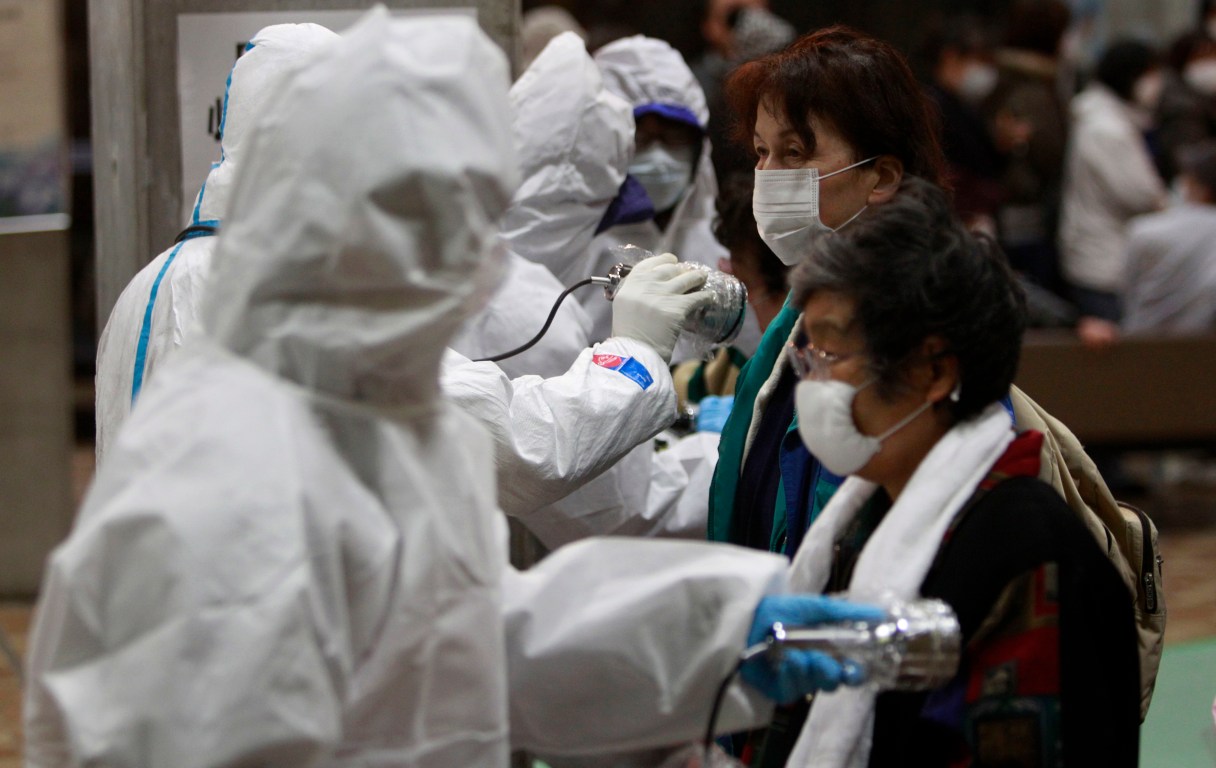
It’s a big ocean between northeastern Japan and the United States and thousands of miles from the crippled nuclear power plant to much of Asia.
Experts have said there’s little chance that radiation from the shattered reactors could pose a serious threat to the wider world.
“Every mile of ocean it crosses, the more it disperses,” said Peter Caracappa, a radiation safety officer and clinical assistant professor of nuclear engineering at Rensselaer Polytechnic Institute in Troy, N.Y.
However, as crews who were trying to prevent a meltdown abandoned the plant to save their own lives, questions remained about just how much radiation levels would rise and where that toxic material would go.
All along, those at immediate risk were workers inside the plant and the people living closest to it.