
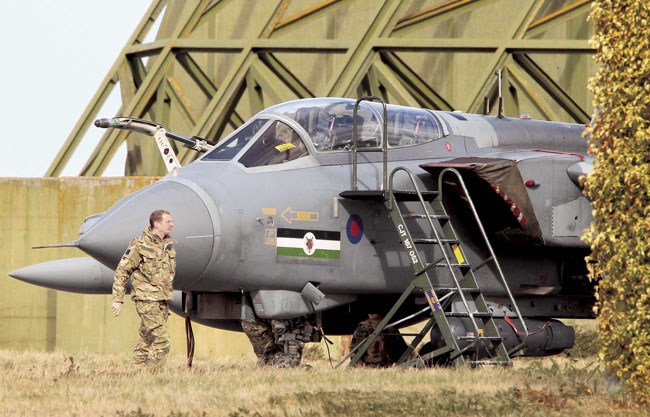
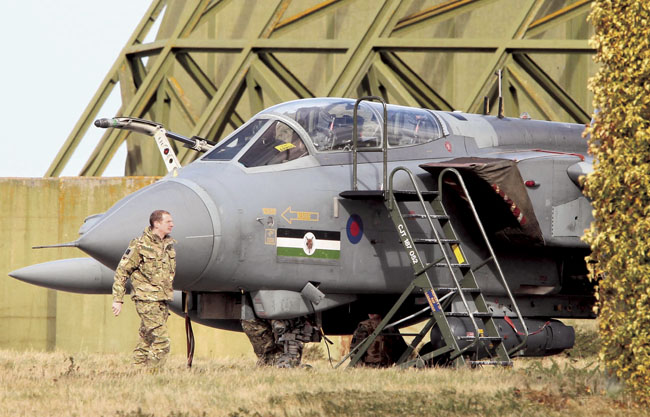
 Air crew work on a Royal Air Force Tornado, one of the typres of aircraft to be used in the operation of a no-fly zone over Libya, at the Lossiemouth air base at Moray, Scotland. Britain’s Prime Minister David Cameron told parliament that preparations to deploy the aircraft were already under way and they would begin moving out to air bases in the Mediterranean region “in the coming hours”.(AP Photo/Andrew Milligan-pa)
By SLOBODAN LEKIC
Associated Press
BRUSSELS – If NATO mounts an operation to enforce a no-fly zone over Libya, it will almost certainly establish quick superiority over Moammar Gadhafi’s outdated air force. But diplomats and analysts – relying on lessons learned from NATO’s intervention in the Balkans in the 1990s – caution that any attempts to launch airstrikes against Gadhafi’s ground forces would be far more dangerous, and could result in serious losses.
NATO’s leaders met Friday to work out the details of a flight ban over Libya, after the U.N. Security Council gave the international community a surprisingly broad mandate to protect civilians under attack by government forces.
Alliance military planners said they could deploy dozens of fighter-bombers, tankers, air surveillance aircraft and unmanned drones to a string of air bases along Europe’s southern perimeter from which to send patrols over Libya.