
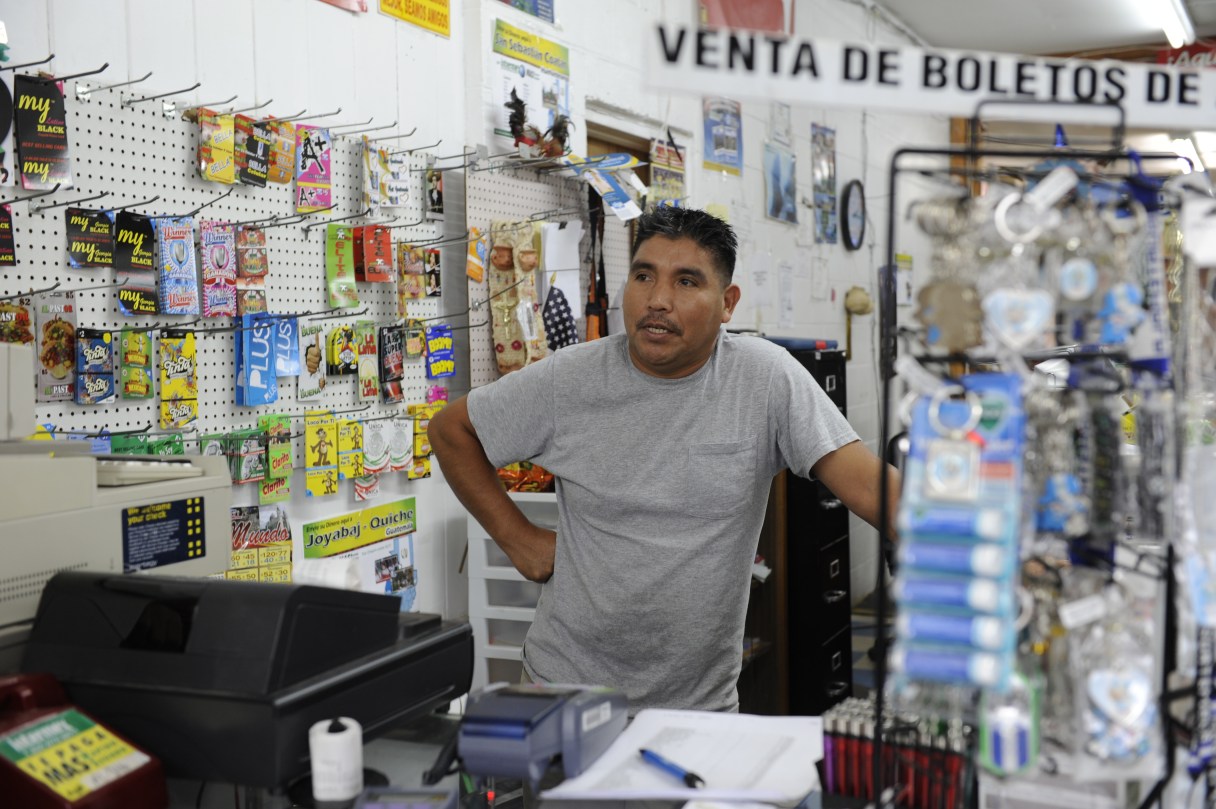
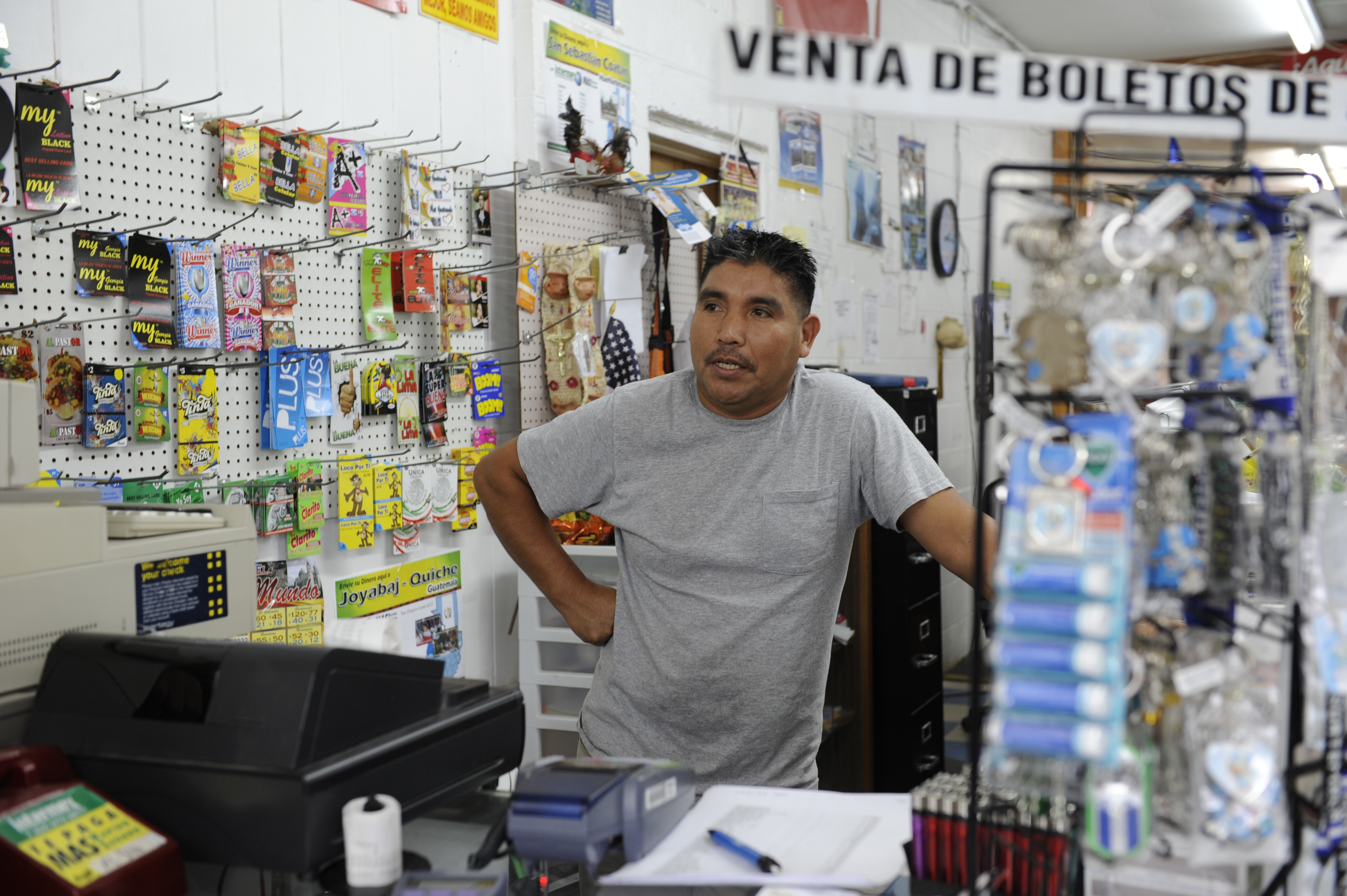
 Silvestre Juan stands inside his store, Tienda Latino, in Fort Payne, Ala., while discussing Alabama’s immigration law.
Alabama unauthorized population1990: 5,0002000: 25,0002010: 120,000Source: Pew Hispanic CenterPopulation broken down by race/ethnicityAlabama• Total: 4.8 million• White: 3.2 million, 67 percent• Black: 1.2 million, 26 percent• Hispanic: 185,602, 4 percentDeKalb County• Total: 897,934• White: 586,752, 65 percent• Black: 186,782, 21 percent• Hispanic: 73,221, 8 percentFort Payne• Total: 14,012• White: 10.091, 79 percent• Black: 21, 0.1 percent• Hispanic: 2,930, 21 percentSource: U.S. Census
FORT PAYNE, Ala. — The full provisions of Alabama’s new immigration law have yet to be implemented, but already its impact in the immigrant community — including fear — is considered much larger than in other states with similar get-tough measures.
“I don’t think we saw anywhere near the level of terror from families and children we are seeing [in Alabama],” said Mary Bauer, legal director with the Southern Poverty Law Center in Montgomery, Ala., in a telephone news conference last week.
It’s been over two weeks since Alabama’s law — considered by many on both sides of the debate as the toughest in the country — went into effect. Advocates and immigrants say the result has been a climate of fear that affects everything from families and schools to business and agriculture.
In other states, “we’ve heard stories of families choosing to leave and rotting crops [because farmers can’t find laborers], but not wholesale terror and destruction of families,” Bauer said. “The other laws didn’t have provisions involving schoolchildren, and the most onerous provisions were [blocked by courts].”