
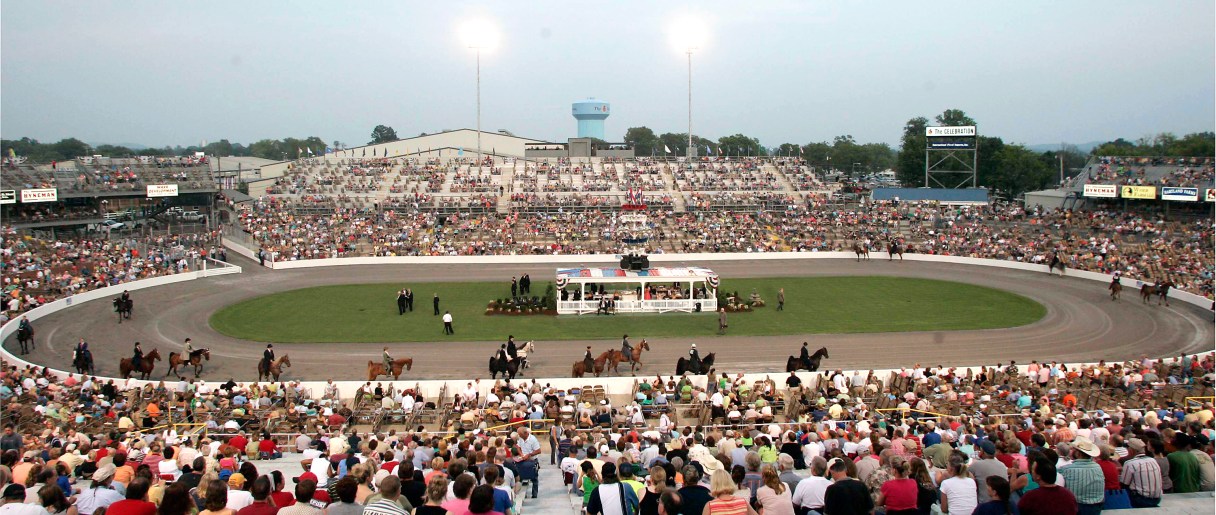
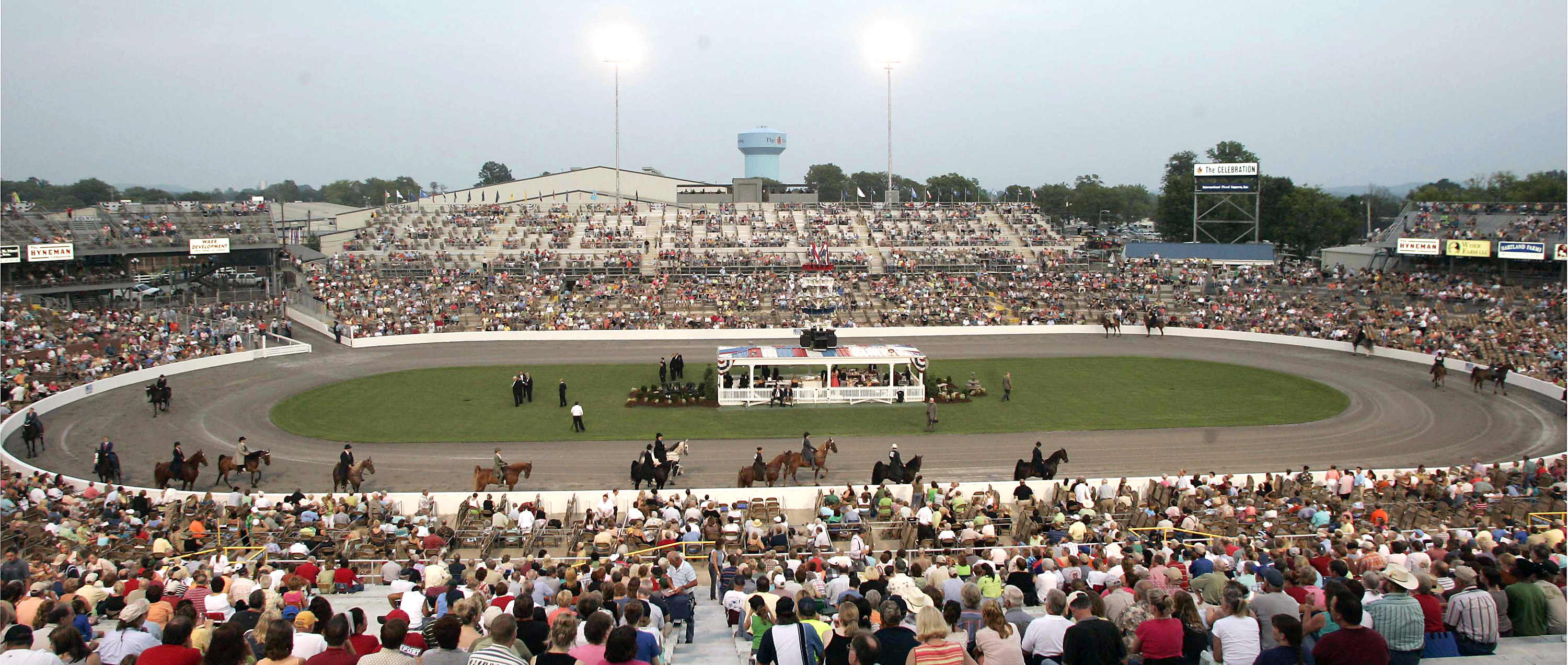
 Competition takes place at the Tennessee Walking Horse National Celebration in Shelbyville, Tenn., Aug. 26, 2006. Owners, breeders and trainers of Tennessee walking horses insist the abuse that led to a federal ban 36 years ago has all but vanished. But government inspectors say they have evidence indicating half the show horses tested at the industry’s premier event in Shelbyville have sustained abuse that is being covered up. (AP Photo/The Tennessean, Mandy Lunn)
Every August, the population in Shelbyville, Tenn., multiplies by 10 as about 200,000 people from across the nation and around the globe trot in to watch the world-famous Tennessee Walking Horse Celebration.
Conceived in 1939, the event features 11 days of horse shows to find the highest-stepping, smoothest-gaited, best-bred Tennessee walking horses. The breed is known for its smooth ride and “big lick” running walk, according to Dale Barnett, spokesman for the Celebration and Calsonic Arena, which includes 63 barns and 1,650 stalls.
Shelbyville, with about 20,000 people, is the county seat of Bedford County, which has the state’s largest population of horses — more than 5,600.
“We’re also known as the Pencil Capital of the U.S. for our long-standing history of manufacturing,” Barnett said.
Most of the pens and pencils in the country still are made in Shelbyville.