
Hidden in some warehouse or basement, a terrorist builds a bomb.
As he unwraps a few pounds of C-4 explosive, the bombmaker’s hands pick up bits of the distinct chemicals that make the bomb explode.
Those same particles are one way for investigators to later find the bomb before it can be detonated.
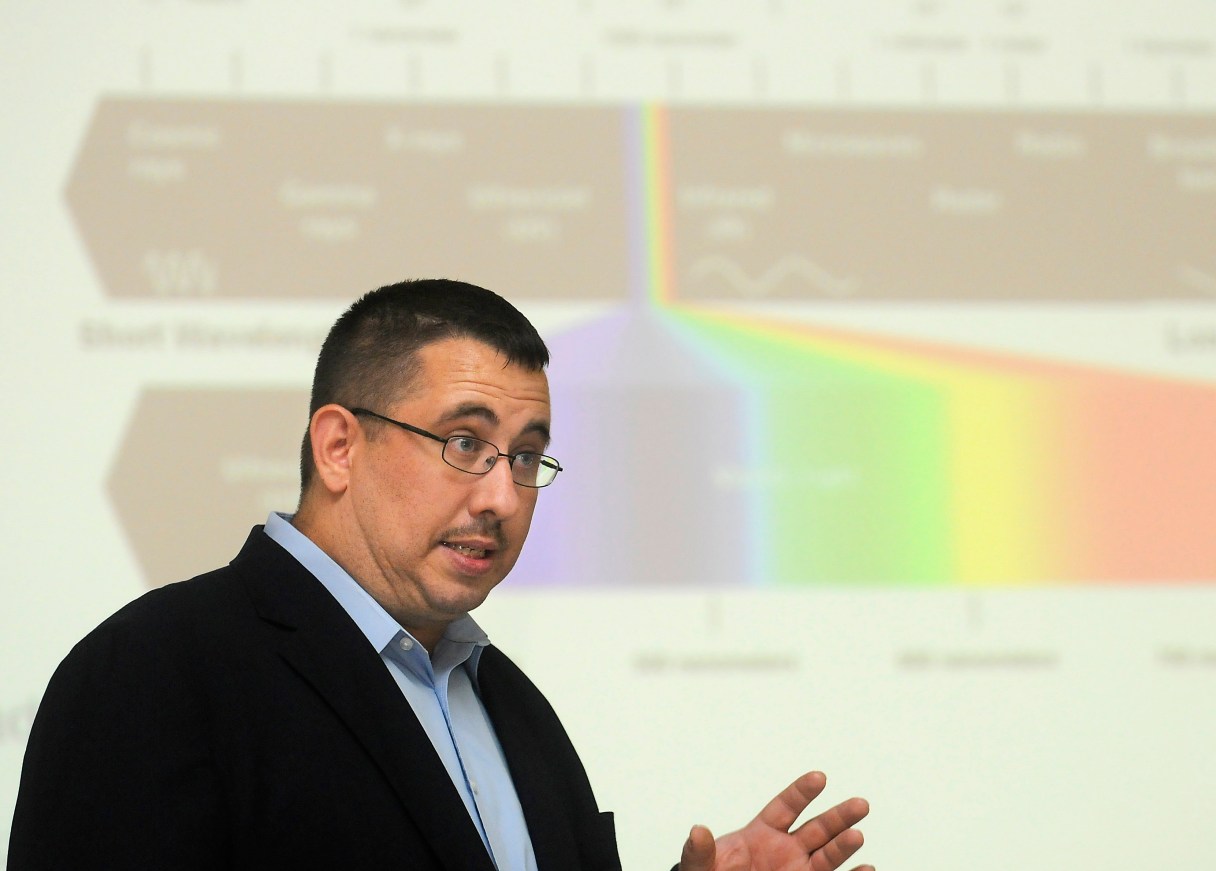
As an employee of the U.S. Department of Homeland Security, Michael Shepard is a chemist who works with developing technologies, including lasers, to find those specks, detect bombs and possibly prevent catastrophe. He spoke Monday night at the University of Tennessee at Chattanooga to a group of about 30 students and faculty about finding bombs before they go off.
Part of the problem with detecting bomb-making materials, he said, is that the bomb-maker not only touches the chemicals, he also touches his clothes, his sandwich, a soda can. A bit of mayonnaise, bread crumbs, sticky sugar from the soda can, oil from his skin can dilute the chemicals.